timistravels

My job allows me to visit a lot of Alaska on a yearly basis. I wanted to capture the trips in one location!

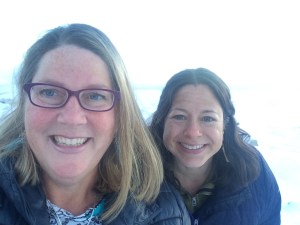
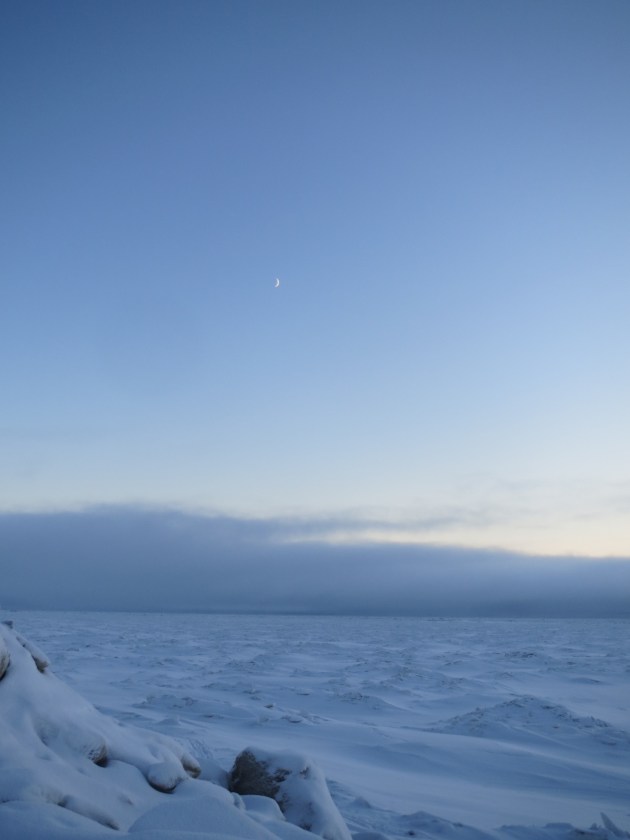
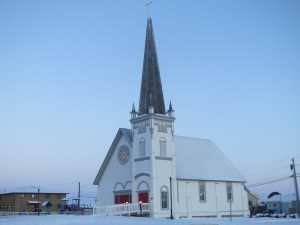
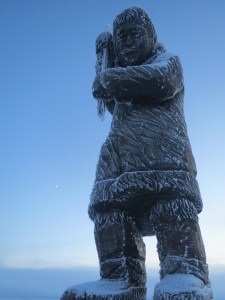
Unalakleet, Alaska with no snow in January

Jan 20-21, 2016

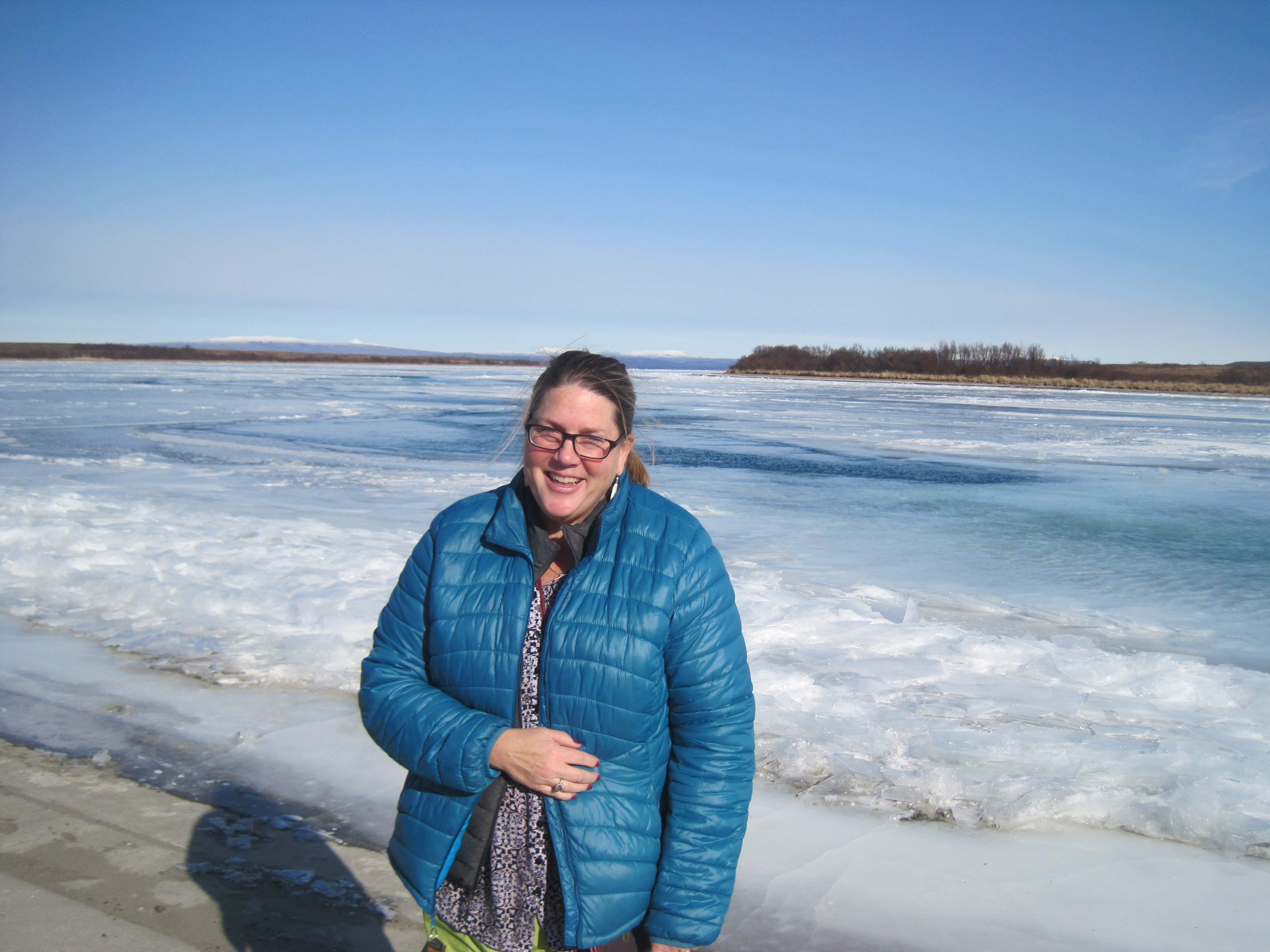
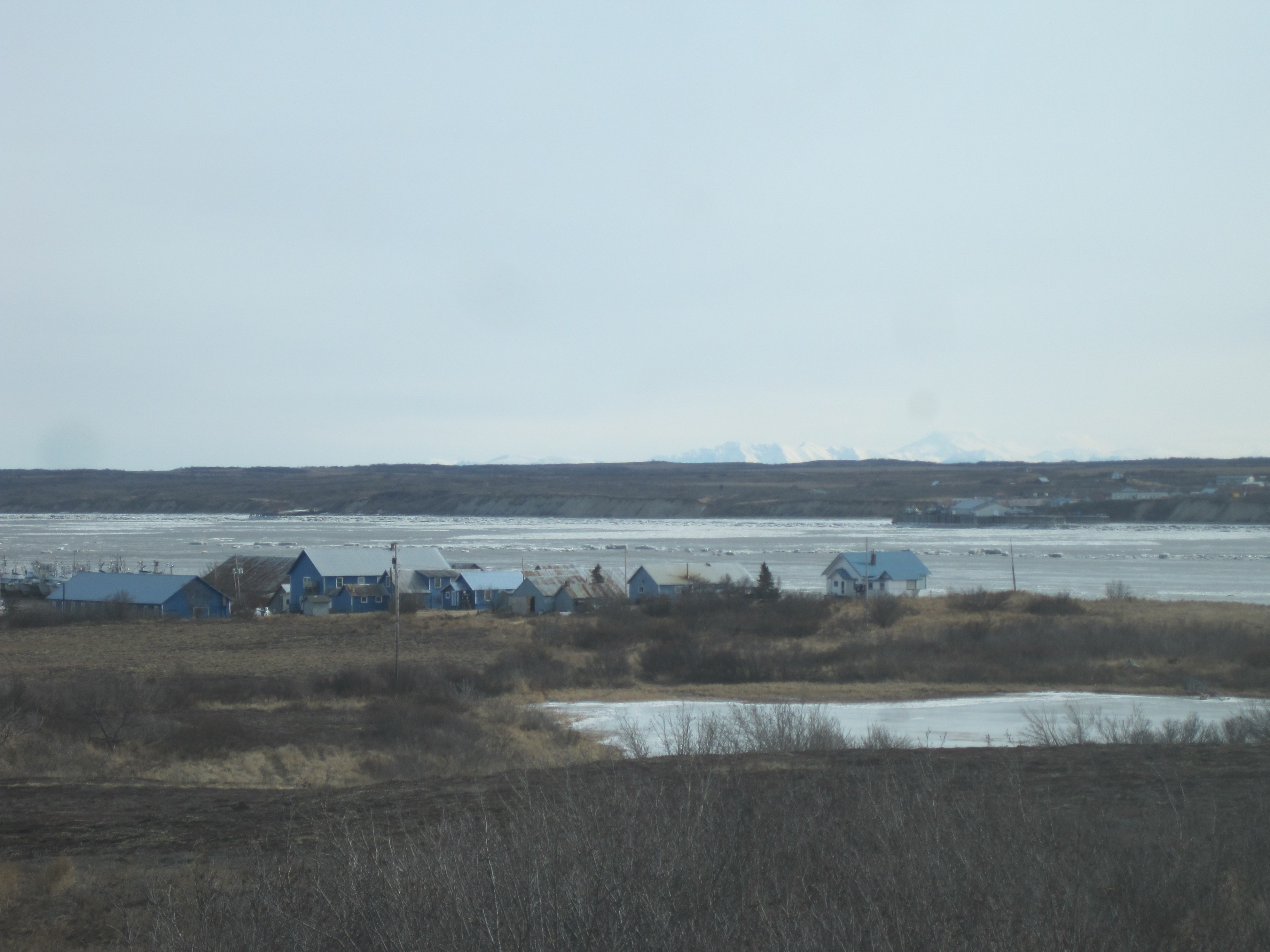
As I flew into Unalakleet my heart sank and I was so saddened to see that there was almost NO ice in the Bering Sea and there was no snow on the ground.  Over the last 7 years that I have been coming here in Jan. this is the least snow or ice I’d ever seen.  I realized that I wished those that think ‘climate change’ isn’t real could come here to see this.

I could only imagine what the locals must be experiencing and someone directed me to this article.  http://www.adn.com/article/20141116/facing-climate-change-unalakleet-will-endure.  It really talks about how the locals are affected by the climate change that is occurring in the region.

My training went wonderfully, I sang an Aleut song with the group.  We had a great time learning, dancing, singing and sharing stories.  I got to visit my friends there and spend time with their children, and you all know how I love being ‘auntie timi’ for an evening.  I love that 3 of the people who came for training brought their small children because we are there for ALL the children of Bering St. School District.  AND I LOVE that I got to see a former student of mine, Donald.  He picked me up at the airport and we got to have lunch together.  He is from here and though he went away for college, he’s back home. These are the reasons I love to visit here and why I can’t wait to return.


Leave a comment »

Nome, Alaska’s and a visit to NACTEC

Jan. 13-15, 2016

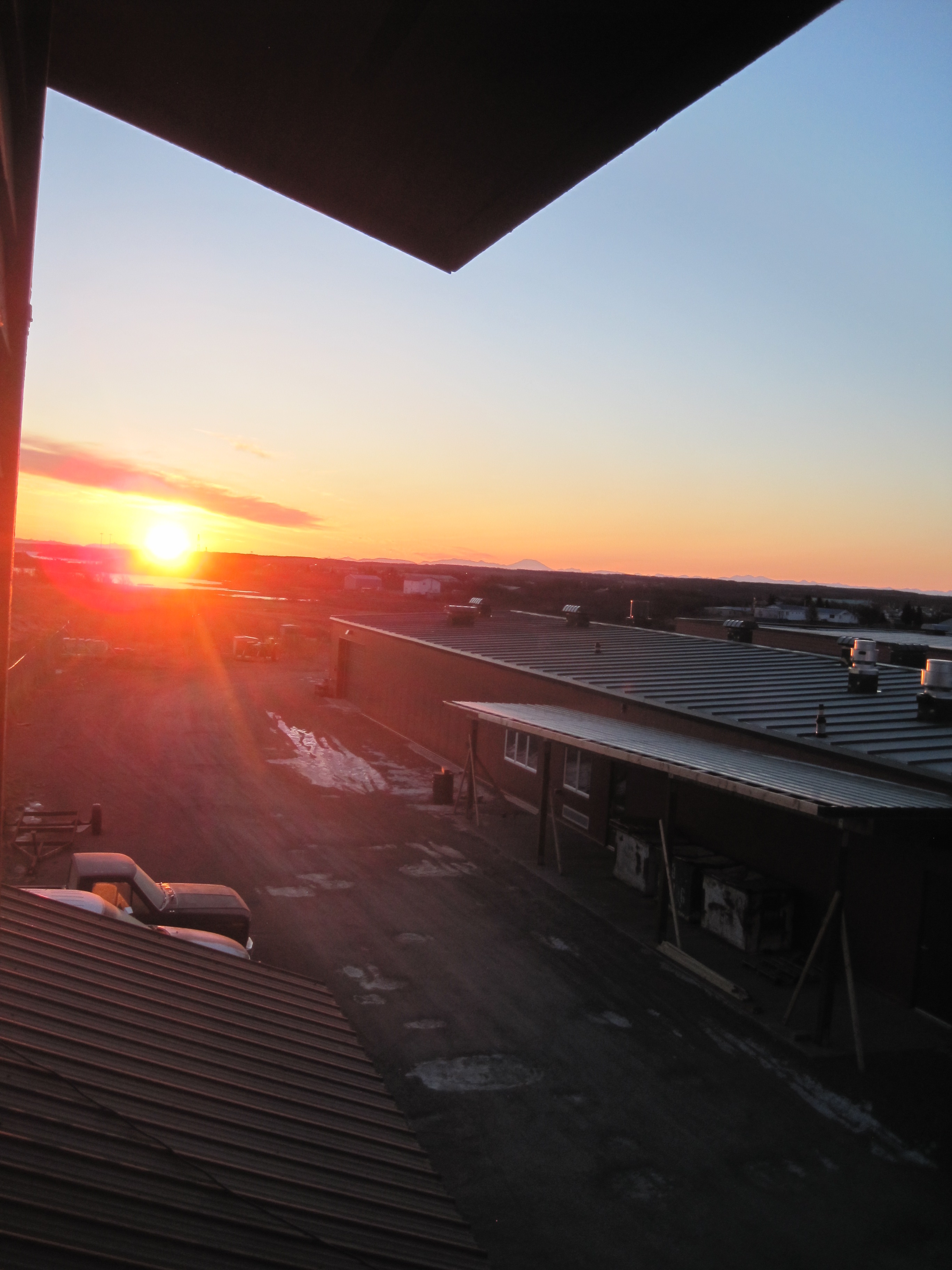
January in Nome is a lot different than June J https://timistravels.wordpress.com/2015/08/07/council-alaska-and-the-last-train-to-nowhere/ but one thing that is similar is that it is bright and sunny regardless of how long the sun is in the sky. When I was in Nome in June the sunrise was at 4:40 a.m. and the sunset was at 1:20 a.m. for 20 hours of sunlight. In January the sun rose at 11:40 a.m. and set at 4:40 p.m. for 5 hours of sunlight.   The sunrises were absolutely beautiful as were the sunsets!IMG_2854IMG_7402IMG_2898IMG_2843IMG_2845IMG_2851IMG_2852

I like to take a few pictures of grocery store items just to give readers an idea how much items are in the places I visit.  Remember Nome is a ‘hub’ community so their prices are lower than the villages outside of here.

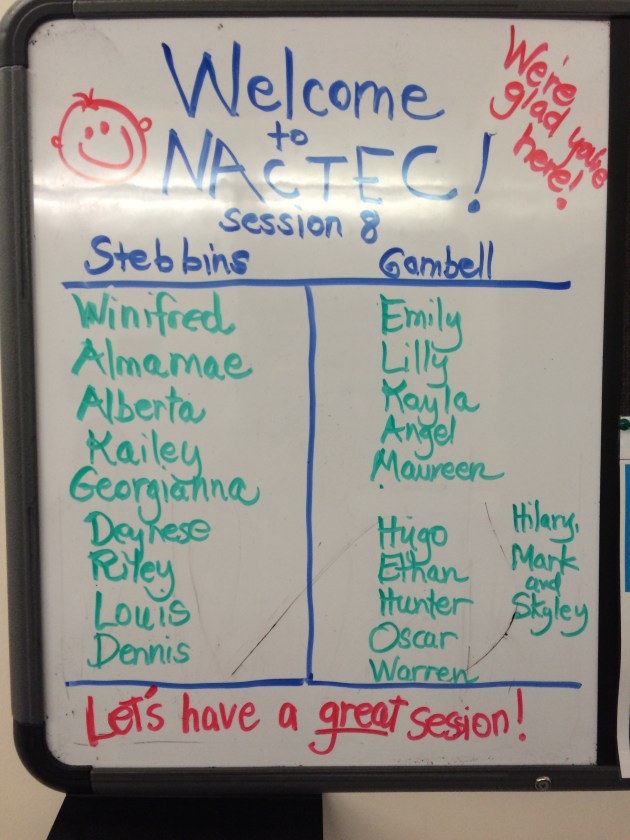
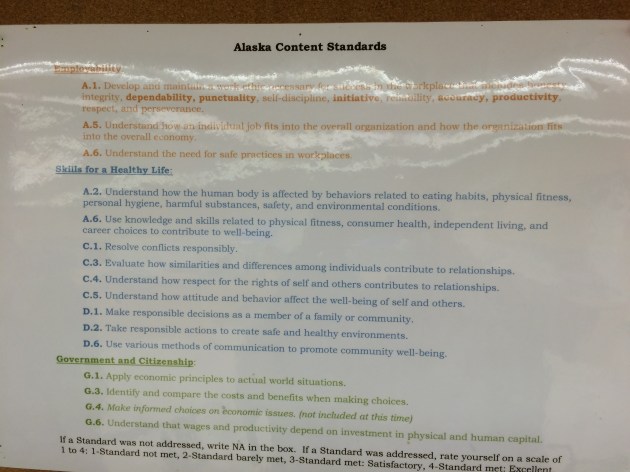
While in Nome this time I was privileged to tour the Northwest Alaska Career and Technical Center or NACTEC as it is known in the region. NACTEC is a joint venture between Bering Strait School District and Nome Public Schools. The focus of the center is vocational and life skill training for students of both districts. A major focus of the school is not only technical skills, but employability skills.

Students attend for 1, 2 or 4 week sessions. Students must apply to attend and travel to Nome for these programs. The students live on campus while they are in town and in there lies the life skills; meal prep, cleaning of common areas and rooms, laundry, time management and living with others. Many of these youth have not been out of their remote villages ever and most will be away from family for the first time.

Classes taught include:

  • Introduction to the Health Field
  • Emergency Trauma Technician
  • Health aid pre classes
  • Profession in the workplace
  • Native Arts and Business and Marketing
  • Business Entrepreneurship
  • Small Business Grant Writing
  • Facility Maintenance Introduction
  • Heavy equipment
  • Renewable energy
  • Welding
  • Arctic survival
  • Outdoor leadership/Guiding
  • Culinary Arts

Studies are indicating an increase in graduation rates that coincide with with the start of NACTEC being offered to village students.    It is a wonderful program.

IMG_7438IMG_7439IMG_7433

2 Comments »

Cuba; Some final thoughts!

Cuba

Overall; Dec. 18-29, 2015

In retrospect this was a very memorable trip for a lot of different reasons. Cuba was fascinating, fun and (really) frustrating at times. Up front I know it would have been a lot less frustrating if we spoke Spanish fluently. Our most said words were; “hablo un poco español”, but by the end of the visit it had improved a lot, but those that speak Spanish will do much better. If our first night had started off better it may have eased some of the continued stress of the trip. Sadly our Cubana air flight was 5.5 hours late getting into Havana, THEN our luggage took another 2 hours to be delivered. Finally, as we cleared customs my husband’s Passport was stamped. We had been told “they never stamp Passports, only the travel visa”, well ‘they’ were wrong.  We worried a lot about this, and in the end just had to stop thinking about it.

Thankfully we had 25 Euro to pay for the cab ride to our casa because the Exchange booths at the airport had run out of money. BUT since we were so late NO ONE was at our rented apartment and at 1:30 in the morning we were not surprised but we were so tired.  Eventually a neighbor across the hall heard us knocking and came out to see what was going on. He called a woman upstairs and about 20 minutes later she came down with the key. Finally to bed by 2 a.m. It was a long day. We knew of the US embargo against Cuba (who doesn’t) but President Barack Obama’s recent efforts to restore relations with the Cuba gave us hope about our visit.   In the end it was NOT a problem to have a stamped passport, OR that we got in late, but all those things added stress when we didn’t need any!   We had a lot of highs and a I had a lot of lows, here are a few of our thoughts on the overall trip:

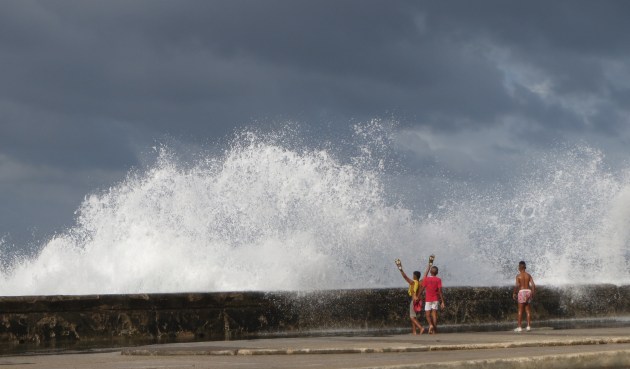
  • Our first 4 days in Havana it rained each day, mostly on and off and actually it cooled down the city and offered great views of waves breaking over onto the streets of Havana.
  • The food is very, very bland and there is not a lot of variety. We heard that there is a food ‘revolution’ happening, but for the most part it is chicken, pork, beef, lamb, with rice and boiled veggies. If we were lucky we got some tomatoes, cucumbers and greens on a plate before dinner. We brought some Chipotle sauce and carried it with us to use on virtually any meal!
  • There is limited wifi and you can purchase a card with a code to use it. When we saw 100’s of people with cell phones OR computers sitting in a park we realized that must be where the wifi exists. Each town had one main park/square with it available. It was 2 CUC’s for 1 hour of usage.  We were happy to find any at all as we had not expected any opportunity for communications.  It was nice to let Mom know we were safe.
  • There are 2 forms of money, the peso’s the locals use and the CUC’s that most tourists use. However, IF you can get some peso’s it costs less for you to purchase street food, pizza’s, churro’s etc. They are MUCH cheaper with peso’s. For Example: a pizza on the street might say “10 peso’s (local money) or 2 CUC’s (tourist money)”. The rate is actually 1 peso= .27 CUC meaning that it costs that the pizza for 10 peso’s would actually only be about .40 CUC’s  a lot less than 2 CUC’s. We traded some of our money for peso’s and were glad we did for a few of these opportunities. Cabs were another place we wish we had more peso’s.
  • We did eat several street side pizza’s. Usually a great breaded crust and a little bit of cheese with some sauce on the top.  They were good.
  • For the most part you will only use CUC’s but most people also accept Euro’s.
  • We met some local’s at our first rental and they helped us secure lodging for our last night in Havana. They also showed us some of the ‘ropes’ of cab rides etc. We will certainly keep in touch with them as they were very helpful and we will suggest to our friends to go through them to rent places in the future etc.
  • The locals are very nice and are very happy to see engage in conversations or at least attempt to engage in conversation with you. The locals are very helpful allowing you to use phones or call their friends to ensure you get to do what your plans dictate.  They do NOT want to talk anything about politics though our last hosts were the most vocal about it. Lionel was an engineer who spoke English, Russian and Spanish. He’d lived in Russia for a year back in the 80’s. He is a very PROUD Cuban and spoke highly of free education, free medical etc.
  • Cubana Air is known to be late, if you fly them be sure to build in an extra day between connections!
  • There are a lot of means of transportation, typical yellow cabs (we never used one), the old 1950’s taxi’s, bicycle taxi’s, pod taxi’s and horse or cow pulled carts.  Nothing is off limits.
  • Casa Particular’s are the way to go for lodging. You typically meet local people and it helps with the transitions. Everyone was more than willing to let us use their phones to call ahead to the next place to stay.
  • All men stare inappropriately at all women.  it is a tad disconcerting, and it is very cultural.  I didn’t appreciate it.
  • Most hosts will offer to make you breakfast and dinner for an additional cost. Breakfast is a great deal and starts your day off on the right foot. We never had dinner as we didn’t want to be tied to a time frame.
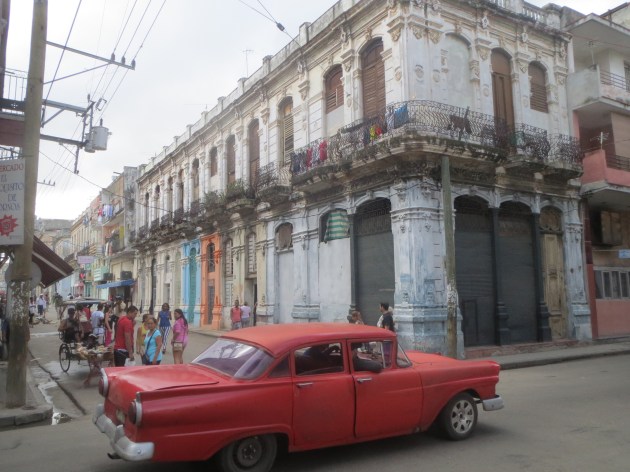
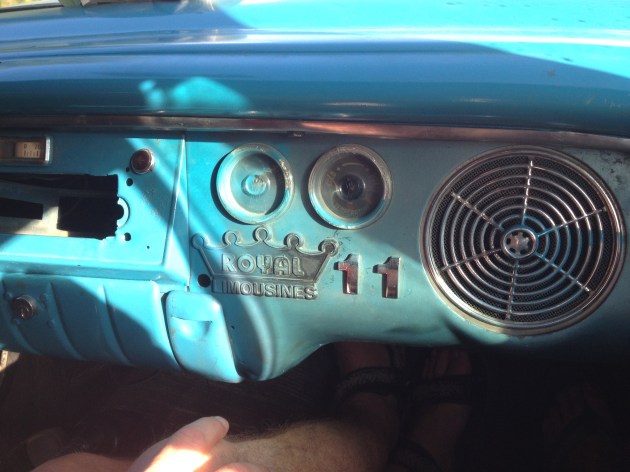
  • Yes there are old cars, EVERYWHERE. Most don’t have their original motors, but the car bodies are original! Some are in better shape than others.
  • We met a lot of tourists from Europe and enjoyed the company of other world travelers.  Germans, Polish, French topped the list, but there were so many languages being spoken around us it was hard to discern them.
  • I/we need to improve on my Spanish… my limited words helped a little, but most Cuban’s speak none to very little English. The younger kids are now being taught in school, but up until 10-15 years ago they learned Russian! It was fun to talk with the youth that are learning it as they really want to practice!

In the end our Cubana Air flight was on time leaving and we made our connections. Nothing I worried about happened, and we are really, really, really happy we went to see Cuba now, before KFC, McDonalds and Subway line the city streets.

FYII: Our agenda was such:

  • 4 nights in Havana
  • 3 nights in Viñales
  • 3 nights in Trinidad
  • 1 last final night in Havana before flying out the next day


https://timistravels.wordpress.com/2016/01/02/various-sights-in-havana-cuba-hotel-national-hamels-alley-etc/#comment-371

https://timistravels.wordpress.com/2016/01/02/vinales-cuba-my-favorite-part-of-the-country/

https://timistravels.wordpress.com/2016/01/02/trinidad-cuba-history-and-beaches/


7 Comments »

Trinidad, Cuba; History AND Beaches

Dec. 25-28, 2015; Trinidad Cuba

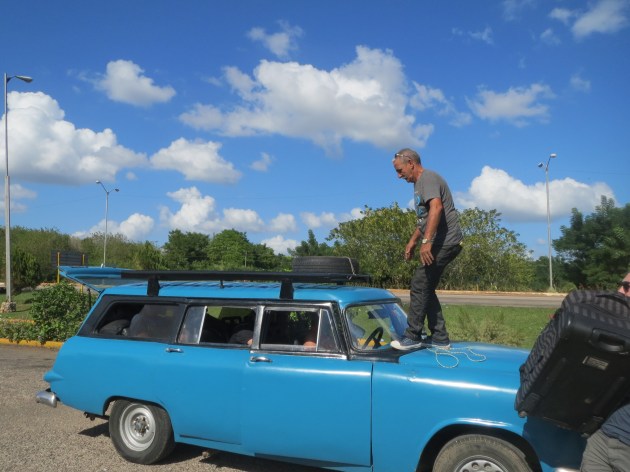
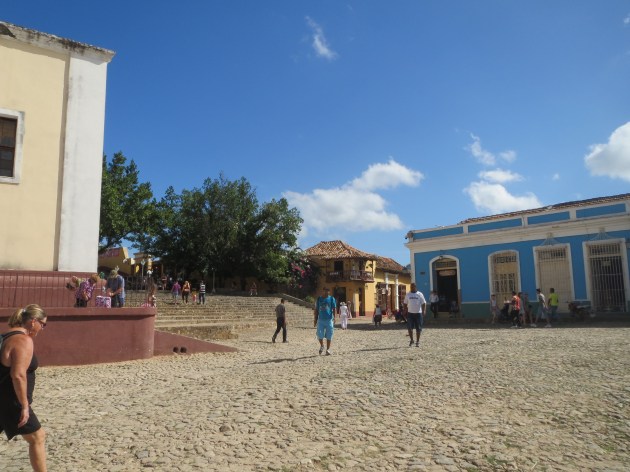
Trinidad was settled by the Spanish in the early 1500’s with a focus on gold and farming and later in the 1800’s it became a hub for tobacco and sugar. Though once sugar trade slowed, the town almost collapsed. Because of perseverance efforts it became a UNESCO World Heritage site in the late 1980’s. There are remnants of the early Spanish settlers in today’s Trinidad.  The first thing we noticed as we pulled into town (in our 1950’s something station wagon, packed with 9 passengers and our driver) were that the streets were narrow and most are cobblestone.IMG_2680IMG_3595IMG_2690

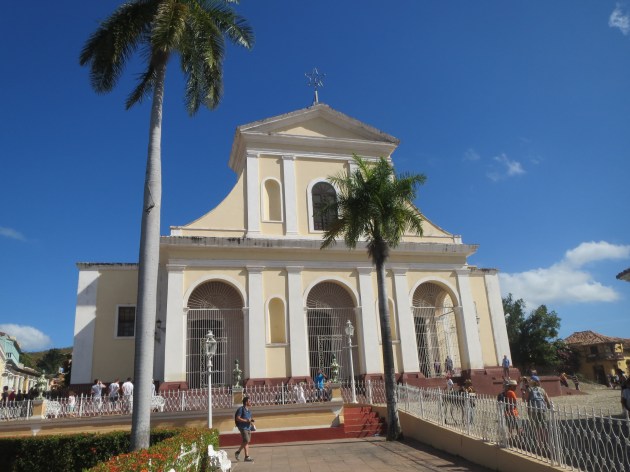
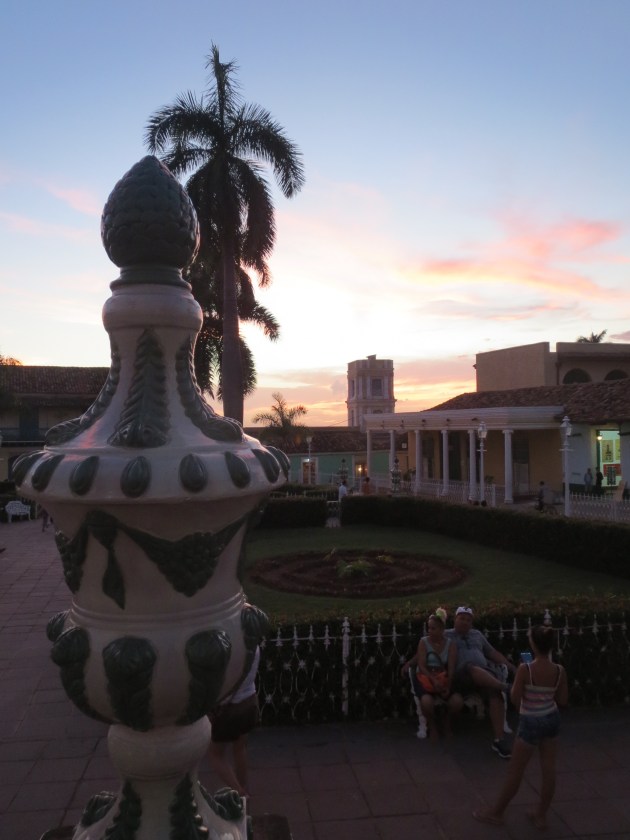
It is much smaller than Havana, but larger than Viñales.   Our Casa Particular was just blocks from Plaza Mayor. Surrounding the Plaza were many historic buildings, most hosting small art galleries and or stores with traditional Cuban items for sale.     We read that in 2011 there were 4 restaurants in the area and now there are 90. Most have very similar menus, but we managed to find some unique places to eat.

IMG_2688IMG_2684

We tried to buy tickets for the bus back to Havana however they were sold out. We then found a guy selling taxi rides to Havana (common) so we gave him our address and asked him for a pick up on the 28th at 8:30. All set, right? (there will be more to this story). We walked around town quite a bit and saw more of the beer carts in the local neighborhoods.

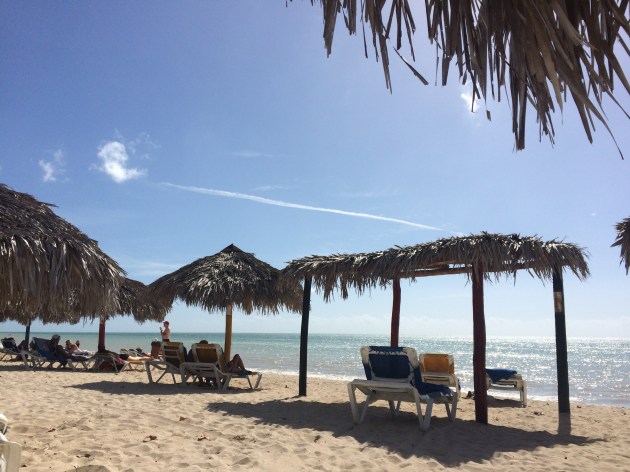
On our last day here we took the on/off bus to the beach arriving about 11:30 and staying until the 5:00 bus home. There were very few people in the water and not sure why but suspect 2 things, 1) water was dirty 2) jelly fish, we saw many folks running out of the water with big red blotches and needing vinegar to pour on the bites, hence we did not venture into the water, but the breeze felt good.  IMG_7251

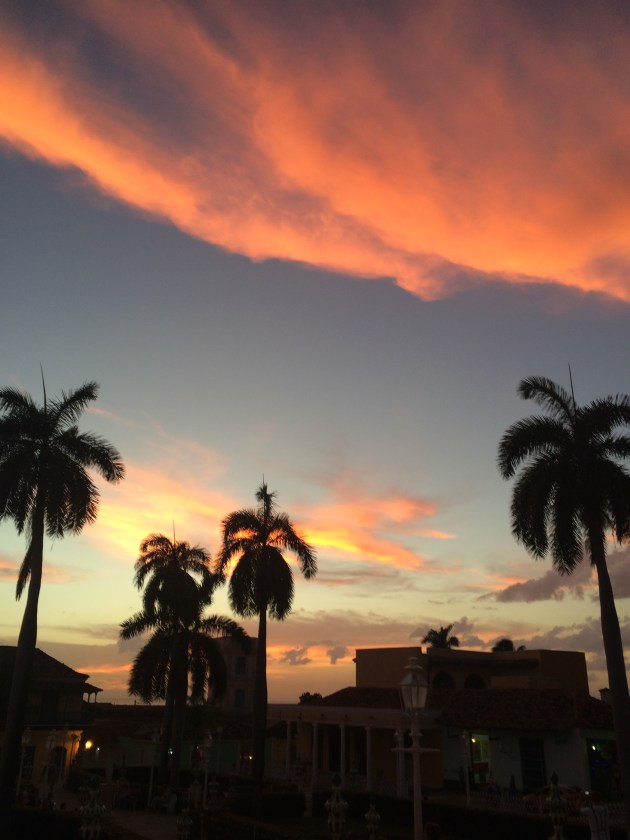
The sunset our last night was beautiful and we watched it from the Plaza Mayor which was a perfect location! The Cuban music steaming from 5-7 different locations around the plaza added to the experience. Trinidad is a beautiful community full of life and history. I will remember most the cobble stone streets, the horse ‘taxi’s’ and carts and the beautiful sunsets.IMG_2766IMG_7256IMG_2747IMG_7259IMG_2768

On our departure day we were ready and on the porch of our casa by 8:15 and our ‘arranged’ taxi never showed. By 9:00 we headed over to the bus station and got accosted by folks as we walked with our backpacks asking if we needed a ride to Havana. We ultimately ended up in a comfortable 1980’s van with 9 other riders. (25CUC’s/pp), and arrived at our Havana casa about 3 p.m.IMG_2716IMG_2737IMG_3599IMG_2749


2 Comments »

Viñales, Cuba; My favorite part of the country

Dec. 22-25

Viñales, Cuba

For 35 CUC’s /pp we took a personal taxi to Viñales. Our driver Pepe brought his 8 year old son John Anthony with him as they were on vacation from school. It was a delightful ride and John Anthony sang “happy birthday” to me J. His English was about as good as my Spanish so instead of ‘birthday’ he said ‘baby’ which made me laugh even more!

The ride was 70% along a highway but what stood out most were all the people along the highway either 1) waiting for a bus or such or 2) holding out money hoping that a taxi might stop and pick them up. Something you’d never see in the states! There were also a number of horse drawn buggies along the roadway as well… as we learned to say “only in Cuba”.

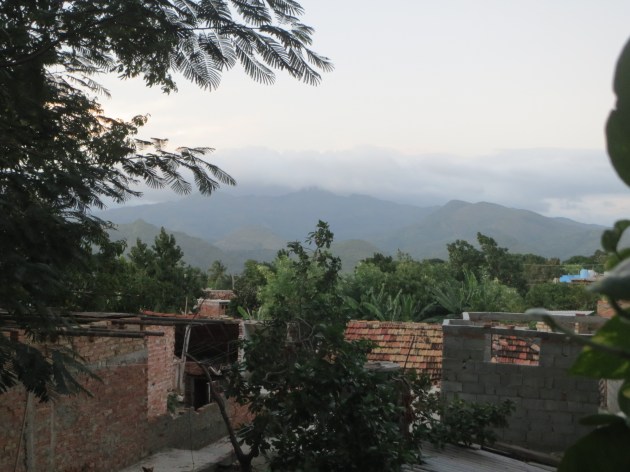
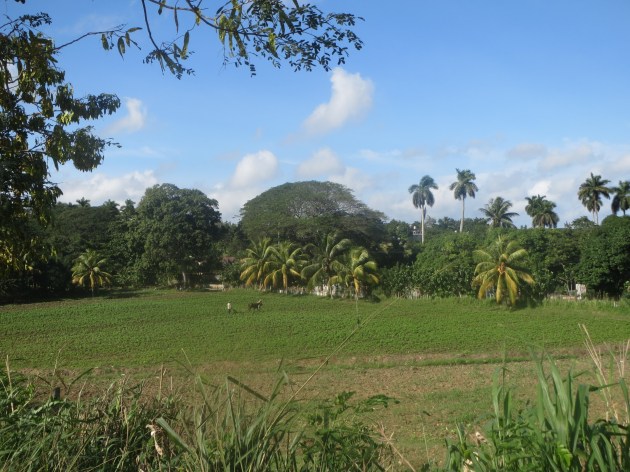
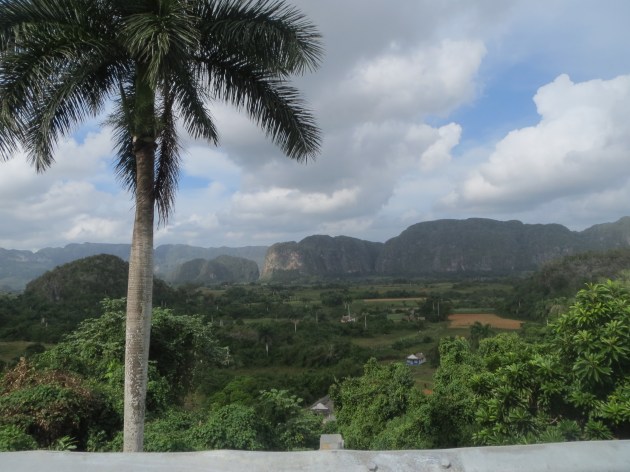
The last 15 miles were off the highway and took us towards the community of Viñales. The landscape was rolling and green. All of the Cuban we met constantly said that Viñales is “so much natural” and we could not agree more. It was beautiful. Pepe took us right to our Casa where we met Isabel and Mario our hosts and the nicest people!

IMG_2395

most of the homes here are ‘casa particulars’ allowing guests to stay in one of their rooms.  The town is lined with brightly painted homes.

IMG_2393

horse or cattle drawn carts were everywhere on their streets

IMG_2391

farm country

IMG_2444

valleys of the area

IMG_2392

Pepe and his son got us here safely

Got settled in and ventured out to explore the town. Stopped for a drink and eventually dinner before going back and sitting on the porch chatting and drinking with the other family that were in our Casa, Aleksandra and her parents visiting from Warsaw, Poland. She spoke fluent Spanish and English so it helped us all communicate.

The following morning we awoke and decided to take the taxi tour ($10/pp IF you get 4 people for your car.). That is when we met Claudia and Robert from the Netherlands, a brother and sister that we ended up really enjoying spending time with. The taxi took us to 2 caves, (Indian Cave) one we got a short board ride down a river before leaving, we went to a big famous mural as well as some fancy hotel with a pool. Lastly we went to a traditional tobacco farm where we watched a guy make cigars and he gave one to Harry.   We met the ‘kids’ for dinner at the best restaurant I found in Cuba, El Olive, a Mediterranean place that had pretty darn good food!

IMG_2456

Mural de la Prehistoria; The snail, dinosaurs, sea monsters and humans  represent the theory of evolution.  You don’t need to pay the entry fee to see it as you can stop along the road and take a photo like this.  It is a bit of a disappointment as I thought it was prehistoric artwork!  Wrong. 

The final day we headed into the town center and stumbled upon their weekly market.  It was funny that the road was closed off for the farmers to come to town and sell their goods! There were vegetables, pigs and one of our favorite things, a beer truck.

IMG_2597We then secured our taxi to Trinidad then hired a taxi to take us to Cuevas de Santo Tomas (caves). We paid $13pp for taxi ride and $10pp for entry (You MUST have your passport to enter). Helmet and headlamp were given to each of us and we headed up a steep 200 foot climb up rocky, unstable terrain to the entry of the caves.

IMG_2574

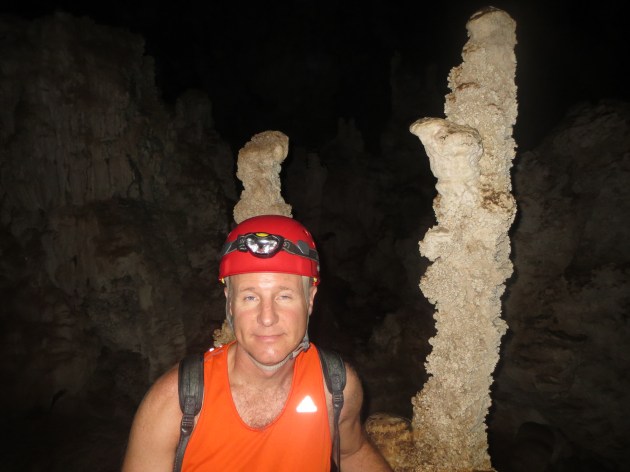
Once in the caves we needed to use the headlamps because it was dark yet sadly my battery was old and the light was really weak. The route we walked in the cave was really wet and slippery, no handrails or the like to guide us or to hang onto.   It was simply not enjoyable and a bit of a disappointment. Not to mention it was HOT inside the cave, something I was not expecting. With the size of the cave we were disappointed by what we actually ‘saw’ on the tour.

In the end our time in Viñales, Cuba was delightful. We enjoyed the natural surroundings and the people. Isabel and Mario were wonderful hosts and even with the language barriers we managed to communicate. We were sad leaving them when our cab arrived on Christmas morning.


3 Comments »

Various Sights in Havana Cuba, Hotel National, Hamel’s Alley etc.

Havana, Cuba

Dec. 18-22 and Dec. 28-29, 2015

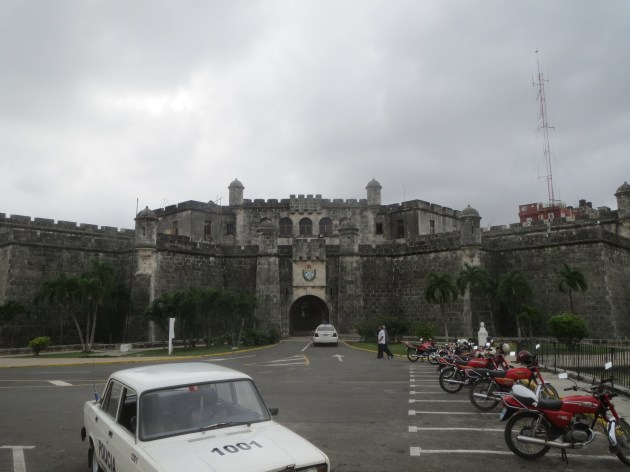
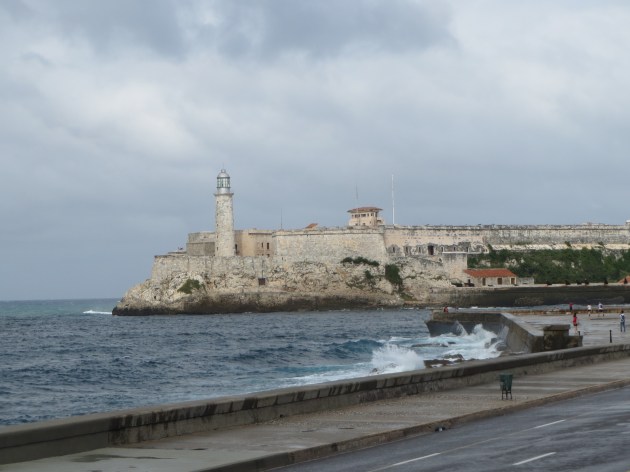
We shared the streets of this historic town with 1000’s of visitors and the 2 million permanent residents.  Havana was discovered 400 years ago by the Spanish and because of this has influence from the Spanish culture. The Spaniards built forts and a wall around the city, many of which still stand.
IMG_2220

La Cabana, Fort Saint Charles

IMG_2100

El Morro Castle


IMG_2132

IMG_2232

The first few days there were HUGE waves coming over the wall.  Kids LOVED it.!


The first thing we did was visit the nearby Hotel Nacional as it was close to our Casa Particular.   We actually bumped into people we’d met the day before at the airport and flew with to Cuba. Was nice to see familiar faces.   They were from Chicago and mentioned that they had just run into Rahm Emanuel, the mayor of Chicago inside the hotel lobby.

The hotel opened its doors in 1930 as it was designed by and for American tourists only and at first no Cubans were allowed to stay there.   The Hotel is a dominant site in Havana and the tours we took passed by it several times. The view from the garden was a 180 degree view of the harbor.

We walked inside and immediately were hit by the history of the area in the lobby. There are still decorations in the Cuban style of 1930s, chandeliers, mahogany furniture and brass fixtures. There are photos of famous visitors around the hallways including Fred Astaire, Frank Sinatra, Gary Cooper and even Walt Disney.

Walking in the grounds of the Hotel Nacional de Cuba we noted more history immediately. Walking into the ground level ‘museum’ we read of the Cuban Missile Crisis, (or as they say in  Havana the October Crisis).  We continued to the underground tunnels that make a circle underneath the hotels lawn and gardens. The tunnels once housed periscopes used by Cuban intelligence in espionage efforts but never nuclear arms.   It was very interesting to walk on these grounds.

As we continued our explorations, we knew that there were 3 parts to Havana, Old Havana, Centro and Vedado.  Our casa was between the University and Habana Libre, and walked to Old Havana each day (about 1.5 miles). We would walk through Centro as we headed towards Old Havana. There is so much history in the buildings and such, however many are crumbling and falling in on themselves, so it is sad to see that the Cubans have not been able to save more of the historic architecture of the area.  IMG_7034IMG_2171IMG_2099IMG_2300
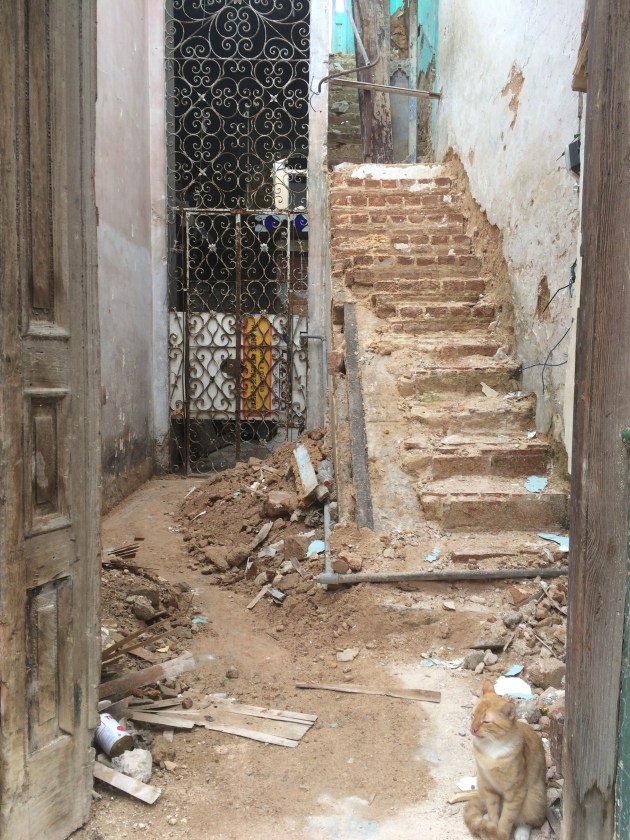
One of our favorite stops was Hamel’s Alley an alley painted by the neighborhood to tell the story of Santera, the Afro-Cuban religion.   Each time we walked through it there we musicians playing music. This was the one spot in town that I felt as if everyone expected money.

We spent our days roaming the Old Havana area full of history and the governmental center of Cuba. We walked through narrow streets and old buildings with balconies full of laundry, plants and people. Many of the home owners offer a room in their home for guests called ‘casa particulars’. They ranged from 20 to 40 CUC’s a night. (when we visited a CUC is 1/1 with the $ but there is a 10% exchange rate).

Some areas of city we enjoyed more than others, I enjoyed the San Fancisco area a lot. The Cubans are trying to renovate many of their plaza’s including Plaza Vieja, Plaza de la Catedral, Plaza de San Francisco and Plaza de Armas as well as the walking only streets: Obispo and Mercaderes both of which we walked on a LOT.

IMG_2138

trying to do some renovations!

We also took the ‘on /off’ open topped bus ride around the town. It was well worth the 5 CUC/pp cost. It took us outside of the downtown center and out to the suburbs of Havana. We were on it for a full 2 hours and then asked for a transfer and eventually rode it back towards our casa.

IMG_7049

Top of the bus!

The bus takes you through the city centre and out to the Miramar (consulate) district, to the Plaza de la Revolucion and back through other suburbs, along the Malecon and into town. We sat on the opened top level of the bus, yes we had broken seats, occasional rain showers and the exhaust fumes were as strong as you might expect, but we enjoyed the ride. JUST know that this is NOT an ‘informative’ tour. There is someone talking occasionally but the sound does not travel to the top level and it is not ‘full of information.’IMG_2193

And we did the ‘touristy’ thing of renting a 1950’s car for a one hour tour, that basically followed the same route as the on off bus, for double the cost!  It was worth it though if for nothing else, the experience.

All in all Havana will leave us with memories but happy and frustrating.  The quote in the Lonely Planet guidebook truly defined our trip:

” Timeworn but magnificent, dilapidated but dignified, fun yet maddeningly frustrating ~ Cuba is a country of indefinable magic.”

We are thrilled we saw it BEFORE it is full of KFC’s/ McDonalds/ and other typical American businesses that are sure to be there in the next few years.


2 Comments »

Brown bears, fishing, birding, OHMI! King Salmon and Bristol Bay, Alaska

Aug. 12-14, 2015

After invited to work with the Lake and Peninsula Borough School District I was thrilled to visit King Salmon, which is located in the infamous Bristol Bay, a quick 1 hour flight south from Anchorage. There is a little bit of everything “Alaska” in this region, though it is best known for 1, fishing and 2, brown bears though there are a lot of caribou, moose, wolves and little critters like fox, beaver and of course porcupine!  Tourists also come to the area for bird watching with over 150 different species that pass through this area.

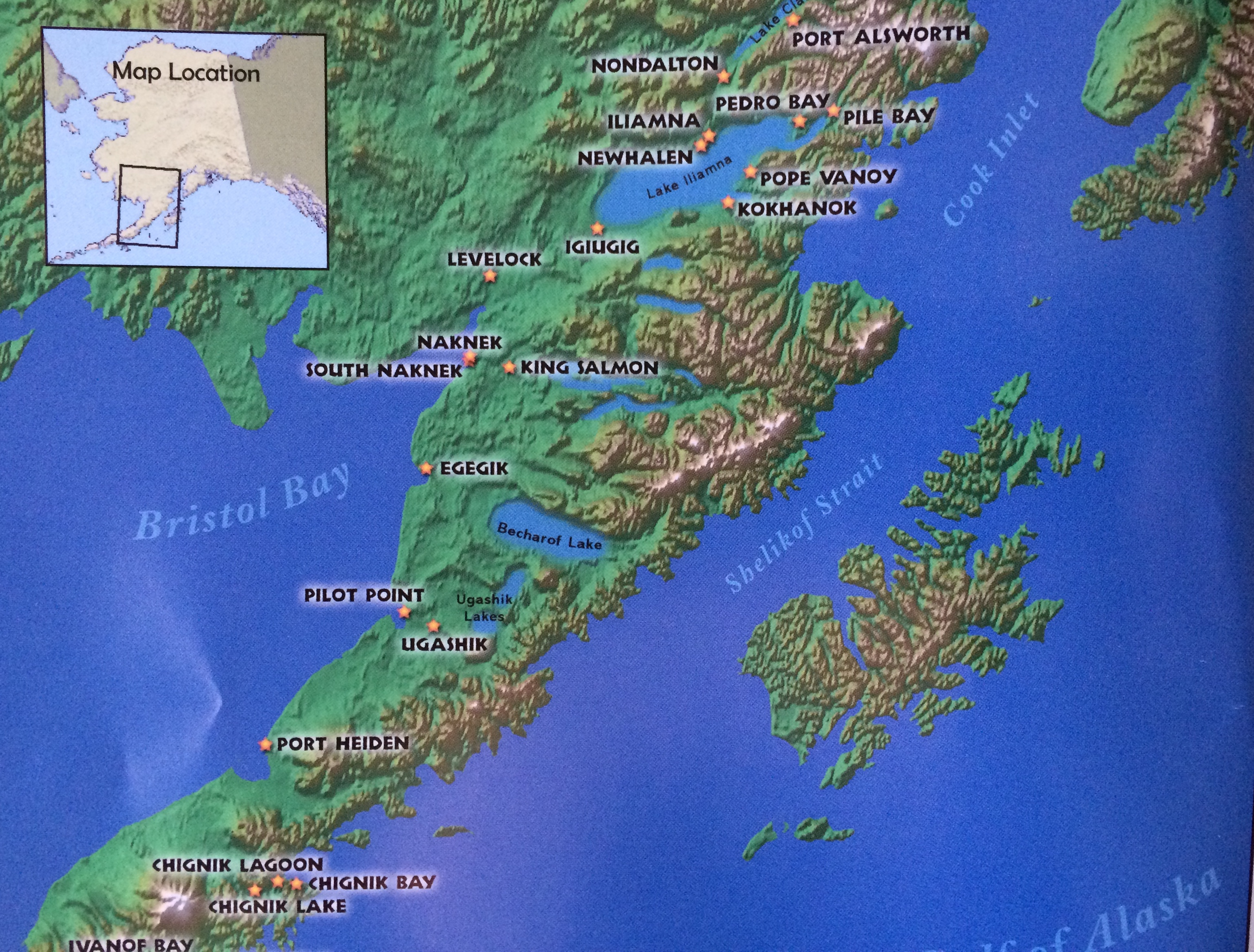
Lake and Pen School District is about the size of West Virginia. The district represents the following communities, the population as of last census is listed after the site.

  1. Port Alsworth ( Tatalian school) 113
  2. Nondalton 205
  3. Newhalen 183
  4. Kokhanok 166
  5. Igiugig 56
  6. Levelock 57
  7. Egegik 76
  8. Pilot Point 76
  9. Port Heiden (Meshik School) 90
  10. Chignik Lagoon 103
  11. Chignik Lake 113
  12. Chignik Bay 92
  13. Perryville 110

IMG_5113

Only 2 of these communities, Newhalen and Iliamna are connected by road, everyone else must fly or boat to other communities. Almost 80% of the population of this area are Alaska Native and the district office is in King Salmon.

Fishing: There are 3 main rivers, the Naknek, the Kvichak and the Alagnak which are all a fisherpersons dream. As the name of the area may give away, salmon is abundant in the region as are rainbow, dolly varden, and grayling. As I left the airport on Friday a.m.

I was one of the only NON fisherperson on the plane. Each of them was checking 100-200#’s of fish, and because of this, there was too much luggage for the plane. In the end the airline had to leave over 2000#’s of luggage in King Salmon that would be delivered at a later time.   Mine arrived home on Saturday!

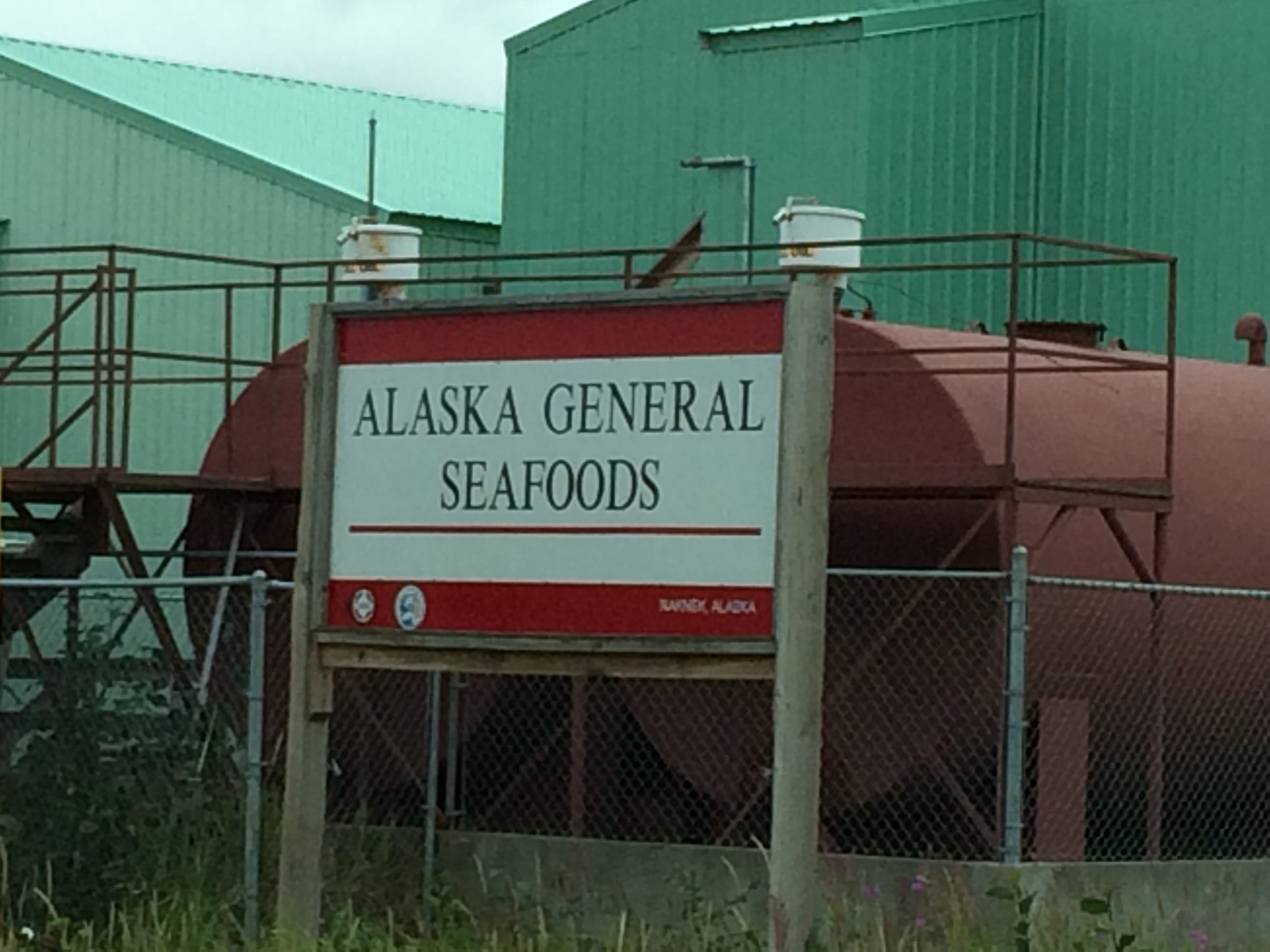
IMG_5029

seafood is a huge industry in the area


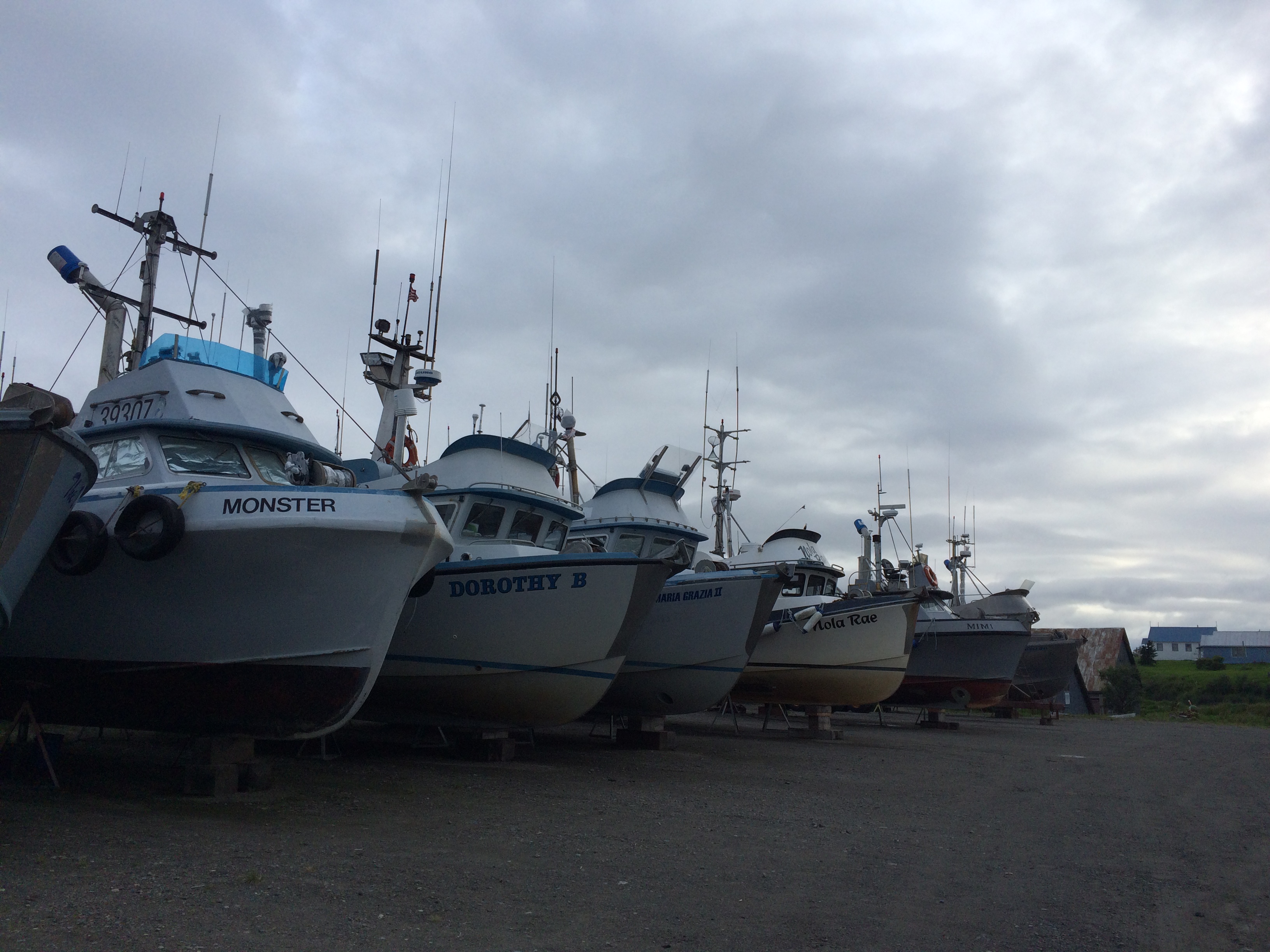
IMG_5033

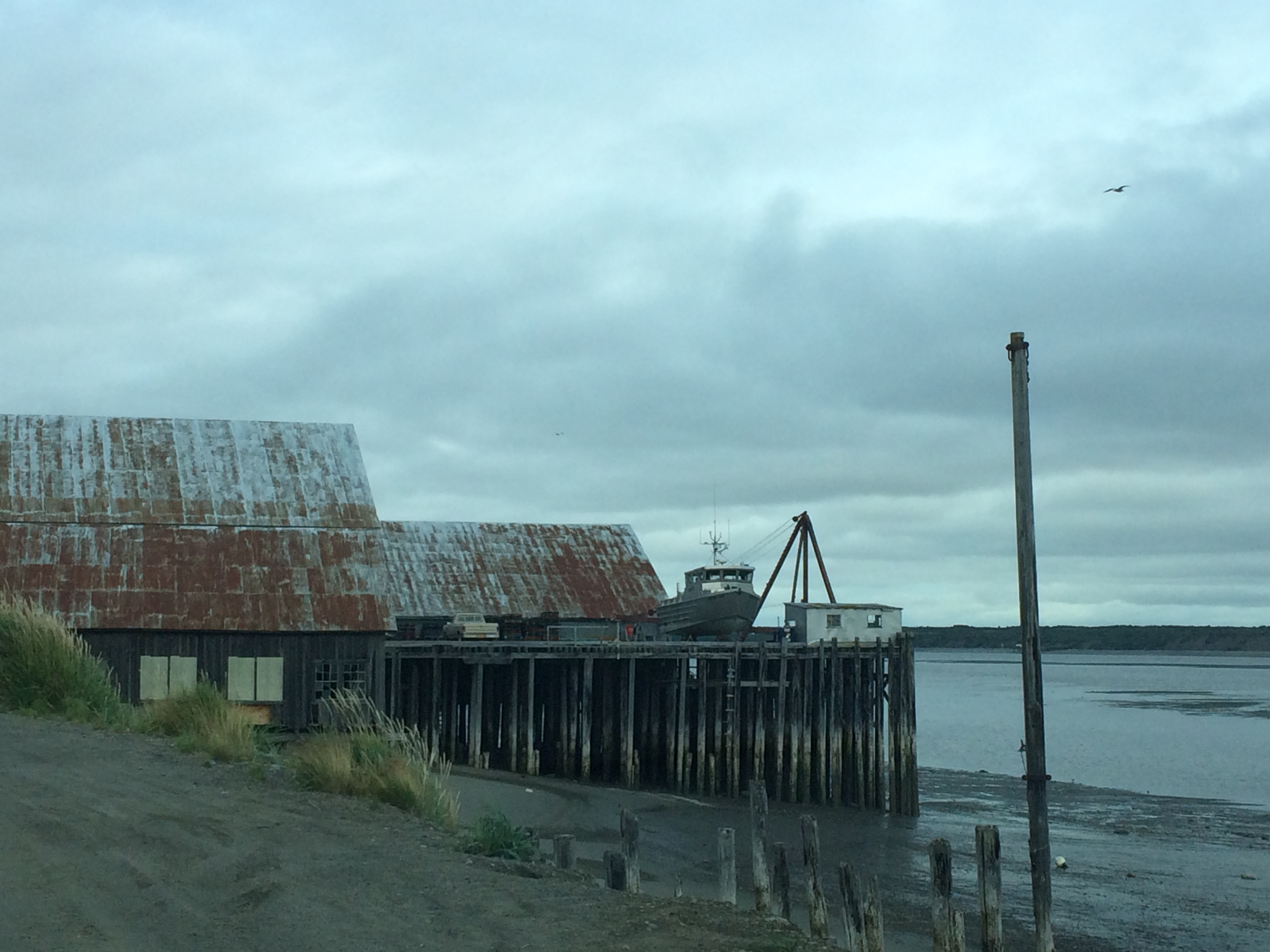
all these boats are on land currently, UNTIL the next big fishing season!


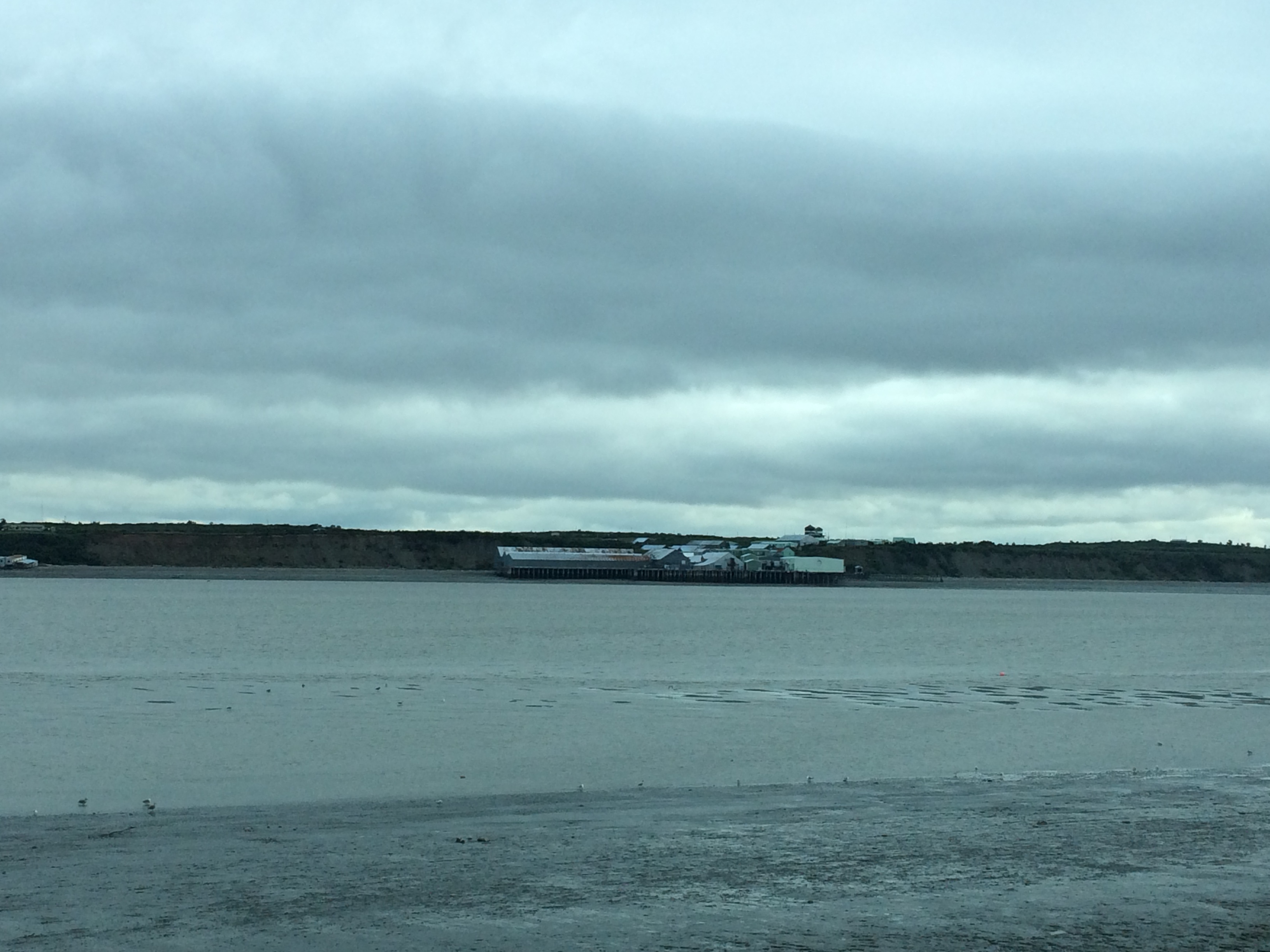
IMG_5034

across the bay another fish plant

Bears: Katmi National Park and Preserve is home to Brooks River/Brooks Camp a famous brown bear viewing location. This area is home to over 2000 bears and in the summer many of them can be seen catching and eating fish during the summer! The other famous bear viewing area in the region is McNeil River. 90 miles from King Salmon it too offers visitors an opportunity to see brown bears in their natural habitat. IMG_5035

IMG_5030

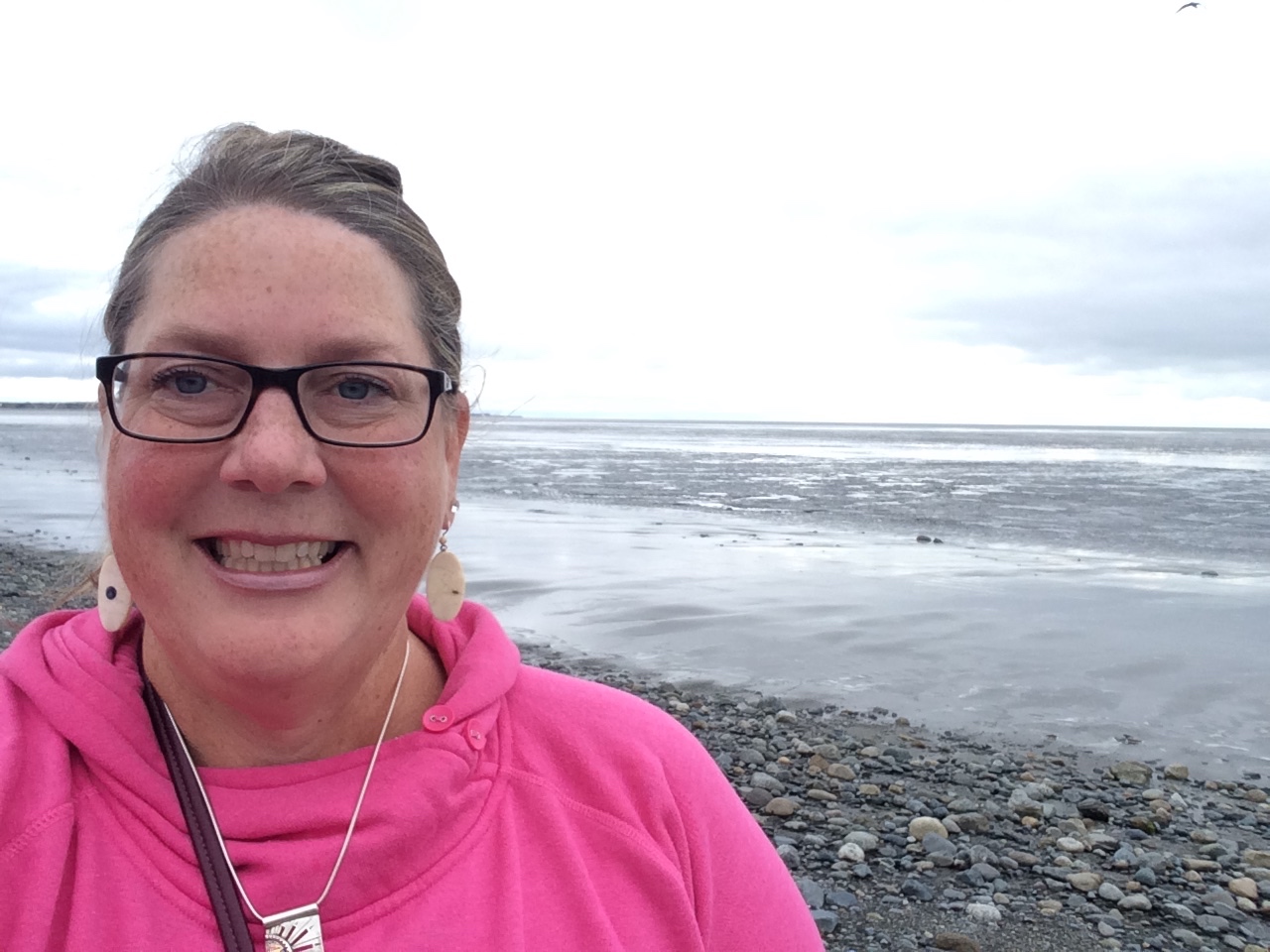
Bristol Bay behind me!

Though I did not get to fish on this trip, I did have a bear experience. As I was leading the workshop, a gun shot was heard, and quickly the superintendent defused any concern by stating “oh the bear must be around the building and we are just shooooing it away”! Only in Alaska!IMG_5036

Leave a comment »

Council, Alaska and the “Last Train to Nowhere”

June 1, 2015

After landing in Nome, Alaska I took a road trip to an abandoned town of Council. The drive was beautiful and took me along the Bering Sea before turning inland toward the former city of Council.

IMG_5328

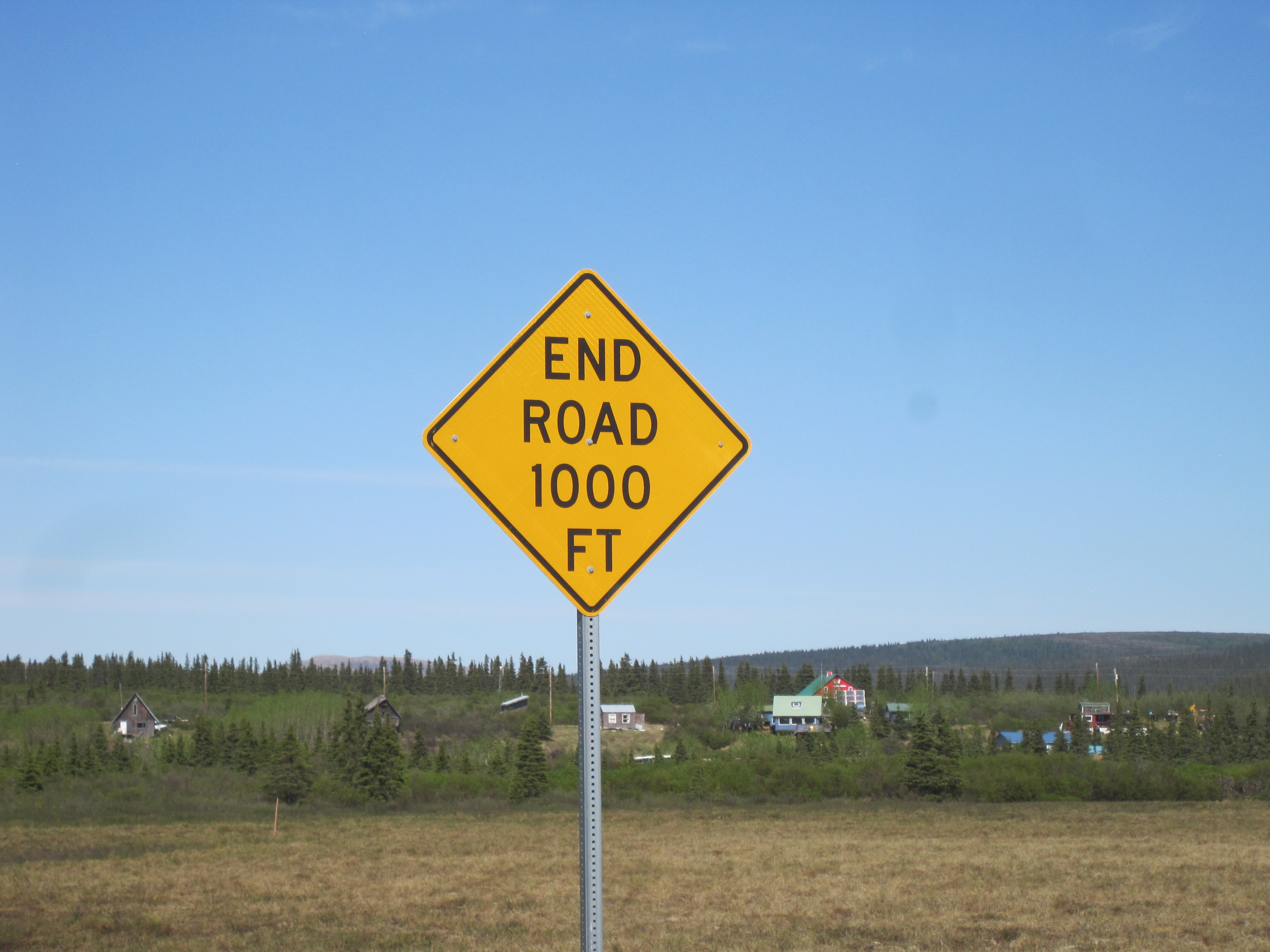
I see these in Juneau often, but yet again another “end of the road” in Alaska

IMG_4084

there still are buildings and even a B and B in Council, Many folks use it as their summer get away!

IMG_5324

when you get to the end of the road you have to take a boat over to the town. I guess at times people have driven but it is not usually low enough to do that safely.

IMG_5321

we walked to the river and looked over to the town of Council which is to the right.

council

Gold was found in a creek near Council in 1897 and in turn over 15,000 individuals lived in Council at that time. Within the next 20 years most of those individuals moved to Nome chasing the gold.

The road from Nome to Council is only open when there is no snow. However since Council has trees, many of Nome residents ride to Council to cut their Christmas trees.

IMG_5314

first tree I saw i this area!

IMG_4082

the closer we got to Council the more trees we saw.

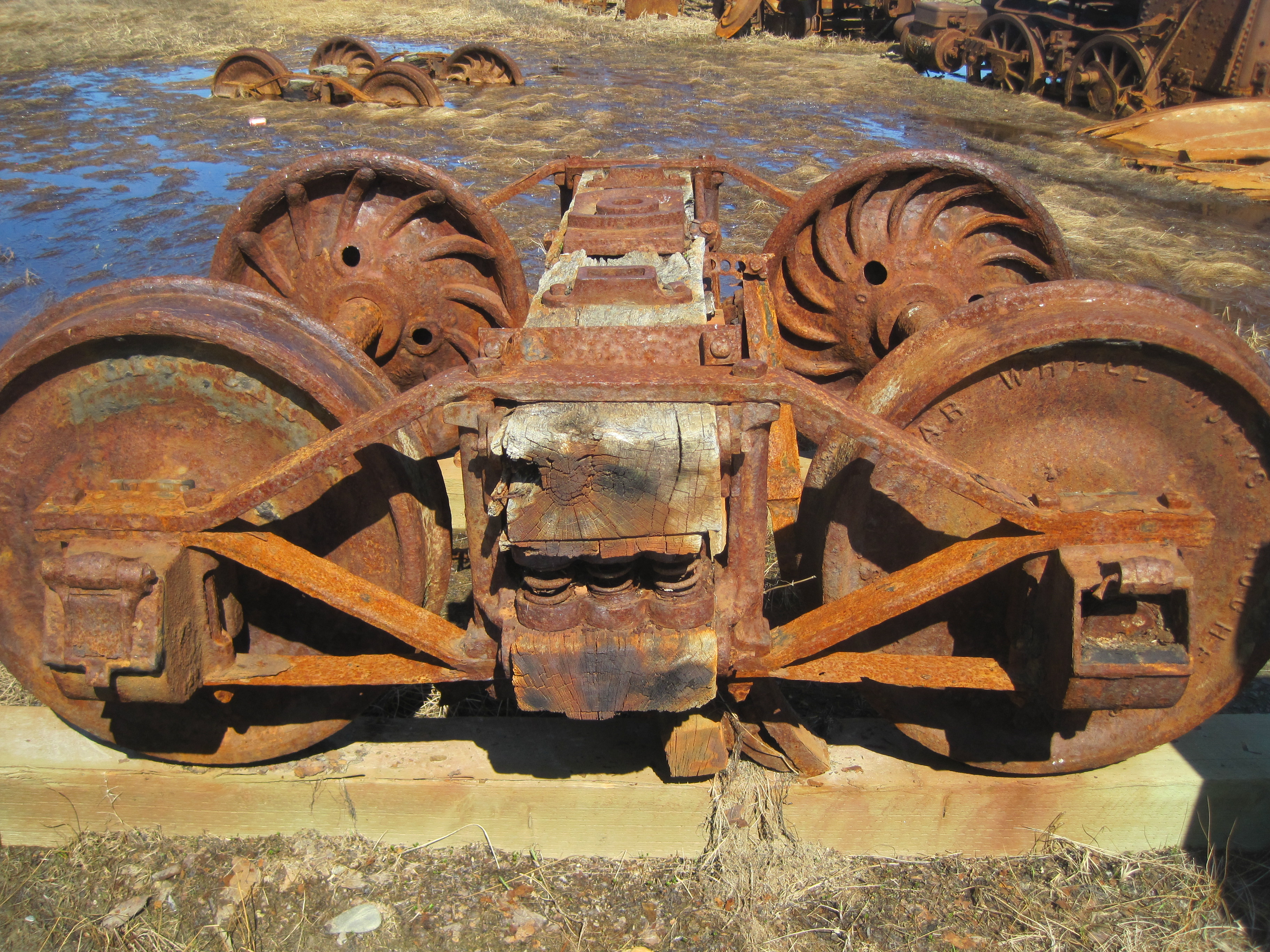
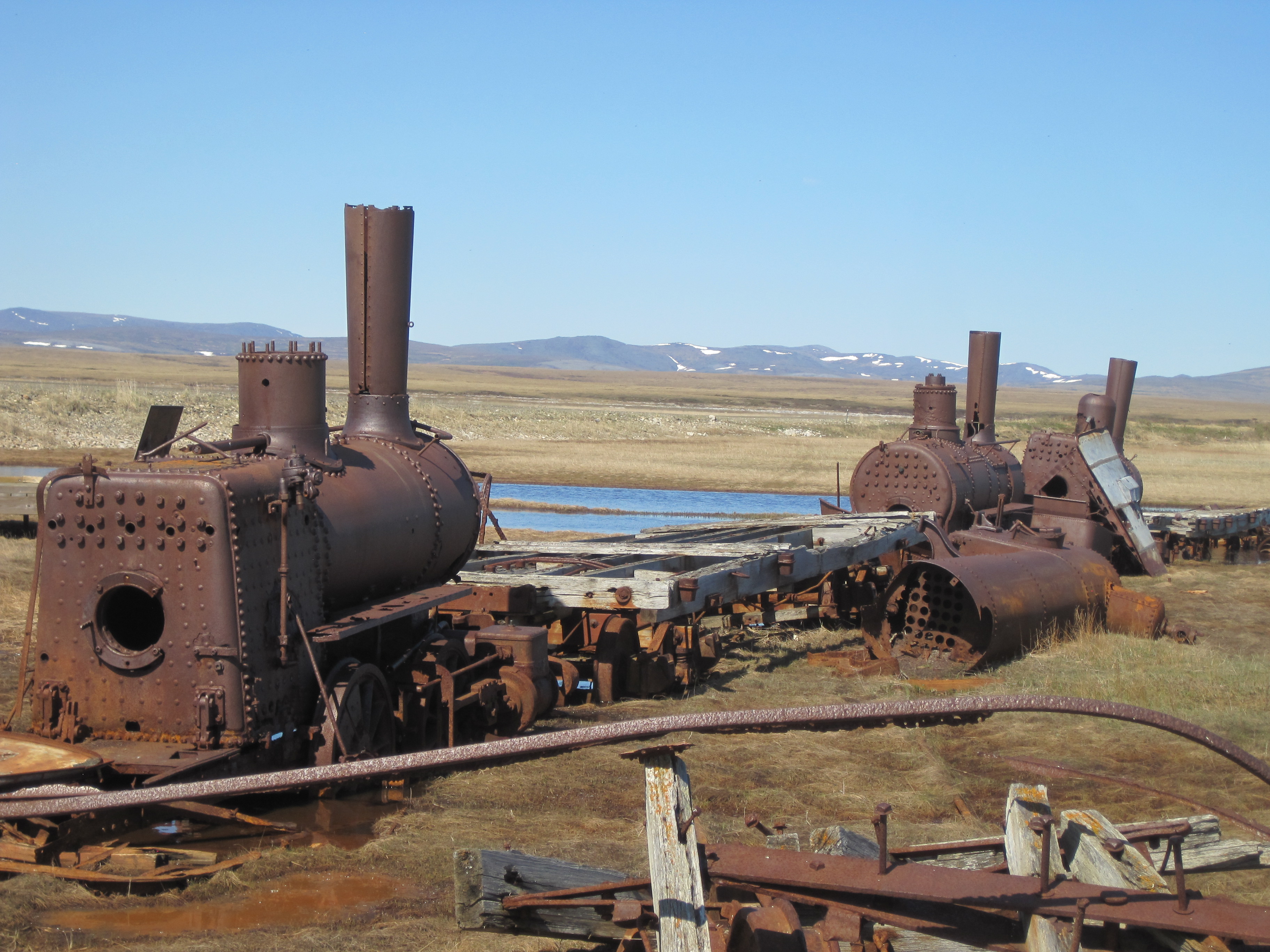
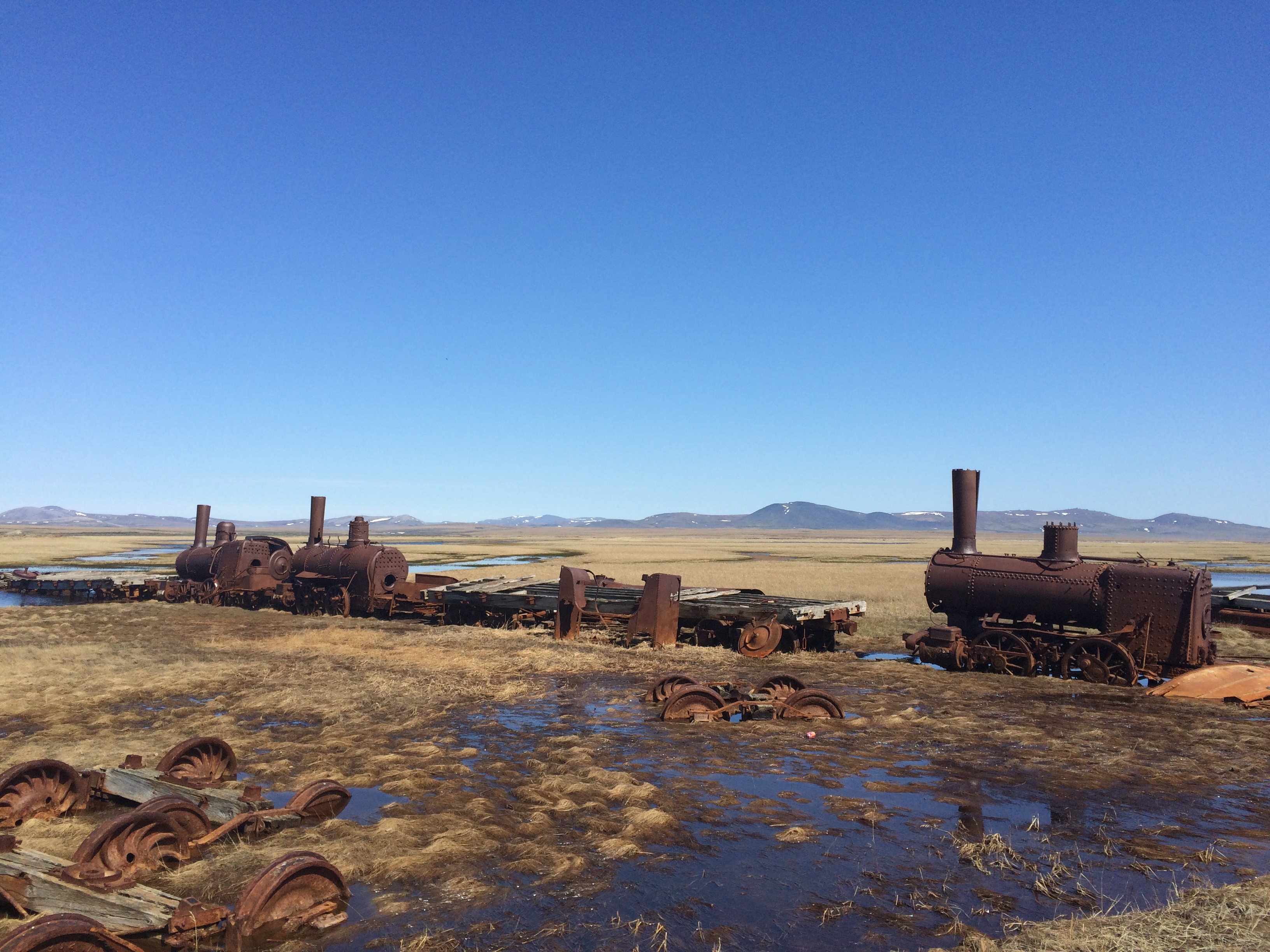
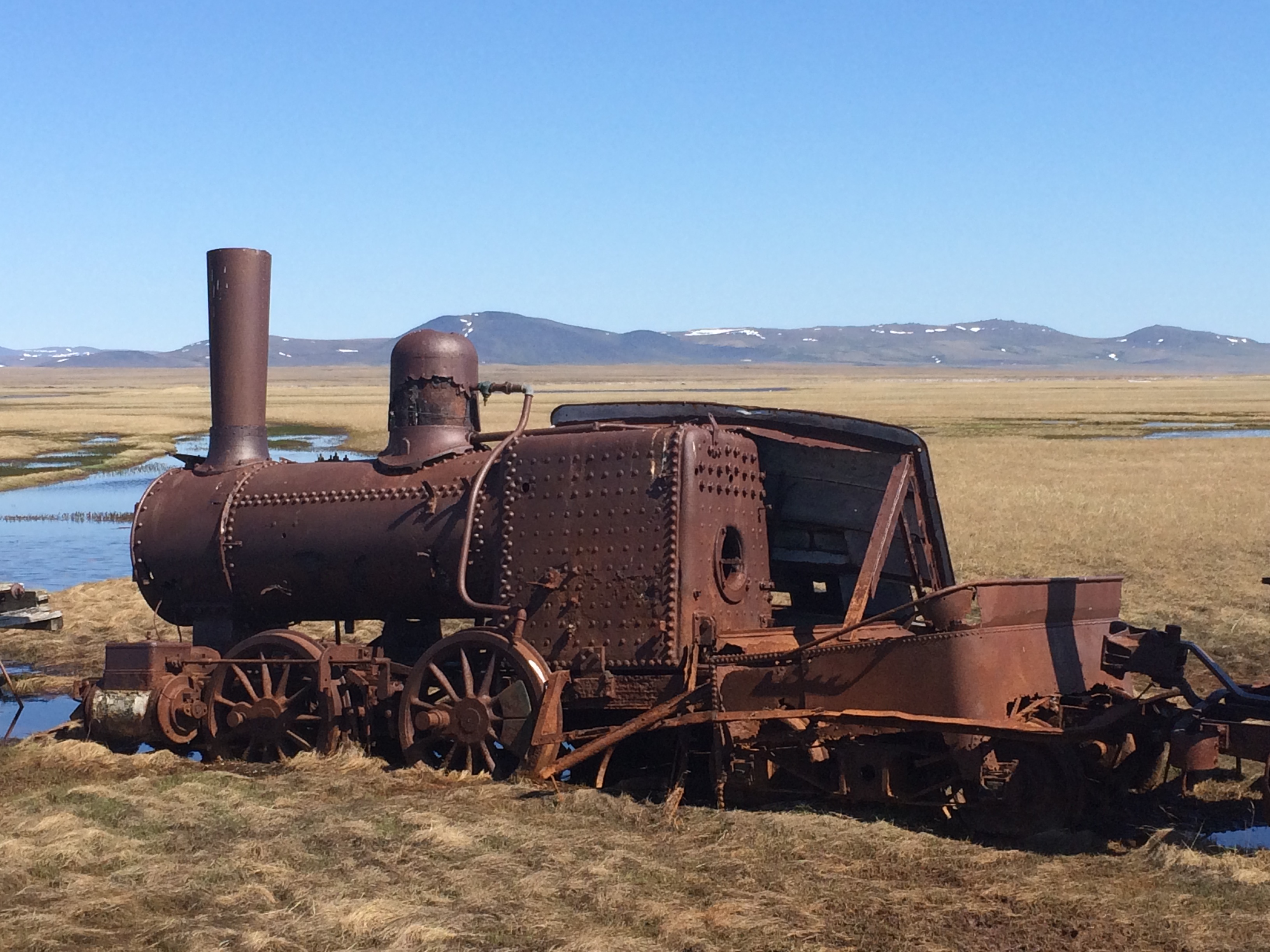
Along the ride there are some treasures of the gold rush including the trains that the locals call the “Last Train to Nowhere”.

IMG_5333

after driving south out of Nome about 20 miles, you turn inland, and as you turn these cliffs are seen to the south. I bet they are beautiful

IMG_4079

at the highest point on the drive.

IMG_5309

looking towards the SE, look at all those mountains

IMG_5307

historic buildings from the Gold Rush days, I wonder how long they will remain standing?

During the height of the gold rush, thousands and thousands of stampeders headed N in search of gold. An investor from Chicago thought that a railroad would be the best way to transport the gold from all the mining camps that were popping up all over the interior.

Eventually 2 locomotives that were retired from New York arrived via badge in 1881 and another n 1886.   By the early 1900’s there were 35 miles of rails for these trains. Sadly by 1906 the boom was over and the “Last Train(s) to Nowhere” have sat in the same location since.IMG_5298 IMG_5297 IMG_5296 IMG_5295IMG_4071 IMG_4069

1 Comment »

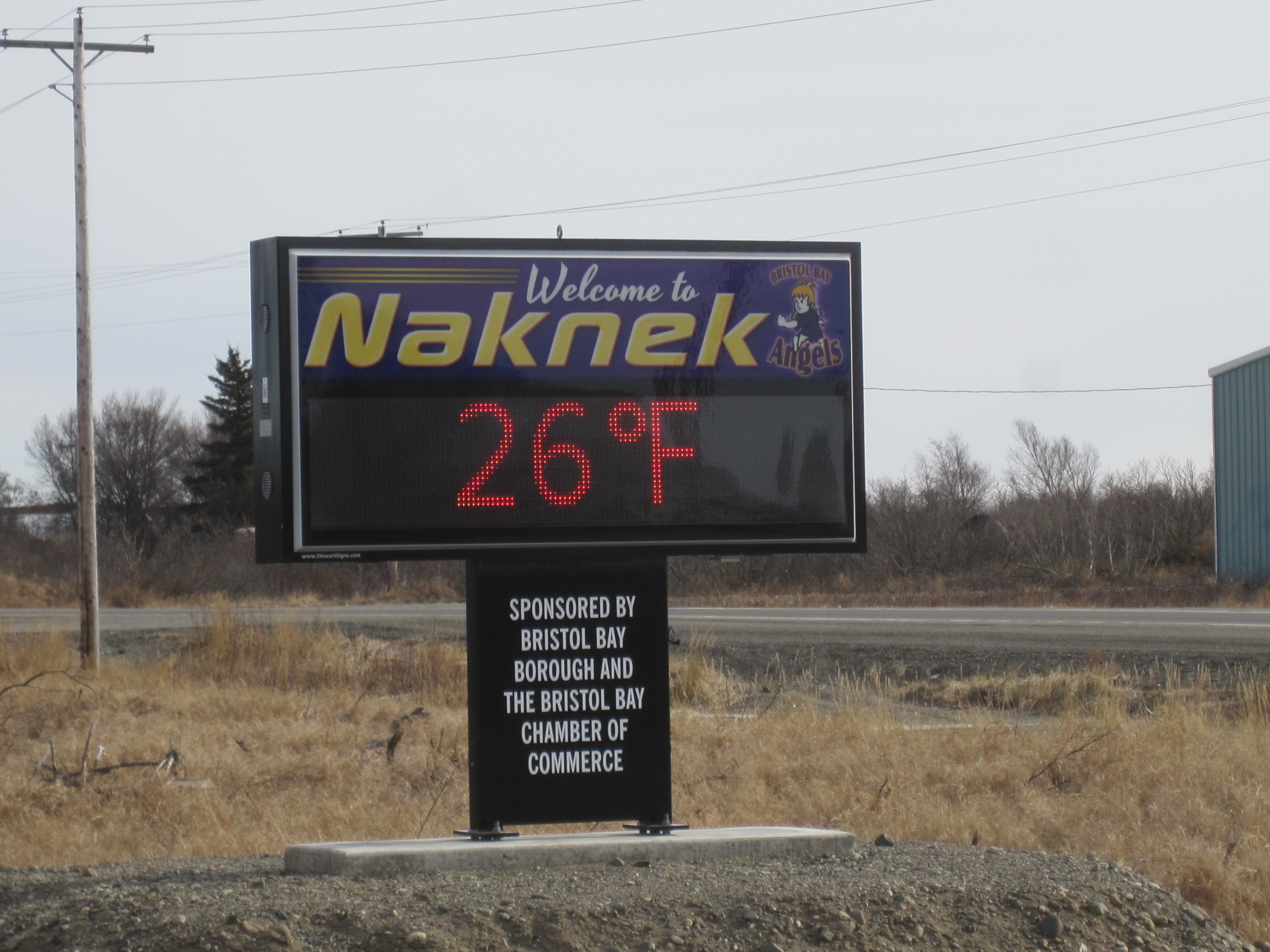
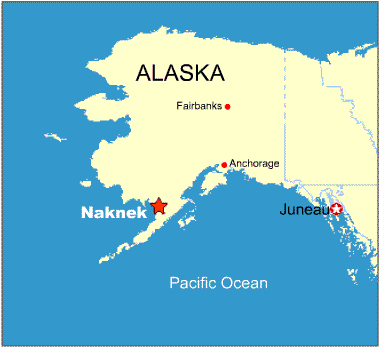
Where in the world is Naknek, Alaska???

IMG_4867

landing about 8:30 a.m. and watching the beautiful sunrise!

IMG_4877

it was a dry cold (BUT very windy by the water)

IMG_4878

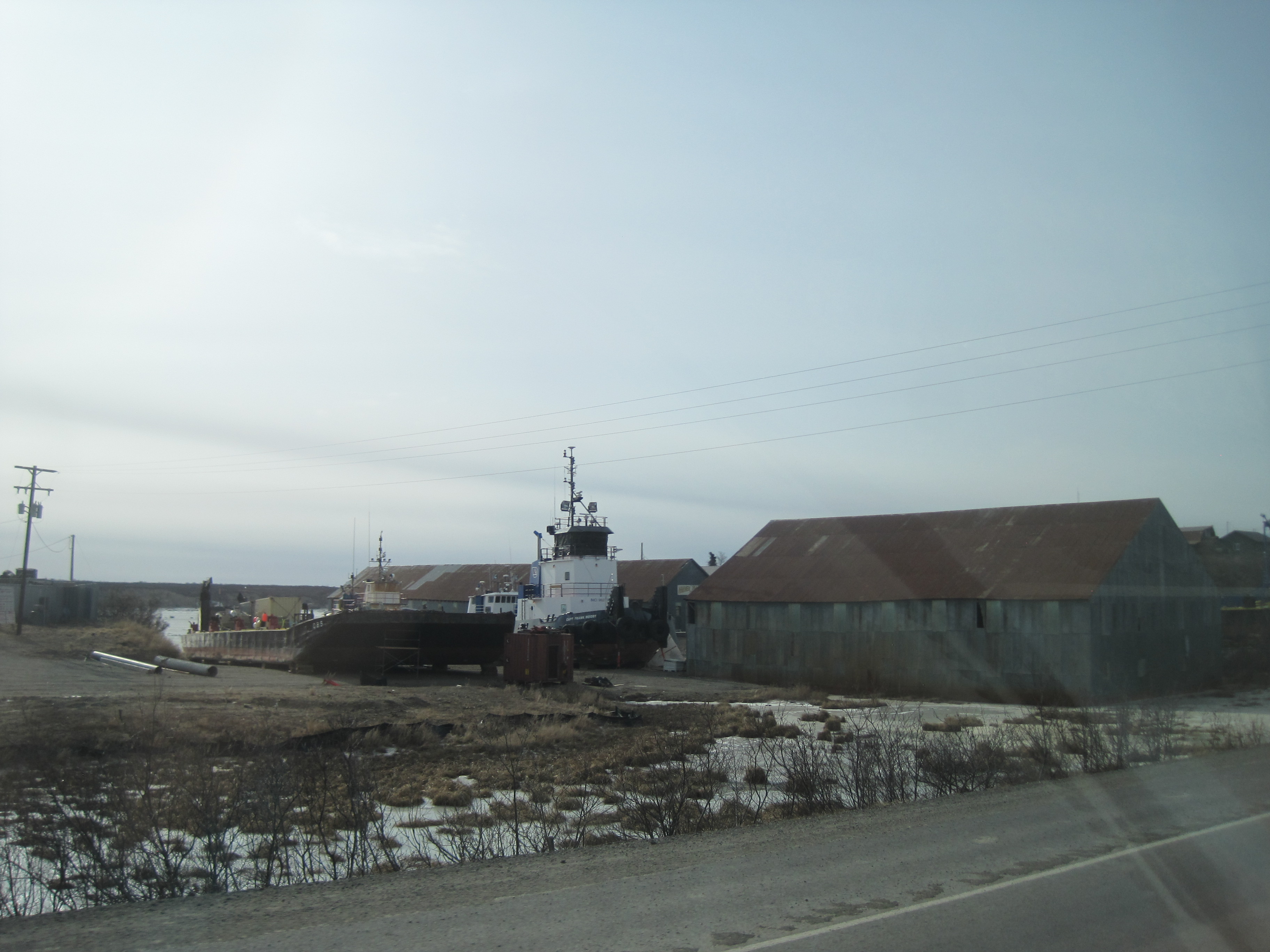
boats are everywhere in this area

IMG_4879

town a tad deserted this time of year, but come July I bet it is packed.

IMG_4880

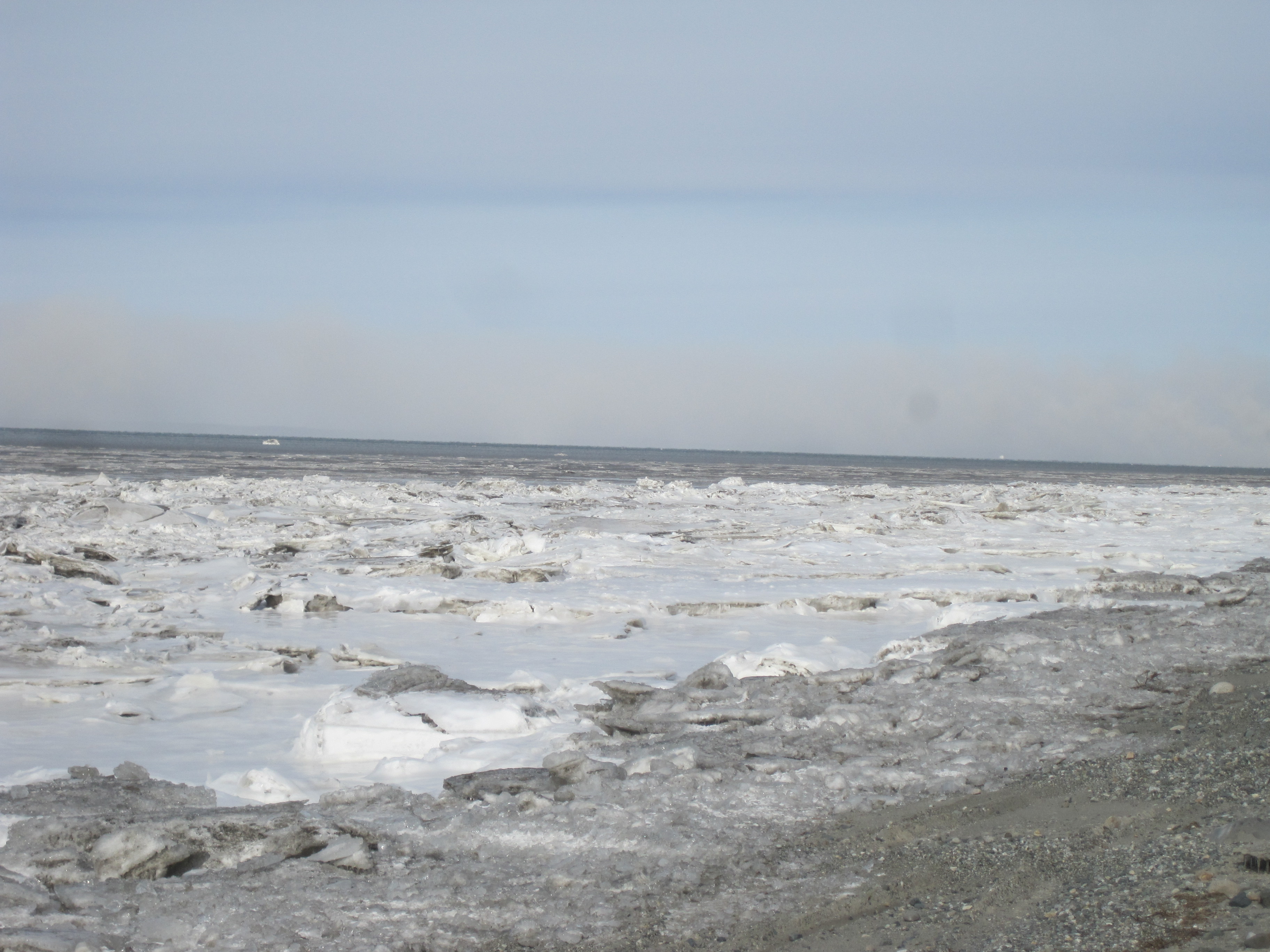
looking out over Bristol Bay

IMG_4886

since it is salt water it does not freeze totally but since there is some fresh water feeding into the bay the fresh water will freeze and break up as the tide goes in and out.

IMG_4892

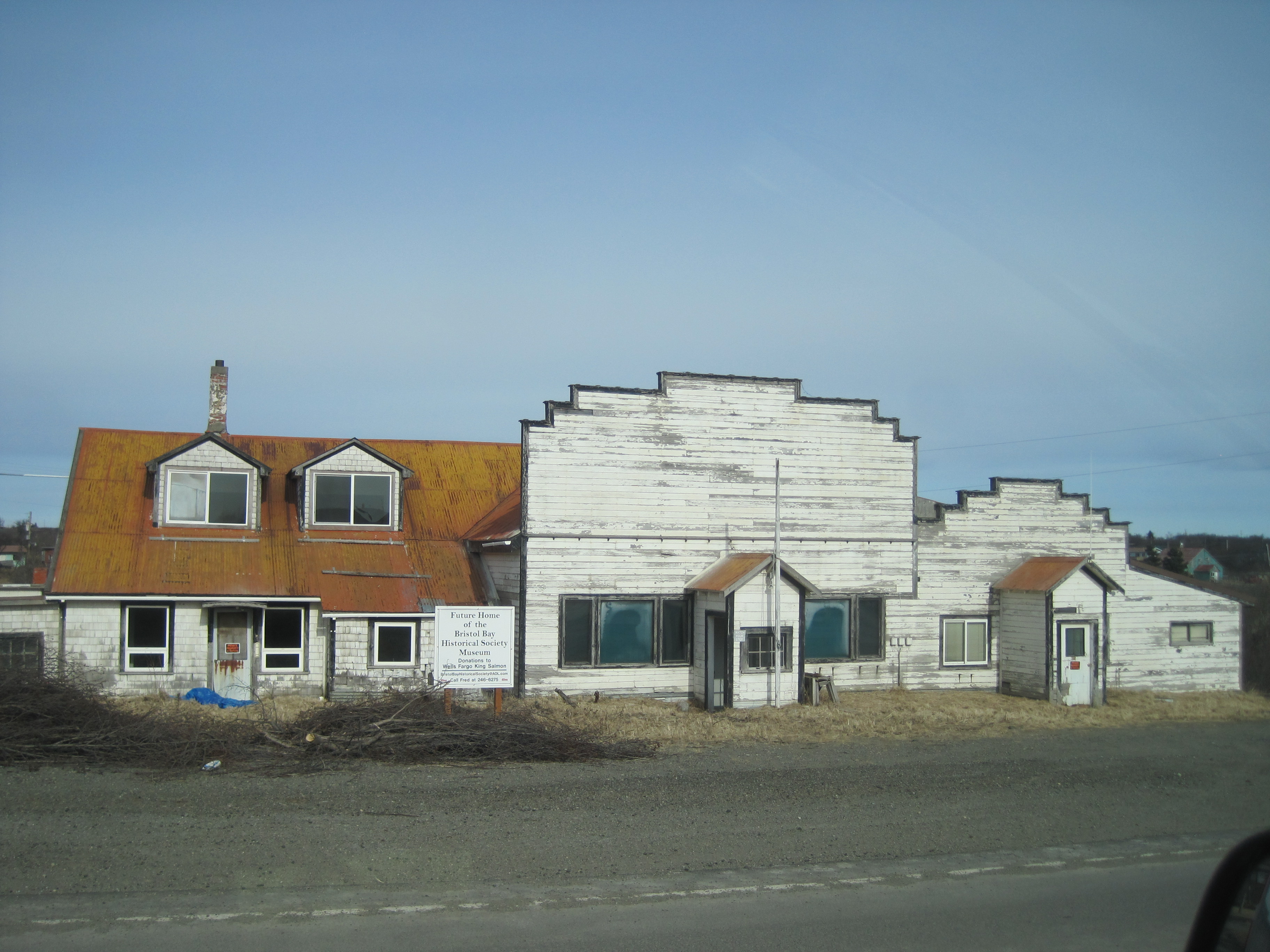
I heard they are putting a new museum in this building!

IMG_4896

in front of the famous Naknek River

IMG_4890 IMG_4891 IMG_4893 IMG_4894 IMG_4898

March 13 and 14

Naknek, Alaska is the home to Bristol Bay School district, I was thrilled to be able to go there and work with the board this spring.  There are about 550 people that live in Naknek however they are also attached by road to King Salmon.  I flew into the King Salmon airport.

This land is the land of the Yupik and Athabaskan Alaska Natives. The community was known as Naugeik until the Russians came to the area in the 1800’s and changed the spelling to Naknek.
The area is known worldwide for it’s fishing! There was a cannery opened there in 1890 and there were 12 canneries at the height of business.   There are currently 6 processing plants left in Naknek.

Noteworthy tidbit: About 70% of the world’s sockeye is caught here, mostly in July!

The Naknek River runs into the Kvichak Bay arm.  I got to go and stand on the edge of the bay, the cold whistling winds whipped through the air making my eyes water a bit!

For me and my job I found another fascinating fact; the superintendent and 4 out of 5 board members were born/ raised in the area. Can’t say that too often any more!naknek_map

Leave a comment »

Nenana’s Ice Classic! Guess when the Ice will Break and the Tripod will give way!

Monday, March 9, 2015

IMG_3309

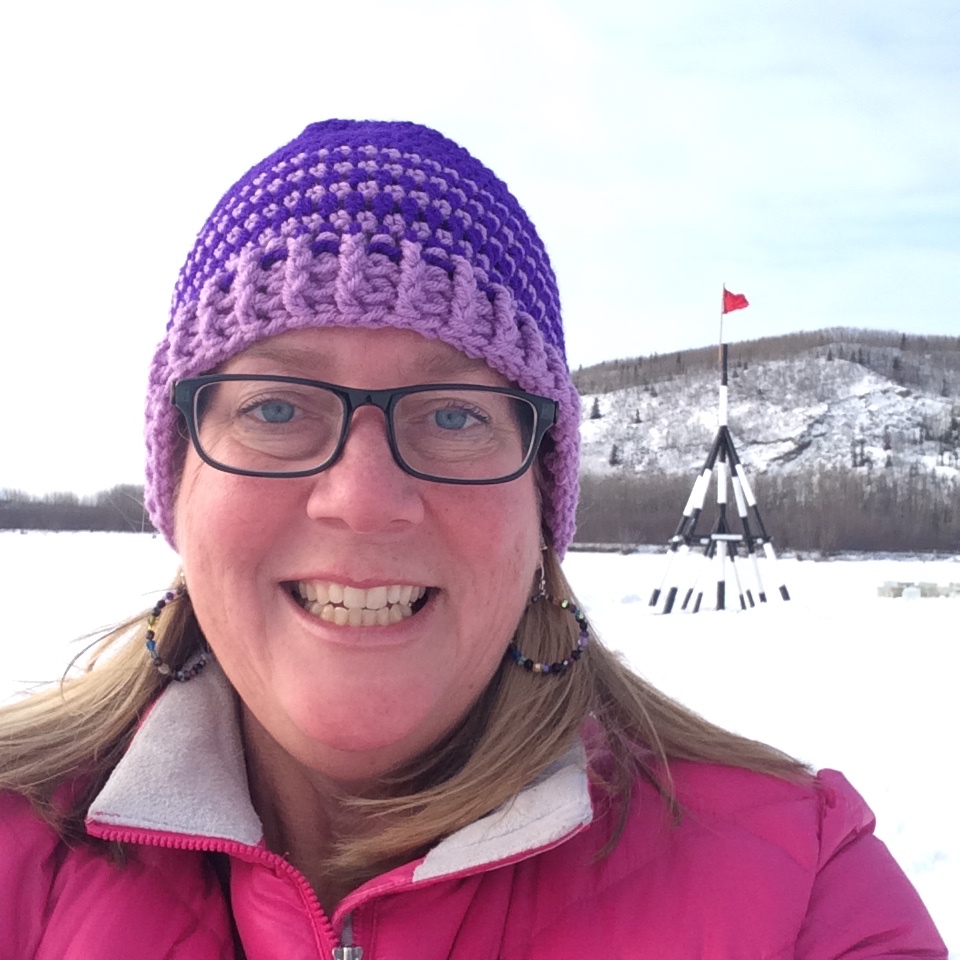
It was freezing when I took this photo, but I HAD to show that I was really there!


Each year Alaskan’s have an opportunity to bet on Mother Nature; the day the ice will break up on the Tanana River near Nenana, Alaska.

In 1906 six guys bet on the day the ice would break up and by 1916 workers from the railroad held a contest, selling tickets to Nenana residents only, but as word spread everyone wanted to get in on the fun. The early day winners won a round of drinks at the bar and the first payout was just over $800. Of late the purse has been well over $350,000.

The bets are placed on when the ‘tripod’ will fall into the water as the ice breaks. It is a tripod of 4 beams and is placed on the ice of the river in early March each year. To accurately get the time of the ice break up, there is a clock attached to the tripod.


I have never bought a ticket, but was ready to this year as I was there on “Tripod Weekend!” Guesses cost $2.50 each. I ended up walking away without a ticket, but I do bet it will break early due to the warm winter we have had in Alaska!


IMG_4854

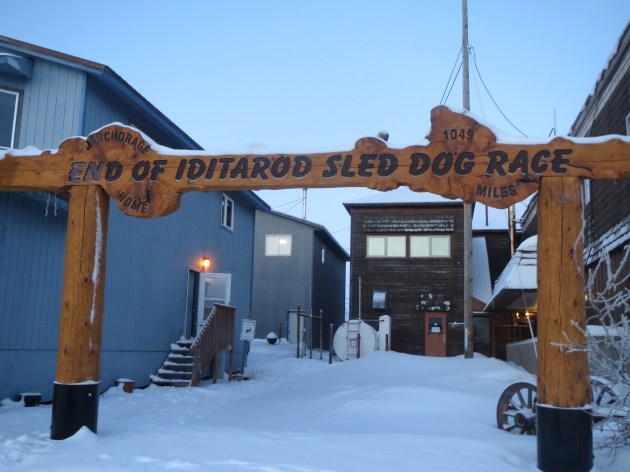
Because the Iditarod was rerouted for the race this year, I watched about 6 teams run by the tripod

IMG_4857

the tripod in all its glory was erected the day before I arrived!

IMG_4860

This is a year round reminder of the the Ice Classic.


1 Comment »