timistravels

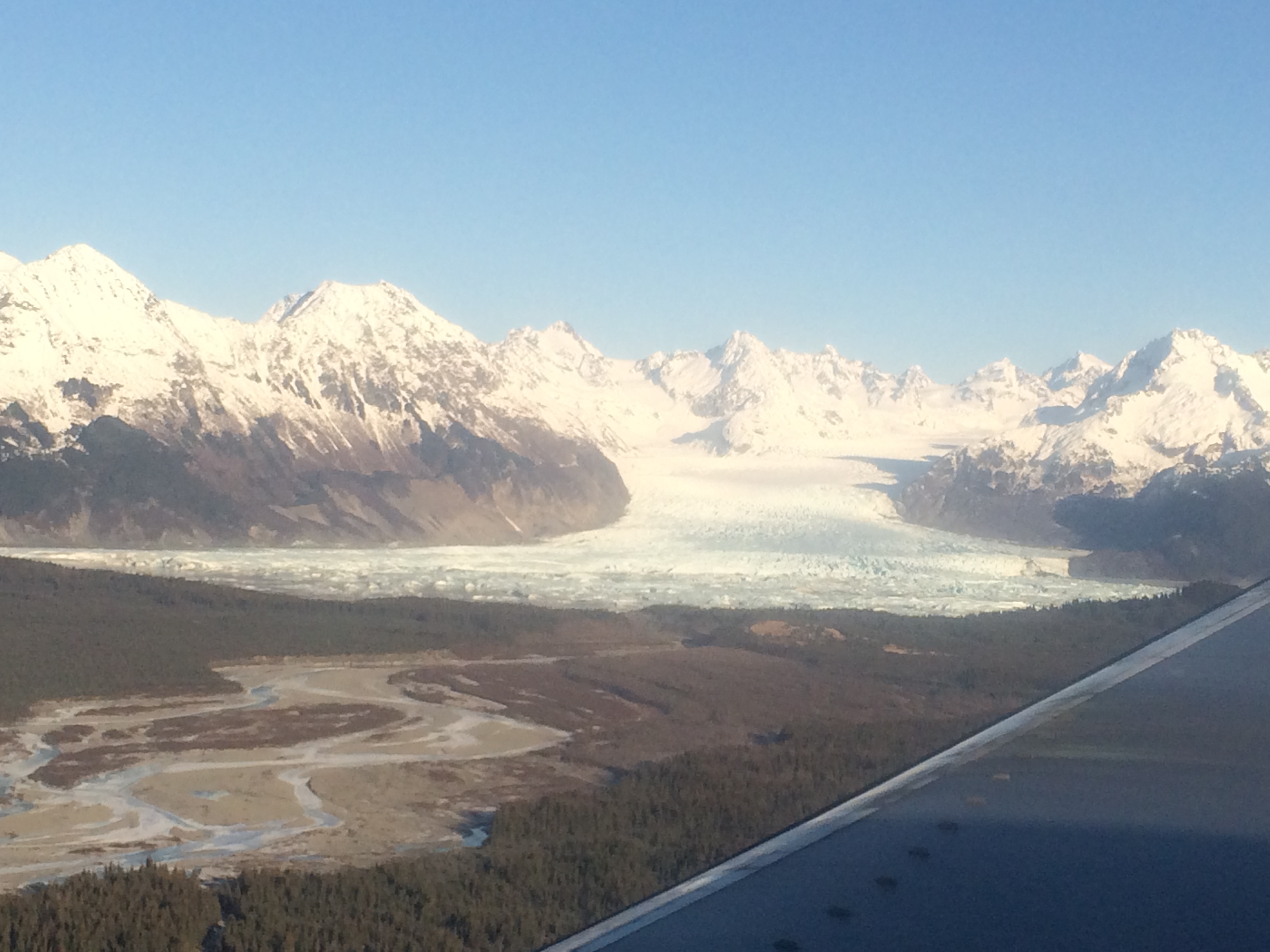
My job allows me to visit a lot of Alaska on a yearly basis. I wanted to capture the trips in one location!

Viñales, Cuba; My favorite part of the country

Dec. 22-25

Viñales, Cuba

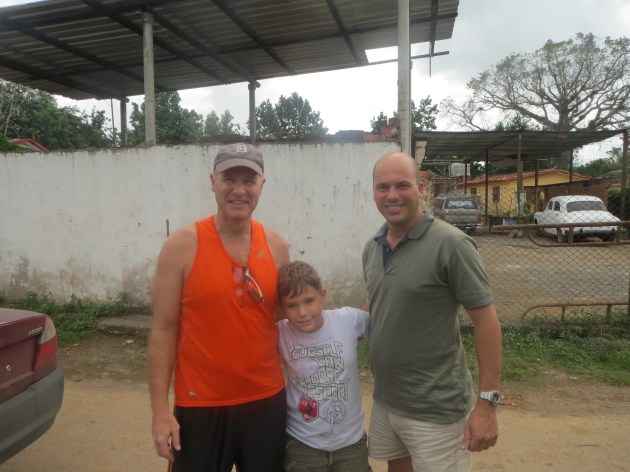
For 35 CUC’s /pp we took a personal taxi to Viñales. Our driver Pepe brought his 8 year old son John Anthony with him as they were on vacation from school. It was a delightful ride and John Anthony sang “happy birthday” to me J. His English was about as good as my Spanish so instead of ‘birthday’ he said ‘baby’ which made me laugh even more!

The ride was 70% along a highway but what stood out most were all the people along the highway either 1) waiting for a bus or such or 2) holding out money hoping that a taxi might stop and pick them up. Something you’d never see in the states! There were also a number of horse drawn buggies along the roadway as well… as we learned to say “only in Cuba”.

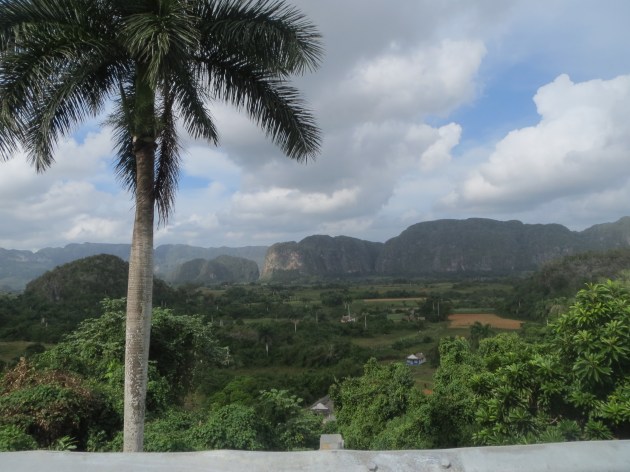
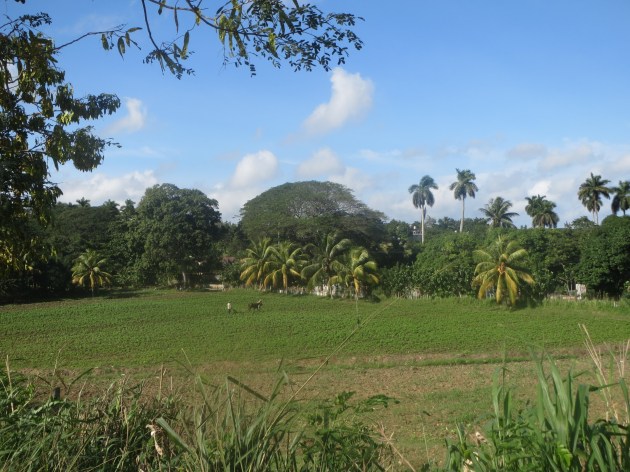
The last 15 miles were off the highway and took us towards the community of Viñales. The landscape was rolling and green. All of the Cuban we met constantly said that Viñales is “so much natural” and we could not agree more. It was beautiful. Pepe took us right to our Casa where we met Isabel and Mario our hosts and the nicest people!

IMG_2395

most of the homes here are ‘casa particulars’ allowing guests to stay in one of their rooms.  The town is lined with brightly painted homes.

IMG_2393

horse or cattle drawn carts were everywhere on their streets
IMG_2391

farm country

IMG_2444

valleys of the area

IMG_2392

Pepe and his son got us here safely

Got settled in and ventured out to explore the town. Stopped for a drink and eventually dinner before going back and sitting on the porch chatting and drinking with the other family that were in our Casa, Aleksandra and her parents visiting from Warsaw, Poland. She spoke fluent Spanish and English so it helped us all communicate.

The following morning we awoke and decided to take the taxi tour ($10/pp IF you get 4 people for your car.). That is when we met Claudia and Robert from the Netherlands, a brother and sister that we ended up really enjoying spending time with. The taxi took us to 2 caves, (Indian Cave) one we got a short board ride down a river before leaving, we went to a big famous mural as well as some fancy hotel with a pool. Lastly we went to a traditional tobacco farm where we watched a guy make cigars and he gave one to Harry.   We met the ‘kids’ for dinner at the best restaurant I found in Cuba, El Olive, a Mediterranean place that had pretty darn good food!

IMG_2456

Mural de la Prehistoria; The snail, dinosaurs, sea monsters and humans  represent the theory of evolution.  You don’t need to pay the entry fee to see it as you can stop along the road and take a photo like this.  It is a bit of a disappointment as I thought it was prehistoric artwork!  Wrong. 

The final day we headed into the town center and stumbled upon their weekly market.  It was funny that the road was closed off for the farmers to come to town and sell their goods! There were vegetables, pigs and one of our favorite things, a beer truck.

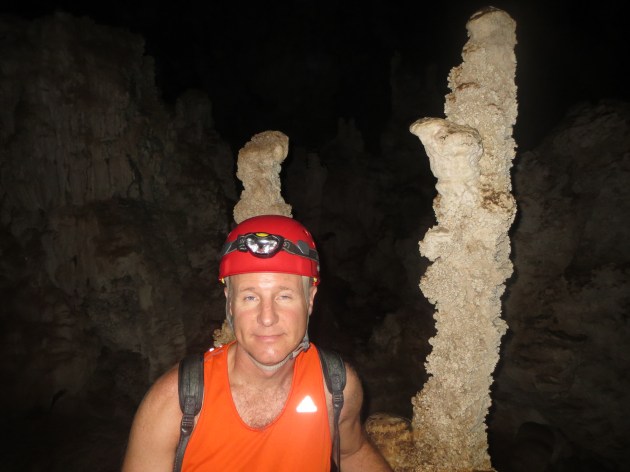
IMG_2597We then secured our taxi to Trinidad then hired a taxi to take us to Cuevas de Santo Tomas (caves). We paid $13pp for taxi ride and $10pp for entry (You MUST have your passport to enter). Helmet and headlamp were given to each of us and we headed up a steep 200 foot climb up rocky, unstable terrain to the entry of the caves.
IMG_2574

Once in the caves we needed to use the headlamps because it was dark yet sadly my battery was old and the light was really weak. The route we walked in the cave was really wet and slippery, no handrails or the like to guide us or to hang onto.   It was simply not enjoyable and a bit of a disappointment. Not to mention it was HOT inside the cave, something I was not expecting. With the size of the cave we were disappointed by what we actually ‘saw’ on the tour.

In the end our time in Viñales, Cuba was delightful. We enjoyed the natural surroundings and the people. Isabel and Mario were wonderful hosts and even with the language barriers we managed to communicate. We were sad leaving them when our cab arrived on Christmas morning.


3 Comments »

Various Sights in Havana Cuba, Hotel National, Hamel’s Alley etc.

Havana, Cuba

Dec. 18-22 and Dec. 28-29, 2015

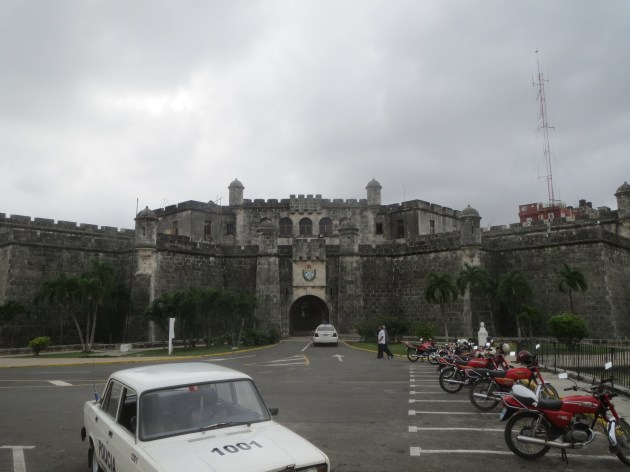
We shared the streets of this historic town with 1000’s of visitors and the 2 million permanent residents.  Havana was discovered 400 years ago by the Spanish and because of this has influence from the Spanish culture. The Spaniards built forts and a wall around the city, many of which still stand.

IMG_2220

La Cabana, Fort Saint Charles

IMG_2100

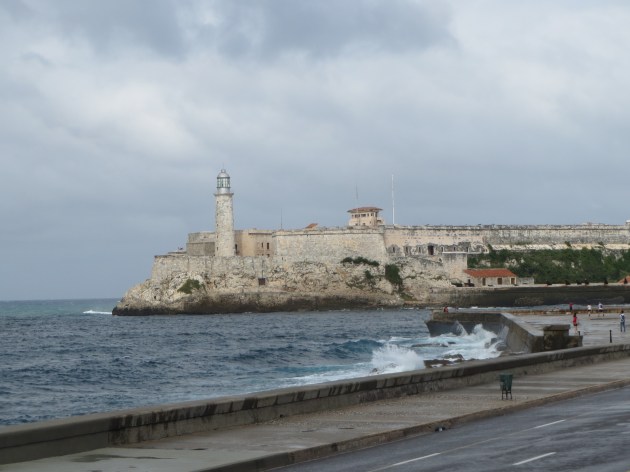
El Morro Castle


IMG_2132

IMG_2232

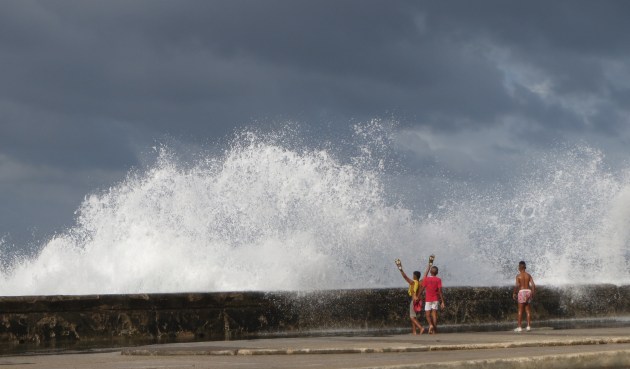
The first few days there were HUGE waves coming over the wall.  Kids LOVED it.!


The first thing we did was visit the nearby Hotel Nacional as it was close to our Casa Particular.   We actually bumped into people we’d met the day before at the airport and flew with to Cuba. Was nice to see familiar faces.   They were from Chicago and mentioned that they had just run into Rahm Emanuel, the mayor of Chicago inside the hotel lobby.

The hotel opened its doors in 1930 as it was designed by and for American tourists only and at first no Cubans were allowed to stay there.   The Hotel is a dominant site in Havana and the tours we took passed by it several times. The view from the garden was a 180 degree view of the harbor.

We walked inside and immediately were hit by the history of the area in the lobby. There are still decorations in the Cuban style of 1930s, chandeliers, mahogany furniture and brass fixtures. There are photos of famous visitors around the hallways including Fred Astaire, Frank Sinatra, Gary Cooper and even Walt Disney.

Walking in the grounds of the Hotel Nacional de Cuba we noted more history immediately. Walking into the ground level ‘museum’ we read of the Cuban Missile Crisis, (or as they say in  Havana the October Crisis).  We continued to the underground tunnels that make a circle underneath the hotels lawn and gardens. The tunnels once housed periscopes used by Cuban intelligence in espionage efforts but never nuclear arms.   It was very interesting to walk on these grounds.

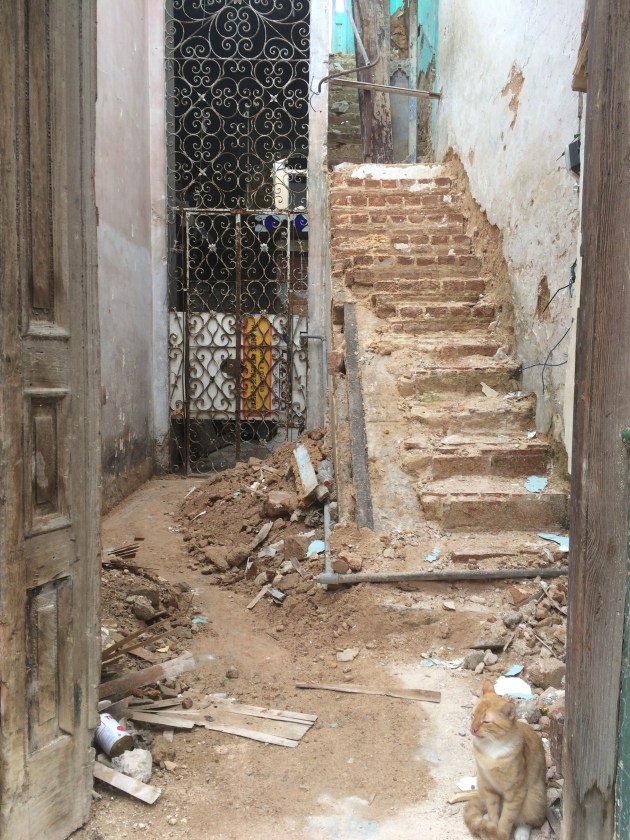
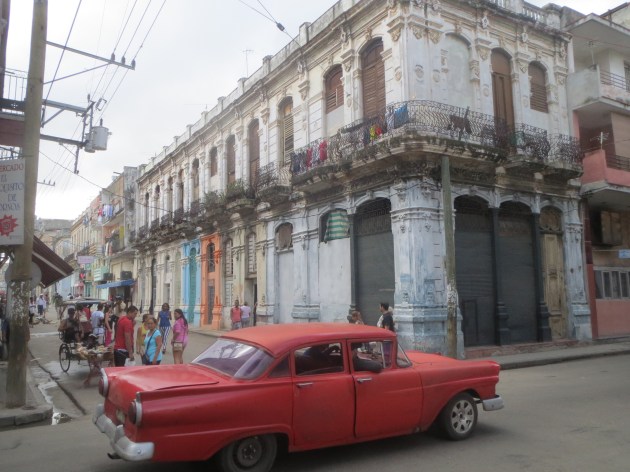
As we continued our explorations, we knew that there were 3 parts to Havana, Old Havana, Centro and Vedado.  Our casa was between the University and Habana Libre, and walked to Old Havana each day (about 1.5 miles). We would walk through Centro as we headed towards Old Havana. There is so much history in the buildings and such, however many are crumbling and falling in on themselves, so it is sad to see that the Cubans have not been able to save more of the historic architecture of the area.  IMG_7034IMG_2171IMG_2099IMG_2300

One of our favorite stops was Hamel’s Alley an alley painted by the neighborhood to tell the story of Santera, the Afro-Cuban religion.   Each time we walked through it there we musicians playing music. This was the one spot in town that I felt as if everyone expected money.

We spent our days roaming the Old Havana area full of history and the governmental center of Cuba. We walked through narrow streets and old buildings with balconies full of laundry, plants and people. Many of the home owners offer a room in their home for guests called ‘casa particulars’. They ranged from 20 to 40 CUC’s a night. (when we visited a CUC is 1/1 with the $ but there is a 10% exchange rate).

Some areas of city we enjoyed more than others, I enjoyed the San Fancisco area a lot. The Cubans are trying to renovate many of their plaza’s including Plaza Vieja, Plaza de la Catedral, Plaza de San Francisco and Plaza de Armas as well as the walking only streets: Obispo and Mercaderes both of which we walked on a LOT.

IMG_2138

trying to do some renovations!

We also took the ‘on /off’ open topped bus ride around the town. It was well worth the 5 CUC/pp cost. It took us outside of the downtown center and out to the suburbs of Havana. We were on it for a full 2 hours and then asked for a transfer and eventually rode it back towards our casa.

IMG_7049

Top of the bus!

The bus takes you through the city centre and out to the Miramar (consulate) district, to the Plaza de la Revolucion and back through other suburbs, along the Malecon and into town. We sat on the opened top level of the bus, yes we had broken seats, occasional rain showers and the exhaust fumes were as strong as you might expect, but we enjoyed the ride. JUST know that this is NOT an ‘informative’ tour. There is someone talking occasionally but the sound does not travel to the top level and it is not ‘full of information.’IMG_2193

And we did the ‘touristy’ thing of renting a 1950’s car for a one hour tour, that basically followed the same route as the on off bus, for double the cost!  It was worth it though if for nothing else, the experience.

All in all Havana will leave us with memories but happy and frustrating.  The quote in the Lonely Planet guidebook truly defined our trip:
” Timeworn but magnificent, dilapidated but dignified, fun yet maddeningly frustrating ~ Cuba is a country of indefinable magic.”

We are thrilled we saw it BEFORE it is full of KFC’s/ McDonalds/ and other typical American businesses that are sure to be there in the next few years.


2 Comments »

Cordova Alaska, 2012 Record snow, 2015 NO snow!

Feb. 3/4, 2015

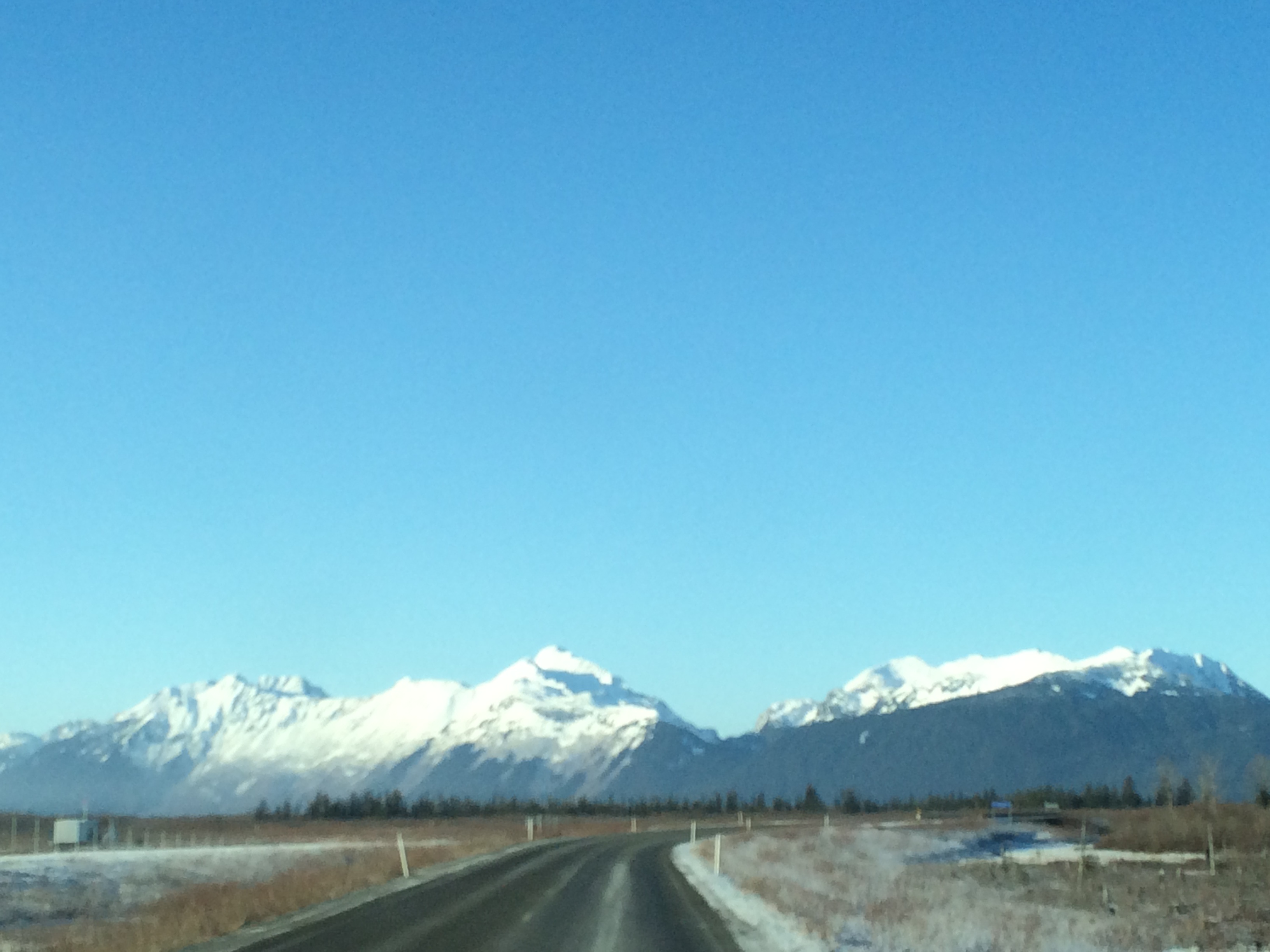
I have visited Cordova a lot over the last few years, but it is stunning how different a few years can make.  3 years ago they were buried in snow and today there is NONE… the white stuff on the ground is frost. Here is the post from 2012 and some photos from today!  They made national news in 2012 because of the snow and the National Guard was called in to help shovel the snow off of roofs.

https://timistravels.wordpress.com/2012/01/16/cordova-alaska-during-snowpocyolypse-2012/

IMG_2960 IMG_2958

Much like my last blog I am here help the board hire a superintendent, this is the information they put in their ad.  Enjoy

“Cordova is located at the southeastern end of Prince William Sound in the Gulf of Alaska. The community was built on Orca Inlet, at the base of Eyak Mountain. It lies 52 air miles southeast of Valdez and 150 miles southeast of Anchorage.  Winter temperatures are mild with average snowfall of 80 inches though this winter they have made national news with their record snowfall! Cordova has become home to those that enjoy the natural beauty of the area and for those that love the out-of-doors. Fishing, hiking, hunting, and most outdoor activities make Cordova’s unique surroundings desirable for many. Summer temperatures average from 50 to 63. Cordova is accessed by plane or boat. It is linked directly to the North Pacific Ocean shipping lanes through the Gulf of Alaska. It receives year-round barge services and State Ferry service.


The area has historically been home to the Alutiiq, with the addition of migrating Athabascan and Tlingit natives. Orca Inlet was originally named “Puerto Cordova” by Don Salvador Fidalgo in 1790. The town of Cordova was named in 1906 and the City was formed in 1909. Cordova became the railroad terminus and ocean shipping port for copper ore from the Kennecott Mine up the Copper River.


Cordova supports a large fishing fleet for Prince William Sound and several fish processing plants. Over 300 of the 2100 year-round residents hold commercial fishing permits, and nearly half of all households have someone working in commercial harvesting or processing. In the summers, Cordova doubles in population as fishermen and others flock to town for involvement with the fishing industry. Copper River red salmon, pink salmon, herring, halibut, bottom fish and other fisheries are harvested. The largest employers are Trident Processors, Cordova School District, Cordova Hospital, the City, and the Department of Transportation. The U.S. Forest Service and the U.S. Coast Guard maintain personnel in Cordova.”

Leave a comment »

Unalakleet, Alaska~ Jan. 15-16, 2015 and NO SNOW!

Jan. 15/16

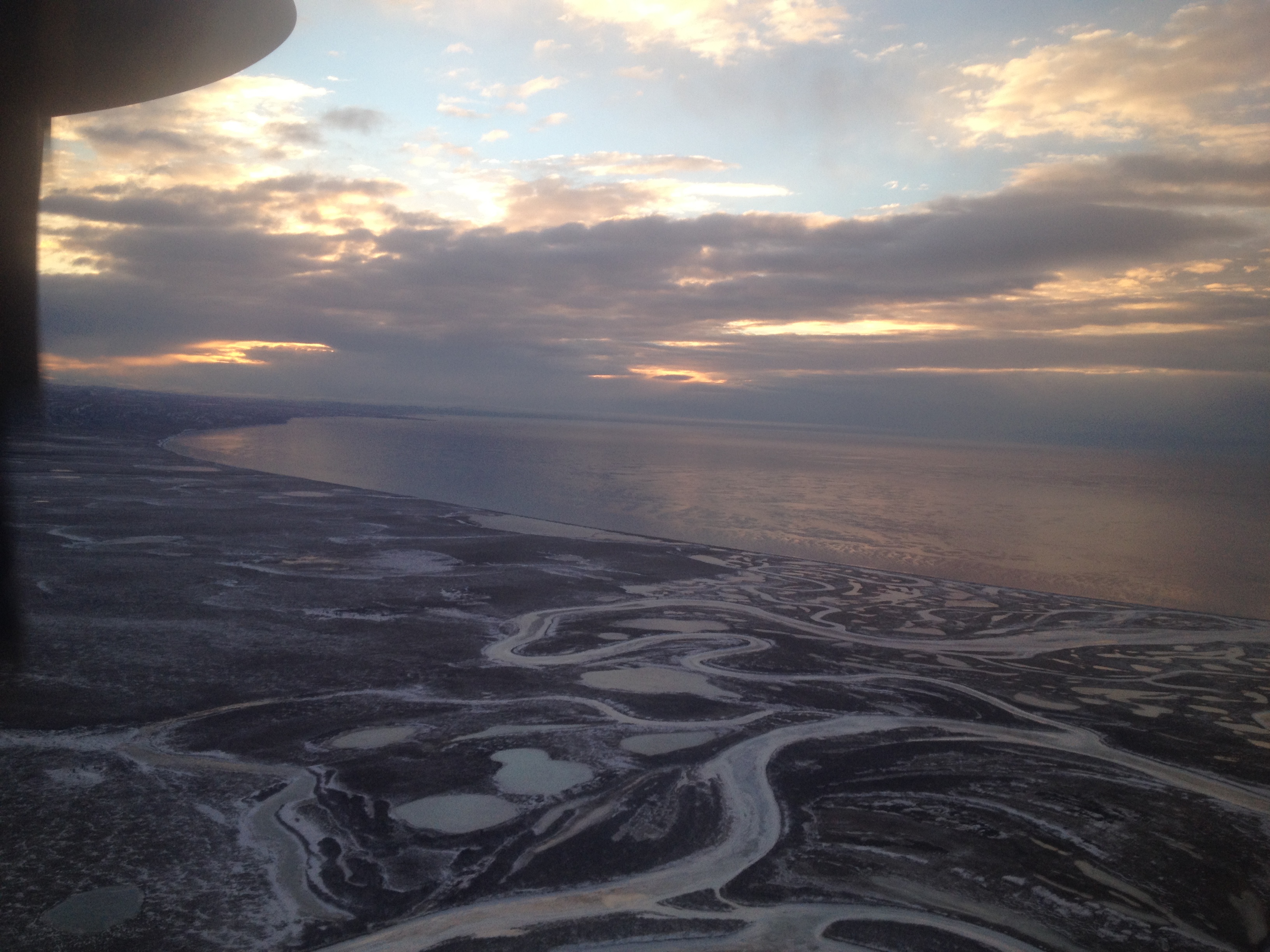
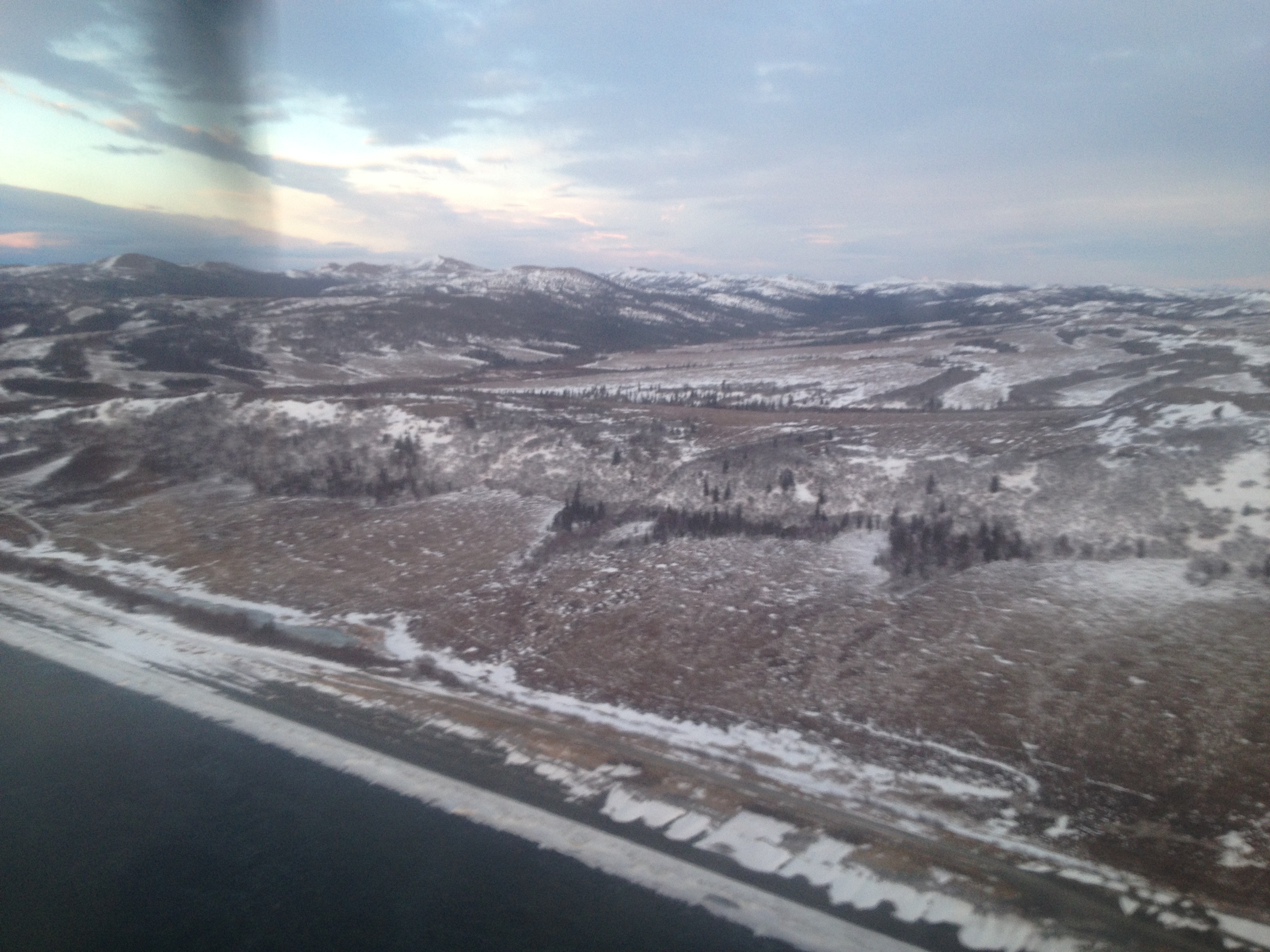
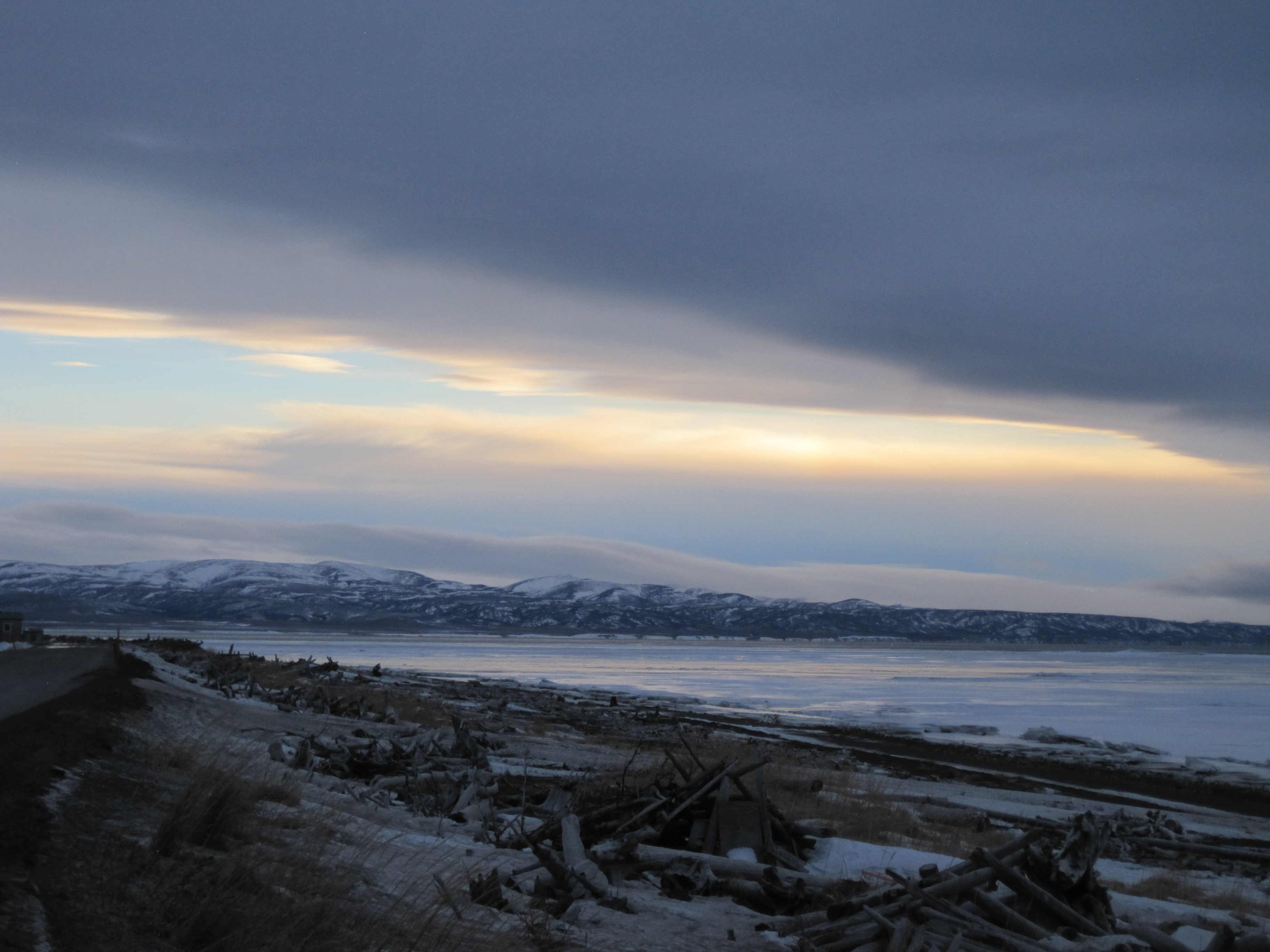
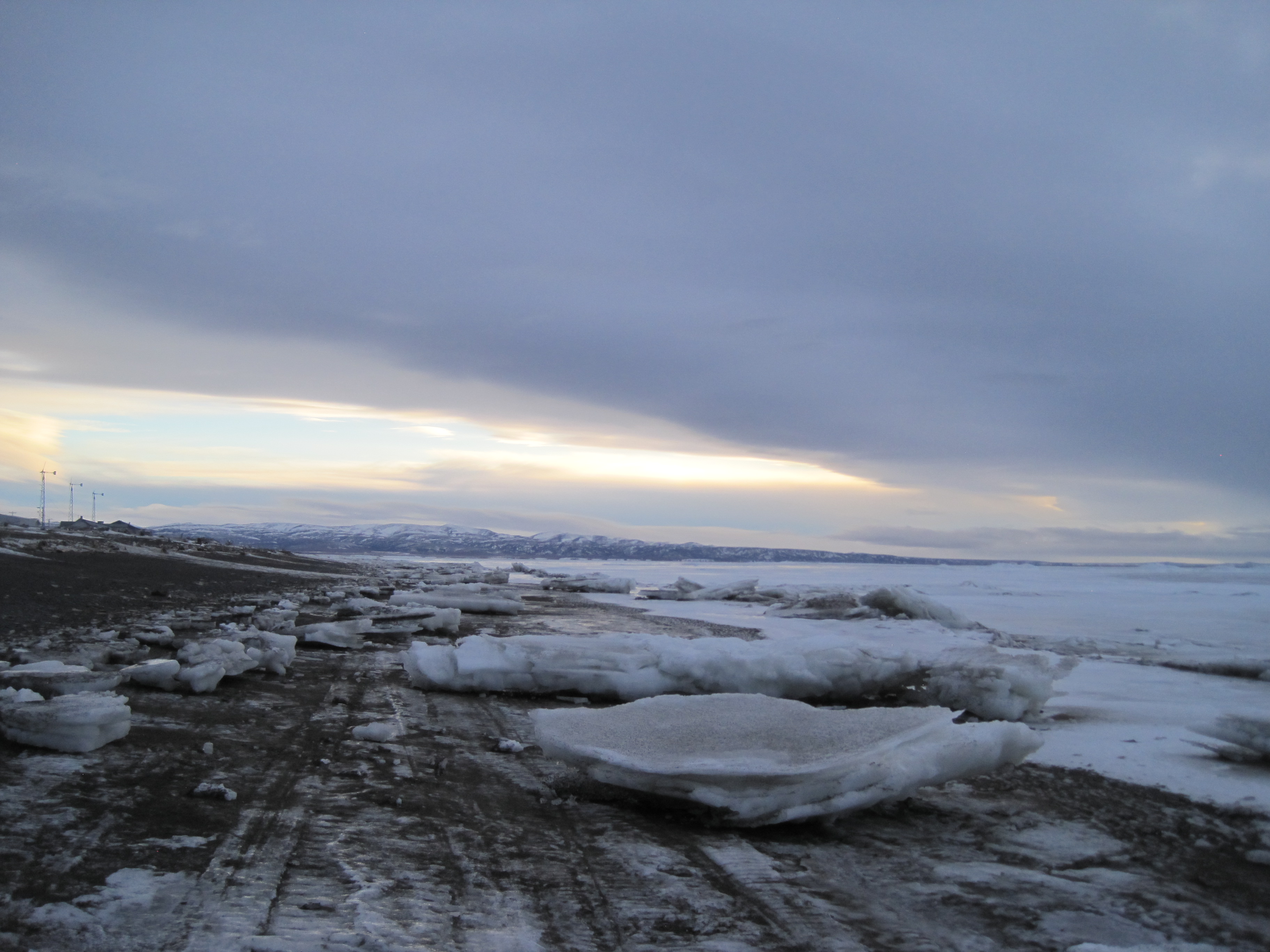
Last year I was unable to fly into Unalakleet because they had so much snow, this year, NONE.  Unalakleet is on the NW coast of the Bering Sea, just under the community of Nome.  It was a beautiful day as I flew in and the sun was setting over the community.  It was in the high 20’s low 30’s while I was there and I enjoyed a quick walk to the beach and the ability to beach comb a bit!    The Elders are worried about the continued warming of the region.  There were locals that had just gone out on a seal hunt, not normal for this time of year.

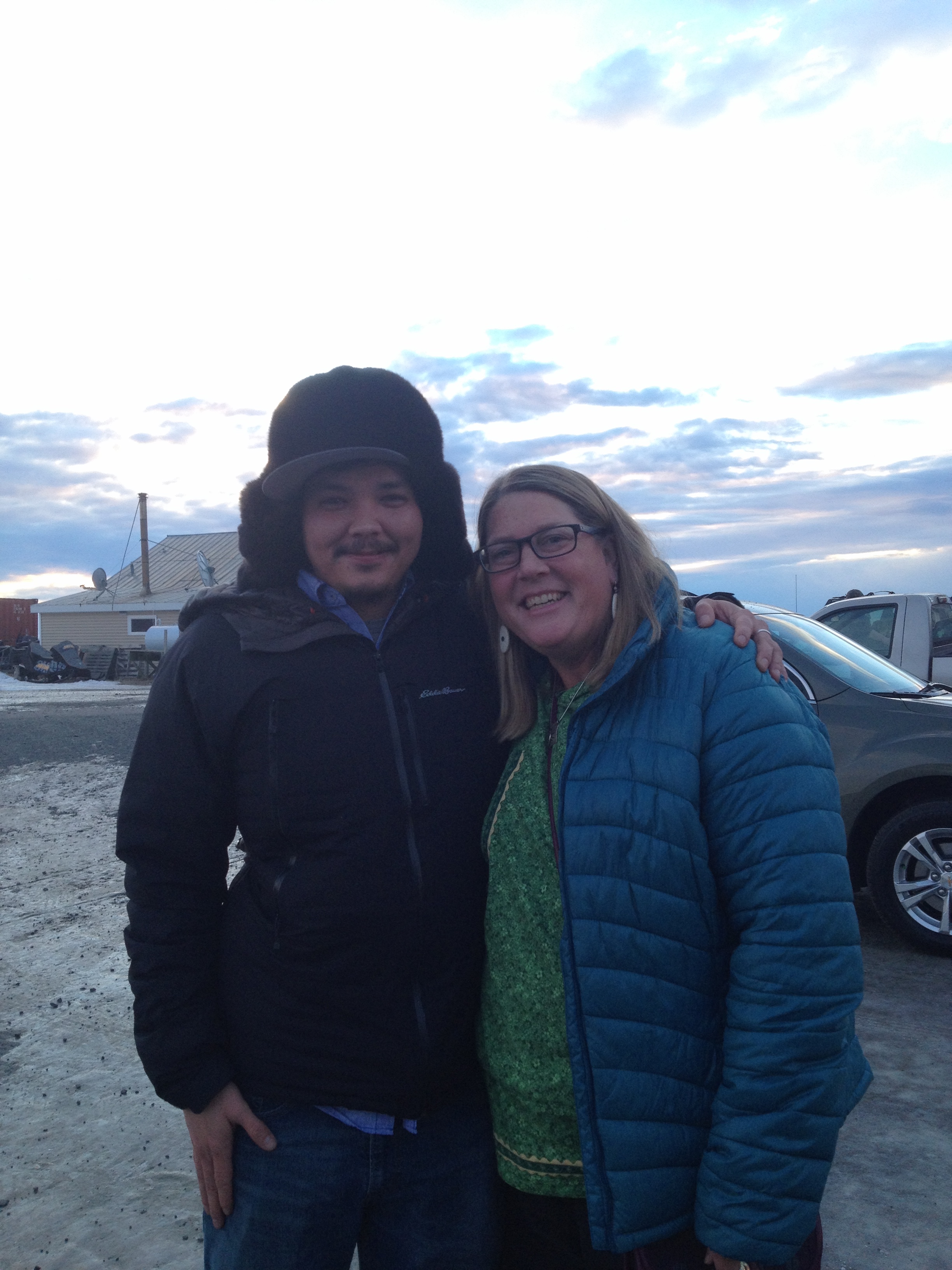
If you want to know more about Unalakleet, check out my blogs from Jan. 2012 and 2013!  Here are some pics!  The photo of me is with Donald Masters, Donald originally from Unalakleet is a former student of mine (at UAS).  He’d gone south for college but has moved back home~ and I got to see him, what a treat!

IMG_3551

landing in Unalakleet! Sun starting to set about 4:30!

IMG_3558

swinging around to the airport

IMG_4439

Sunset on the day I left, this is a beautiful community.

IMG_4441

drift wood on the beach, locals use it for fire wood

IMG_4442

another view looking down the beach

IMG_3561

long lost friends… last saw each other over 15 years ago! JOY

1 Comment »

Little Diomede, you CAN see Russia from this Alaska town!

Jan. 15-16, 2015

opik crabbing_10201918398510867_6874398955344371888_n Opik and her scoop to help grab the crabs with! (photo courtsey of Opik Ahkinga)
little with big distance224_10202162234806622_8244573605986660090_n this photo was taken on Little Diomede but you can see how close Big Diomede is. Big is part of Russia! (photo courtesy of Opik Ahkinga)
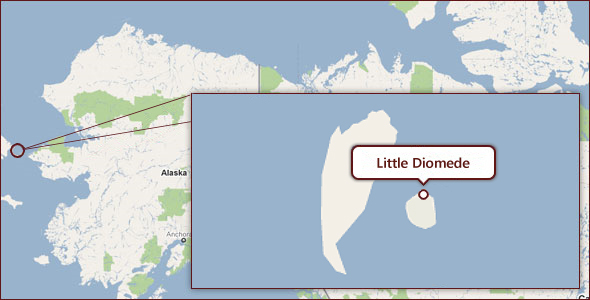
little-diomede Little Diomede sits in the Bering Sea just off the coast of AK near Nome.
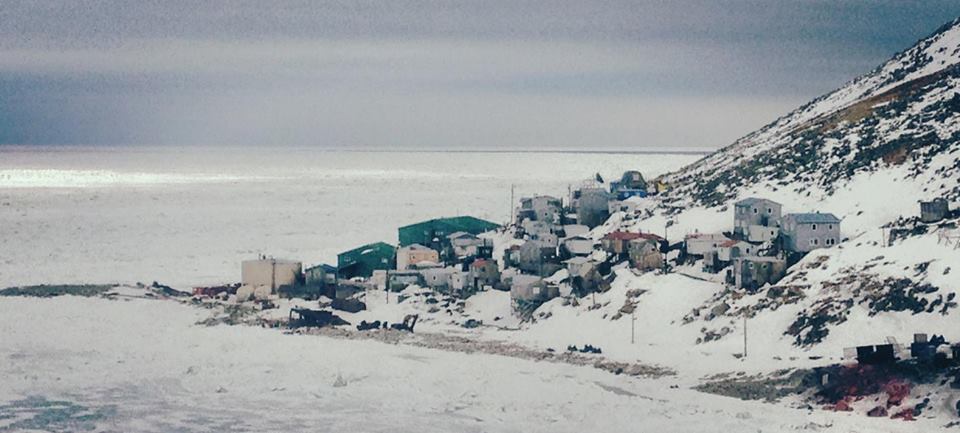
the town201832445082085_6403267181590825491_n This is Little Diomede (photo by Opik Ahkinga)
helicopter land big background201063887468625_996764091_n There is one helicopter flight in/out of Little Diomede each week, there are no planes as there is no place for a runway. This is a remote community.(photo by Opik Ahkinga)

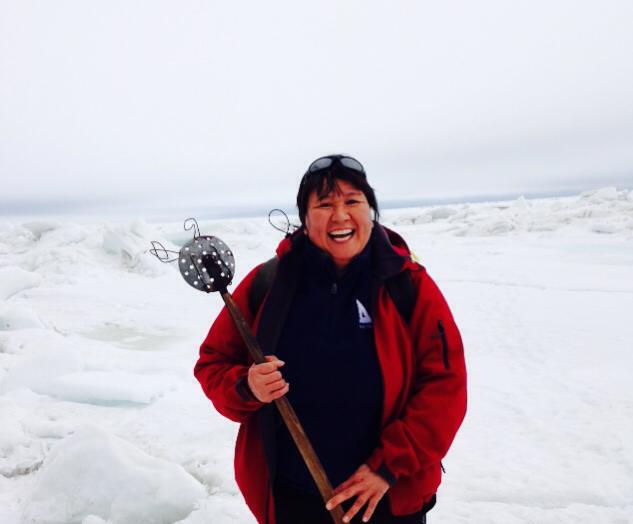
Okay, NO I did not get to go to Little Diomede, but there was a woman at my training ( which was held at the regional office in Unalakleet https://timistravels.wordpress.com/2012/01/24/flying-wild-alaska-unalakleet-adventure-jan-16-18-2012/?preview=true&preview_id=34&preview_nonce=6a772c9321 ) that grew up there.  I felt like a reporter asking her questions about her home town!  Her name is Opik Ahkinga, Opik is her Eskimo name and the name she has always gone by.  Opik translates to “snow owl”!

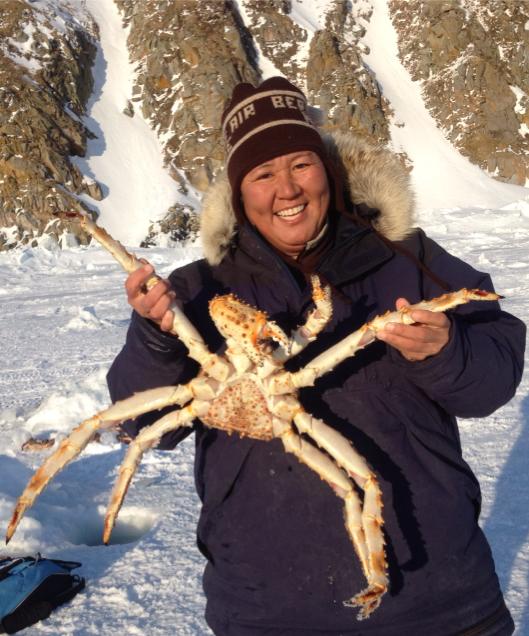
opik and crab0179335674_269752413_n Happy Crabber Opik Ahkinga! So blessed to meet this woman! (photo courtesy of Opik Ahkinga)
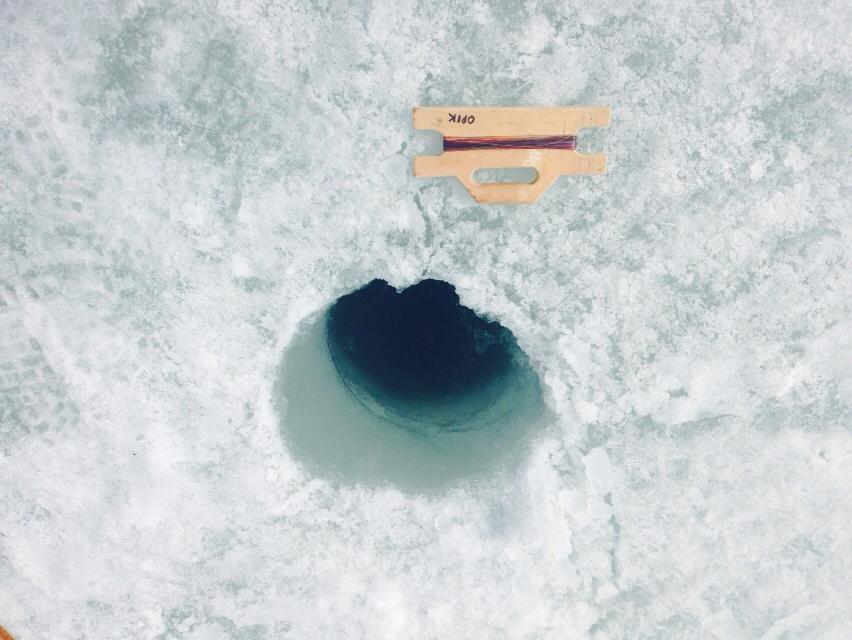
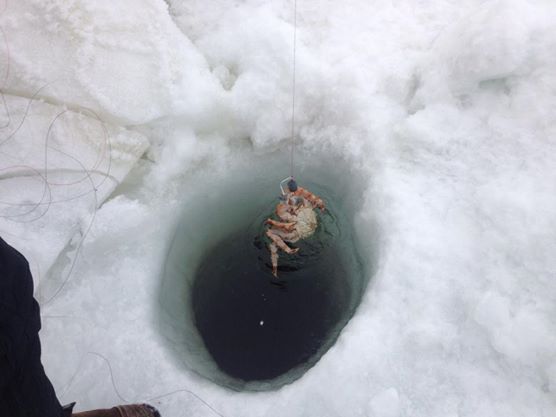
hole1918323989004_4710106530687486734_n the hole made in the ice to get crab! (photo by Opik Ahkinga)

Opik spends much of her time helping her village become aware of humans environmental impact.  She shared many stories of growing up there and how for years there were ‘disposable’ items such as water bottles.  They had never seen such a thing, but once ‘western ways’ moved to Little Diomede there was a need to educate on how to remove unwanted material.

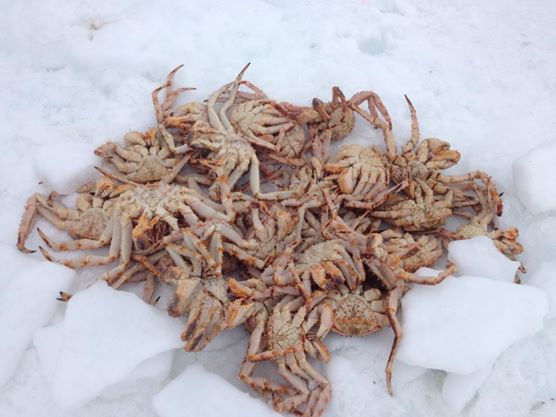
pile oh crab4702046678404_1030976808_n a days catch! (photo by Opik Ahkinga)
crab hole253503_413916261_n one by one! (photo by Opik Ahkinga)

Another interesting discussion I had with Opik was her talking about subsistence living.   She is a crabber.  She crabs by digging a hole through the ice of the Bering Sea and dropping a line with bait.  She prefers smelt, but any fish is acceptable.  She drops down about 60-80 feet but can go down as deep as 100 feet.  Opik talked about 2 main kinds of crab that she gets; Blue King which is very tasty, Blue King is fished where there is a rocky bottom.  The other is Red King, not as good as good as Blue but still yummy.  Red King is caught in more mucky bottom areas.  In the winter these crab come ‘in’ to spawn where in the fall and summer they are further off shore.
And though Blue King is so sweet and tasty, the Spiny King is the best!  Historically  these Spiny Kings were found Japan and eastern Russia.  The first time they were found in AK were off of Little Diomede in 2003.  However, by 2010 they were really showing up in the waters around St. Lawrence Island and other communities in the Bering Sea.

Opik shared other interesting stories with me including the fact that she remembers going with her Grandpa to the international date line to trade with the Russians. Big Diomede is part of Russia, though it is just miles from Little Diomede and can been seen across the Bering Sea.  The international date line separated them and they are less than 2 miles apart.  Big Diomede is actually only a Russian military base.  Both Big and Little Diomded ‘communities’ are on the west side of the islands.  She shared that her father used to go to school on Big Diomede.  Another story was that  in 1952 her uncle (mom’s brother) went out to hunt and  was found and taken by the Russians.  He was kept captive for 50 days before he was released and sent home.

There is so much history in this part of our great state and so few know anything about it.  I feel blessed to have met Opik and look forward to more conversations in the years ahead.

side note that made me smile; the mascot for Little Diomede; the “dateliners”  isn’t that cute?

Leave a comment »

Gibraltar quick stop to see “the Rock”

Jan. 5, 2014

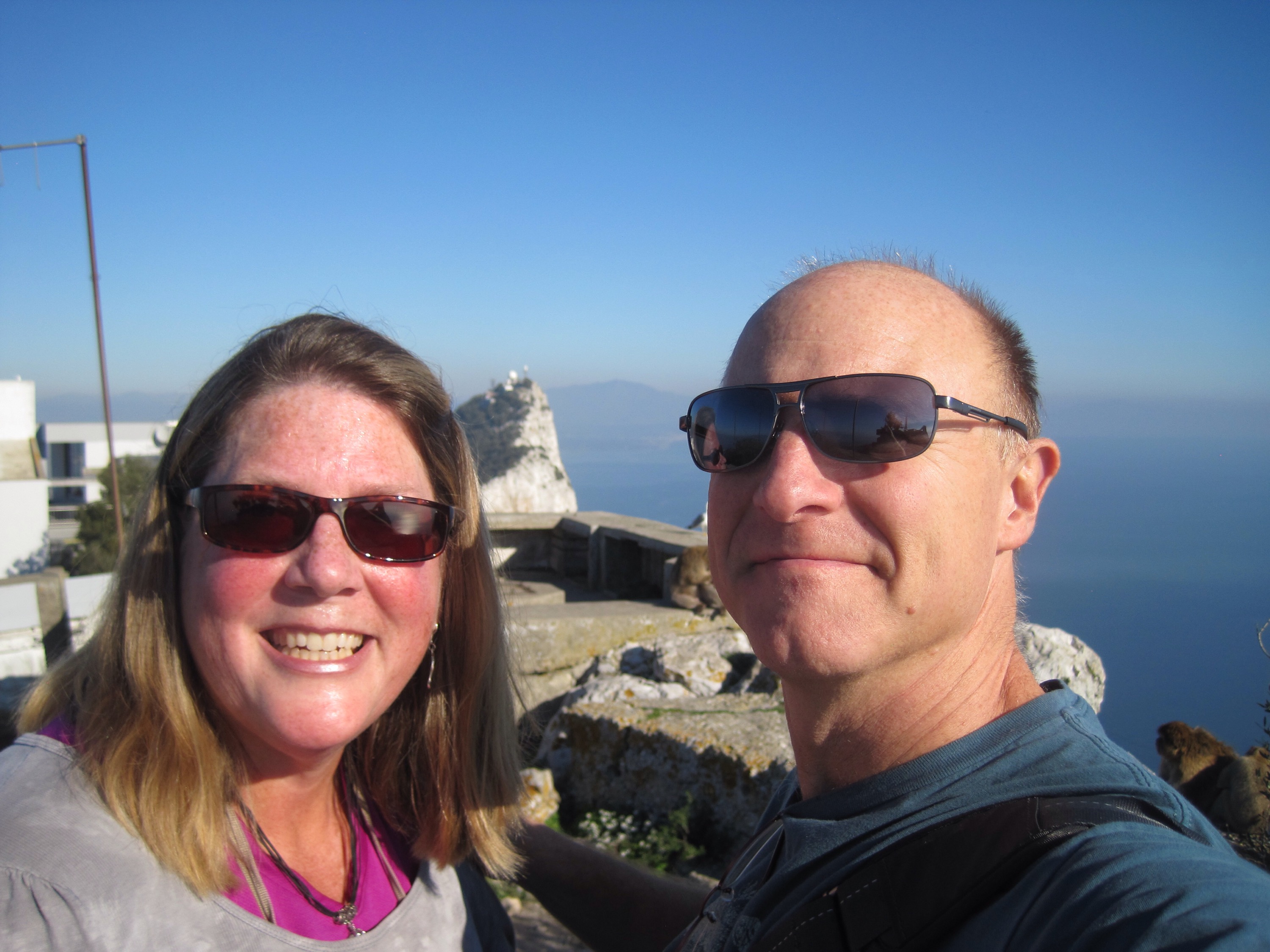
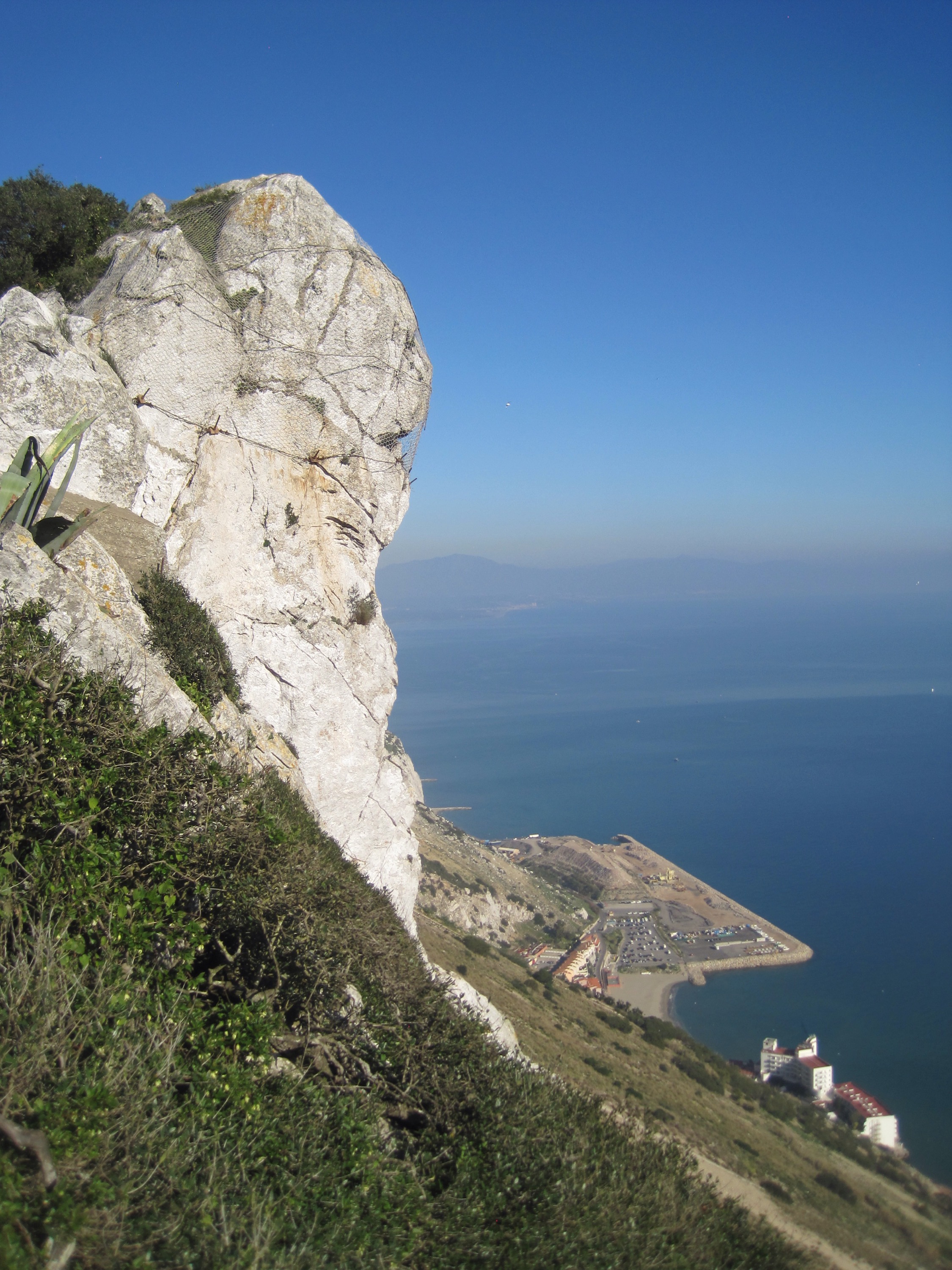
Unfortunately we were not able to take the ferry ride over to Morocco. This gave us an opportunity to visit Gibraltar and explore the upper rock a bit more. During the visit several times I commented that Gibraltar reminded me of Juneau. A tourist town surrounded by water and cliffs.

We had to show our passports as we enter Gibraltar as it is part of Britain. There are 8000 to 9000 Spaniards that enter Gibraltar on a daily basis to work. The gentleman at the information center indicated that they mostly did jobs that the British did not want to do. A tad bit condescending but I suppose if it’s good for the Spaniards then I’m happy for them.

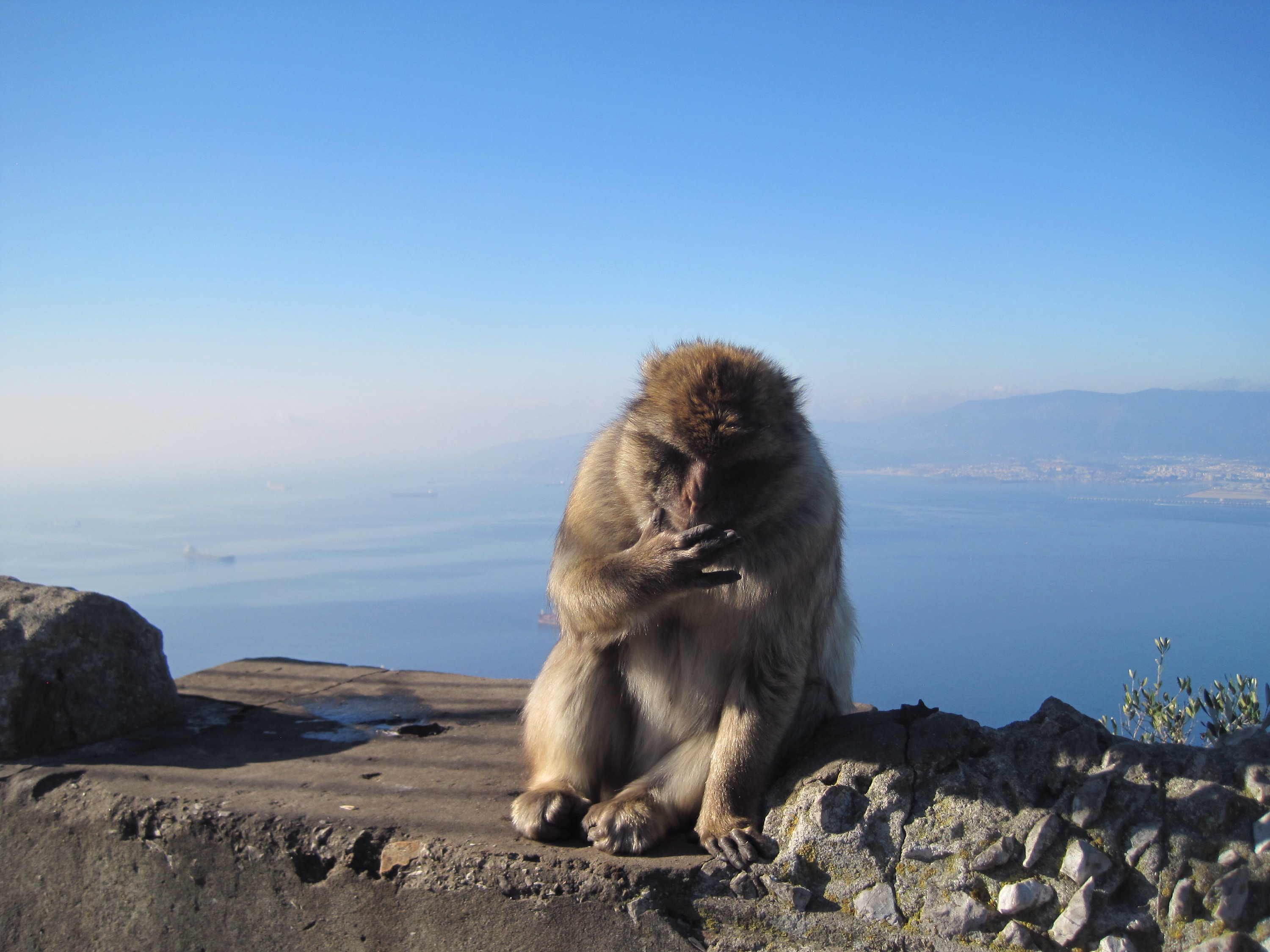
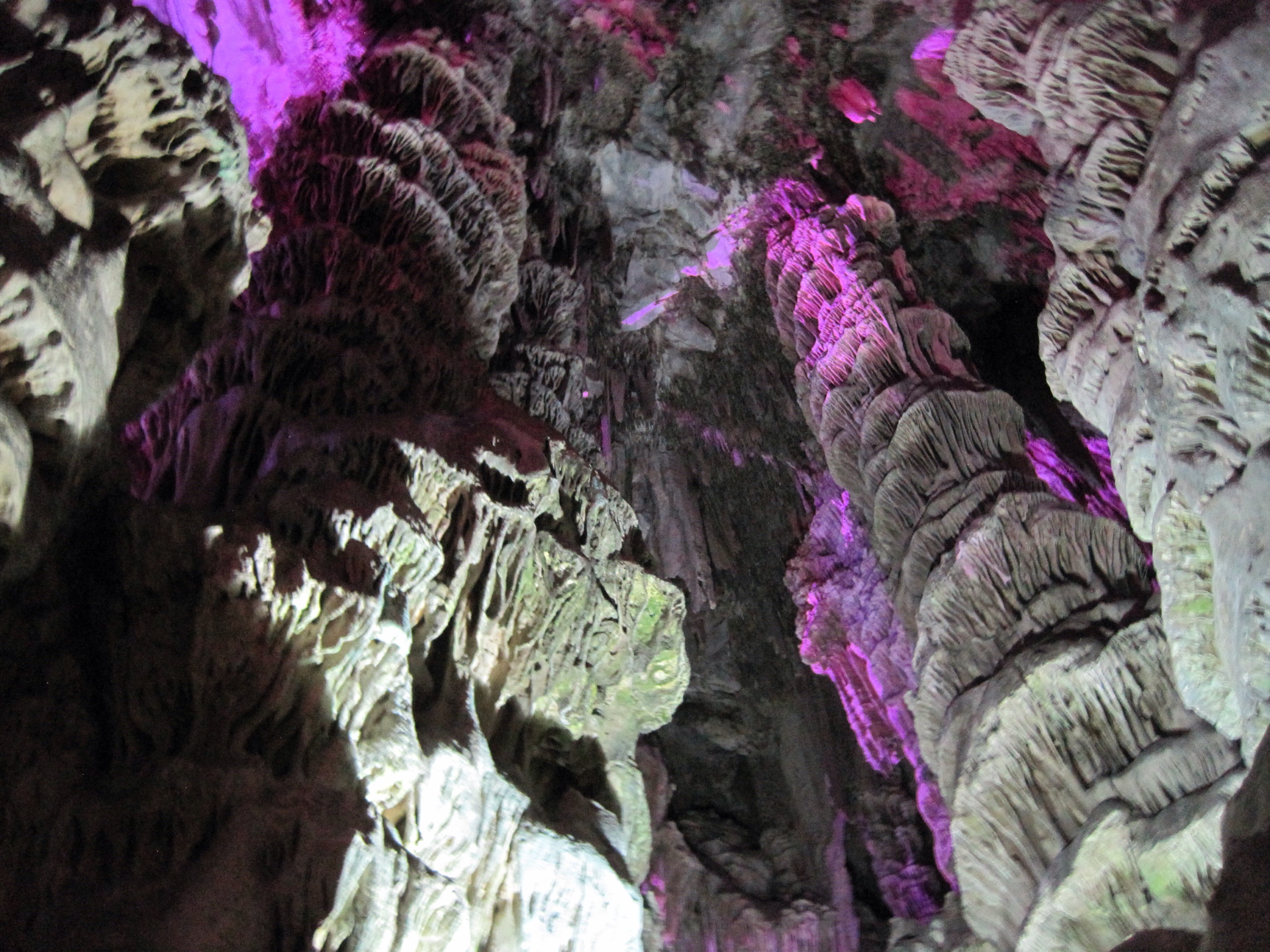
We got directions on how to go to the upper rock. Once we arrived we parked the car and took off on a hike to the very tip top of the rock. Along the way we saw several monkeys and surprisingly they were not aggressive at all. There’s a huge fine if you are caught feeding them. In many ways I felt as if we were hiking to the top of Mount Juneau at home. It was steep, however here they were sidewalks to hike on.

It ended up being a beautiful day and we can see for miles and all directions including down to Morocco. The gentleman at the information center also indicated that we were on the most southern tip of Europe however we disagree with him and think that Tarifa, Spain is the most southern tip of Europe. Typical Gibraltar to think that they are better than Spain!

Gibraltar is only 2.3 sq miles and all 30,000 residents live in those 2.3 sq miles. One of the most interesting things is that as you enter Gibraltar you actually drive across the regional airport runway, planes often make car stop is there taking off or landing, kind of crazy.

Historically this rock plays a big part in the history of Europe. There has been much military presence there over thousands of years. Most everyone has heard the saying “solid as the Rock of Gibraltar”. This usually refers to a person that is unfathomed by a situation, as this rock remains in tact after centuries of war!

Certainly not the best stop on the trip, but can say we’ve been there. Locals were quick to say they’d accept Euros but gave a terrible exchange rate. The only thing we paid for was park entry so we used cc for better rate. The British Pound is high in value currently.

/home/wpcom/public_html/wp-content/blogs.dir/99b/31551210/files/2015/01/img_4247.jpge

/home/wpcom/public_html/wp-content/blogs.dir/99b/31551210/files/2015/01/img_4232.jpg

/home/wpcom/public_html/wp-content/blogs.dir/99b/31551210/files/2015/01/img_4252.jpgo

/home/wpcom/public_html/wp-content/blogs.dir/99b/31551210/files/2015/01/img_4211.jpg</a

/home/wpcom/public_html/wp-content/blogs.dir/99b/31551210/files/2015/01/img_4254.jpg

Leave a comment »

Sun filled Sevilla Spain

Jan. 3 & 4, 2015

Sevilla is surrounded by farmlands and orchards, and full of history and Morrish Influence. As we drove towards the city it is a quick transition from these rural areas to the city. Ride bus #3 into the town center and back to our hotel. (1.4 Euro pp.)

First stop Torre Del Orso. This tower marks the spot where ships would return to Spain after their exploration of the new world. They would offload all the gold they had collected and give it to the Queen. The cost to go to the top was only 3 euro, and gives you a great view of the city.

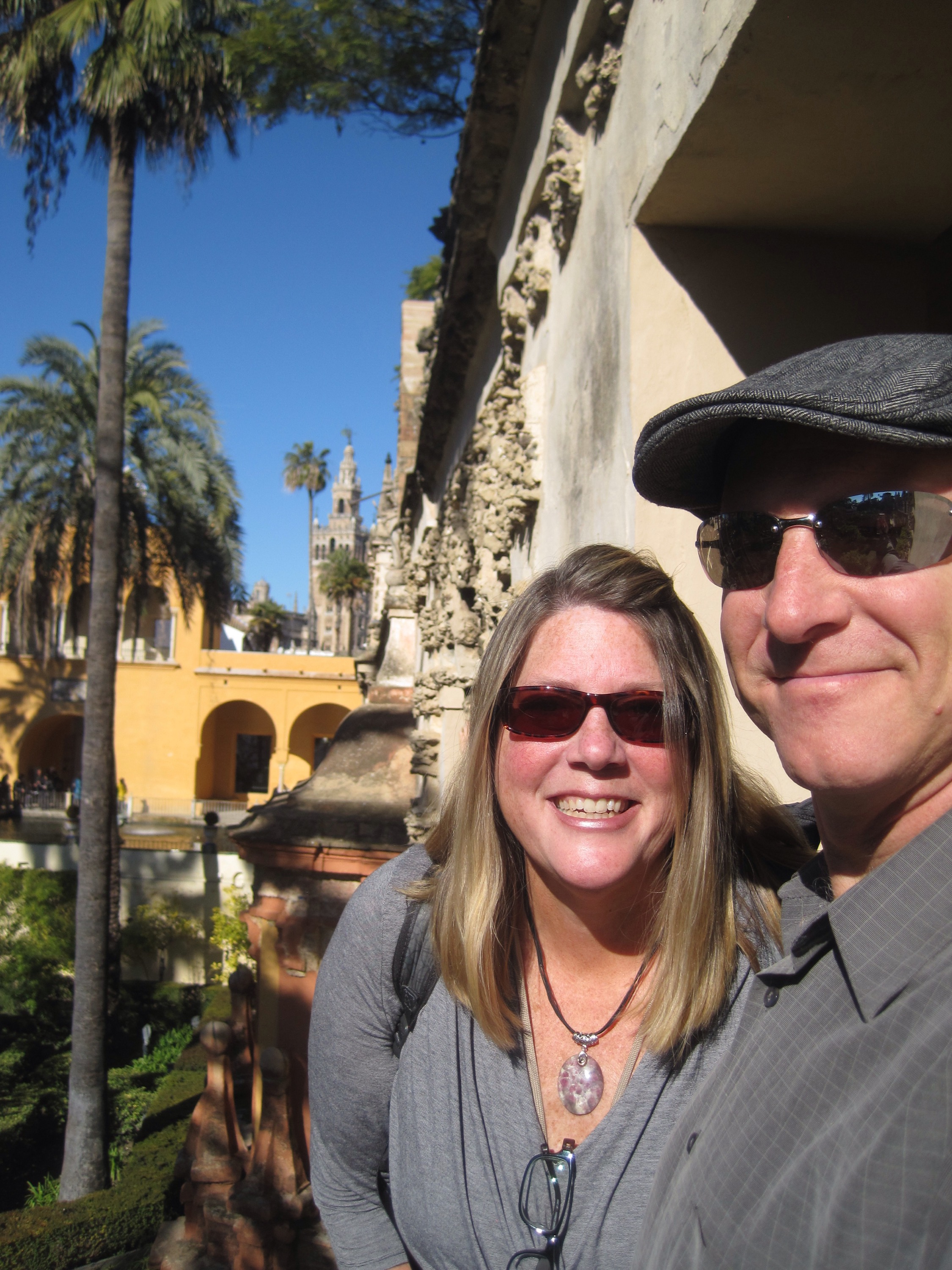
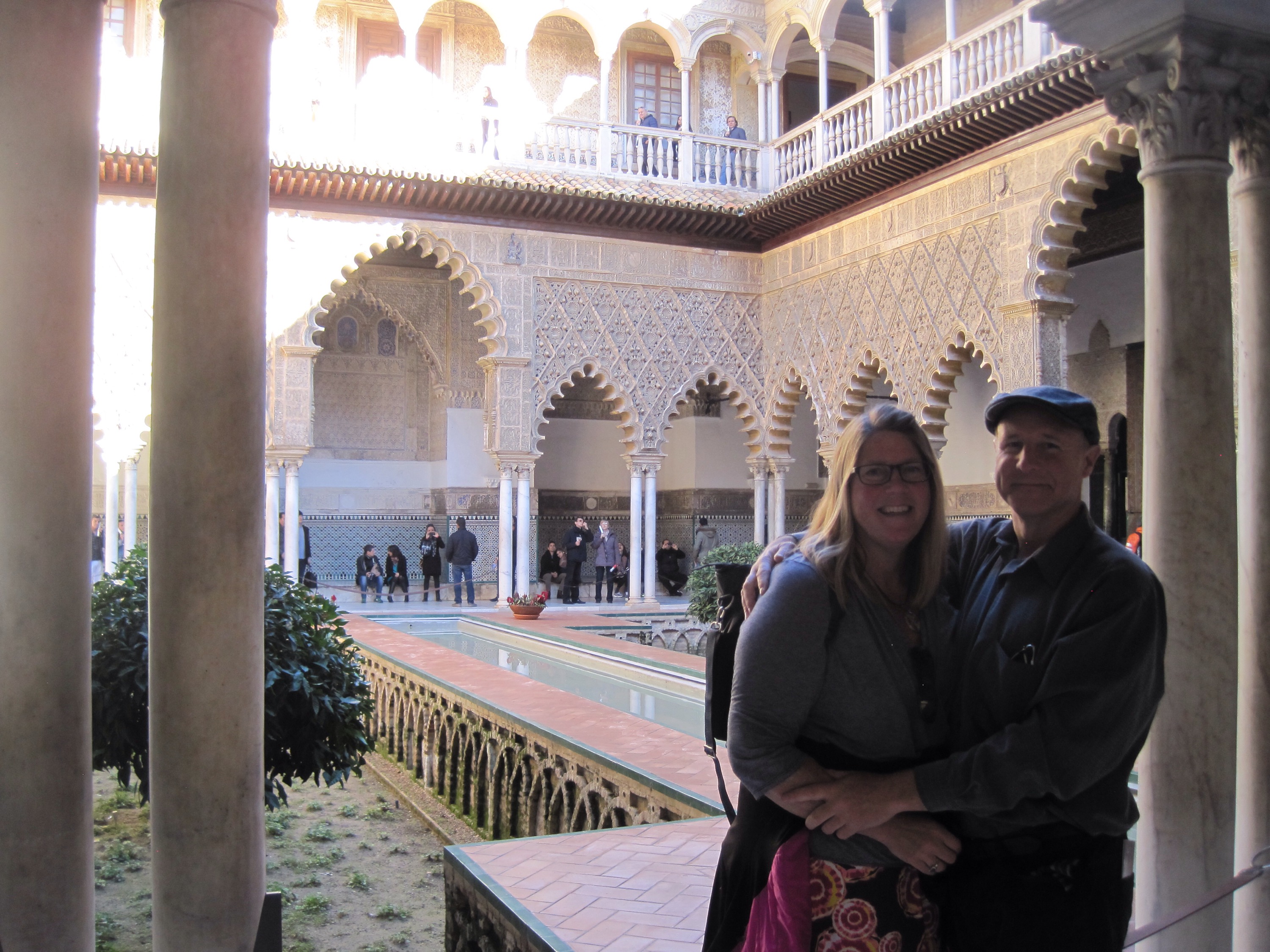
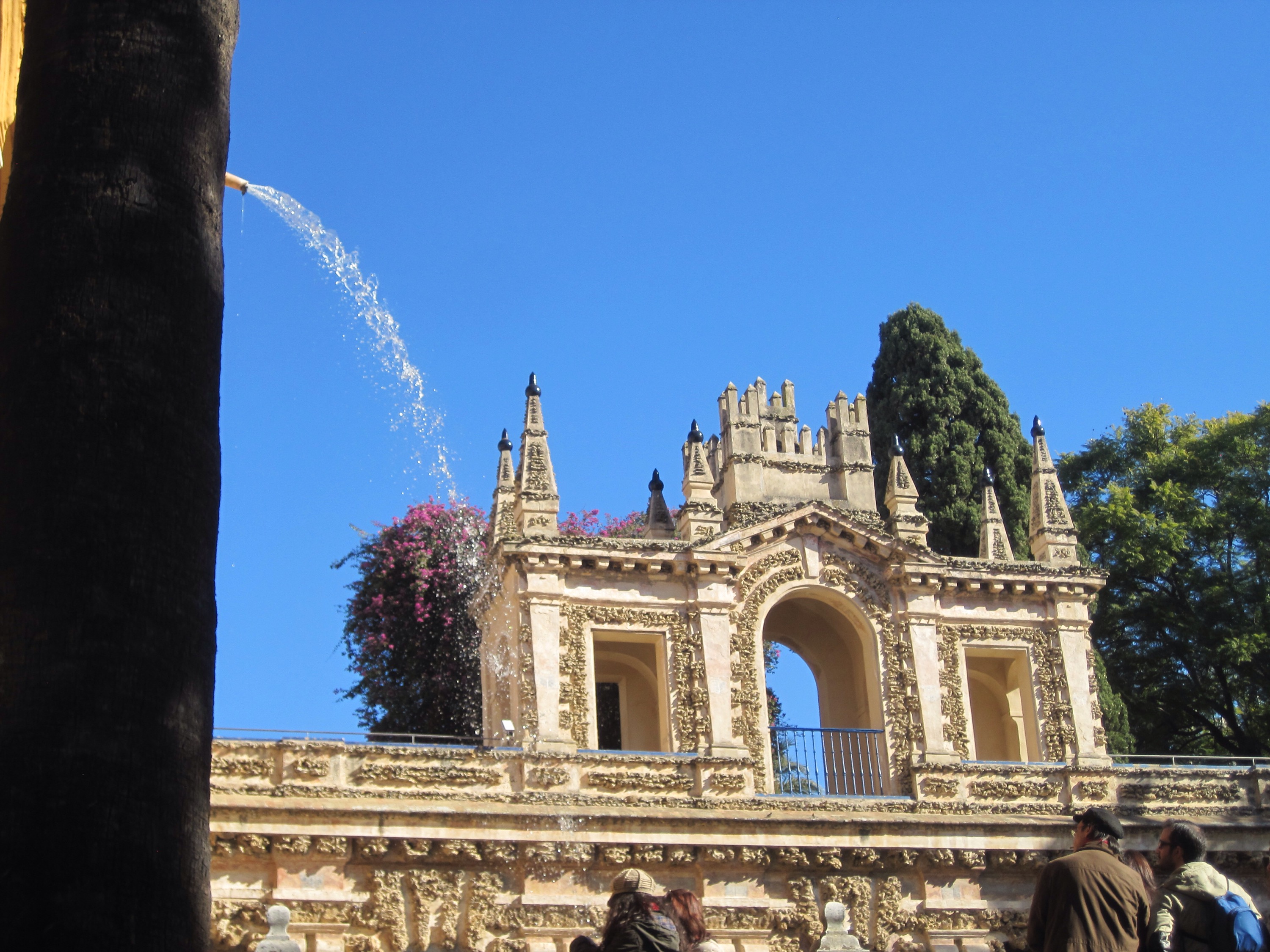
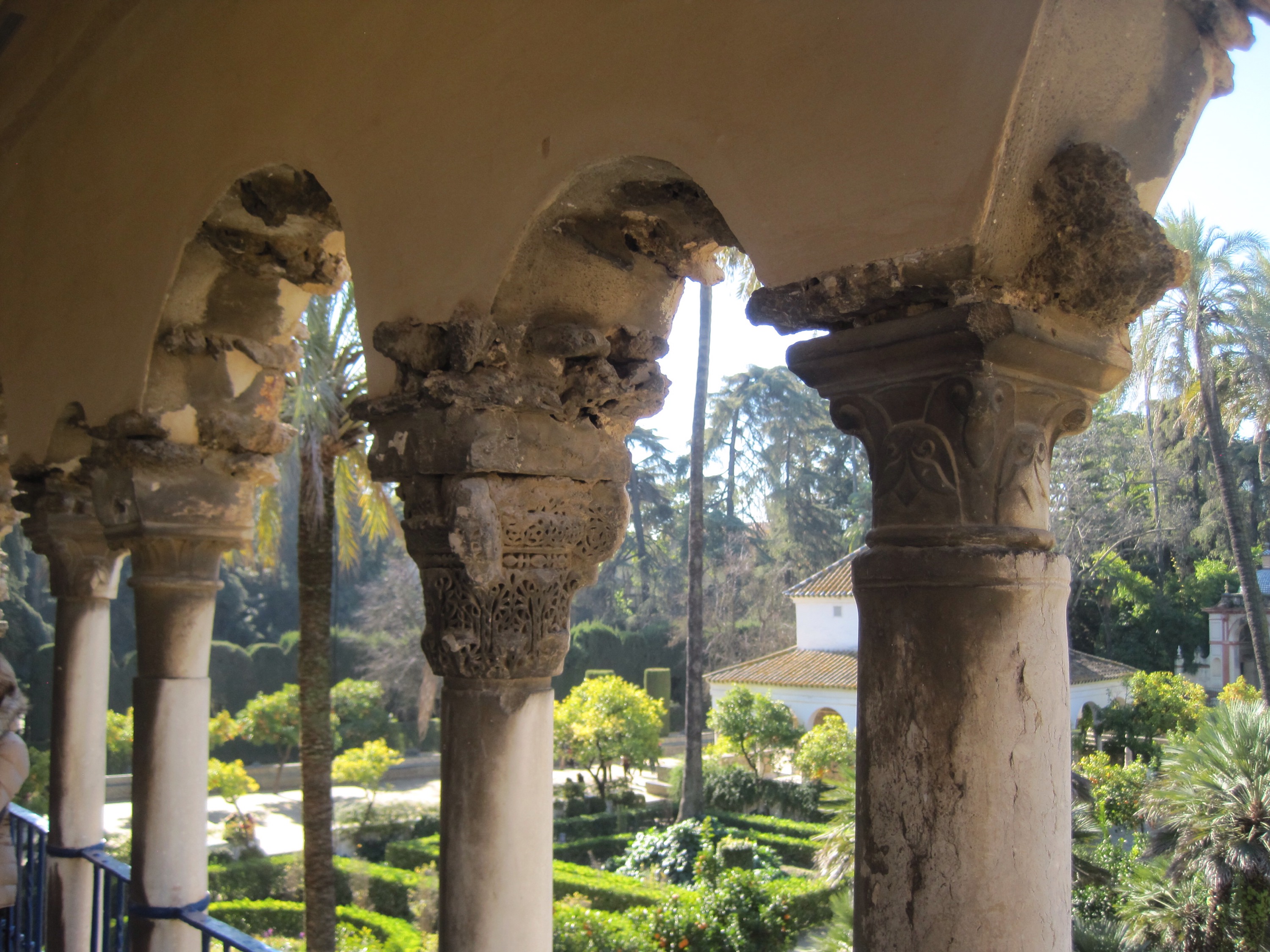
Next stop the Alcázar of Seville or the royal palace in Seville, Spain. It too has Morrish roots as it was originally a Moorish fort. The palace is the oldest royal palace still in use in Europe, and it was registered in 1987 by UNESCO as a World Heritage Site! The palace is much less elaborate than other palaces we’ve visited on this and other trips but has the most beautiful gardens we’ve seen. There is much Morrish influence that mostly shows in the tiles that adorn every corner of the palace.

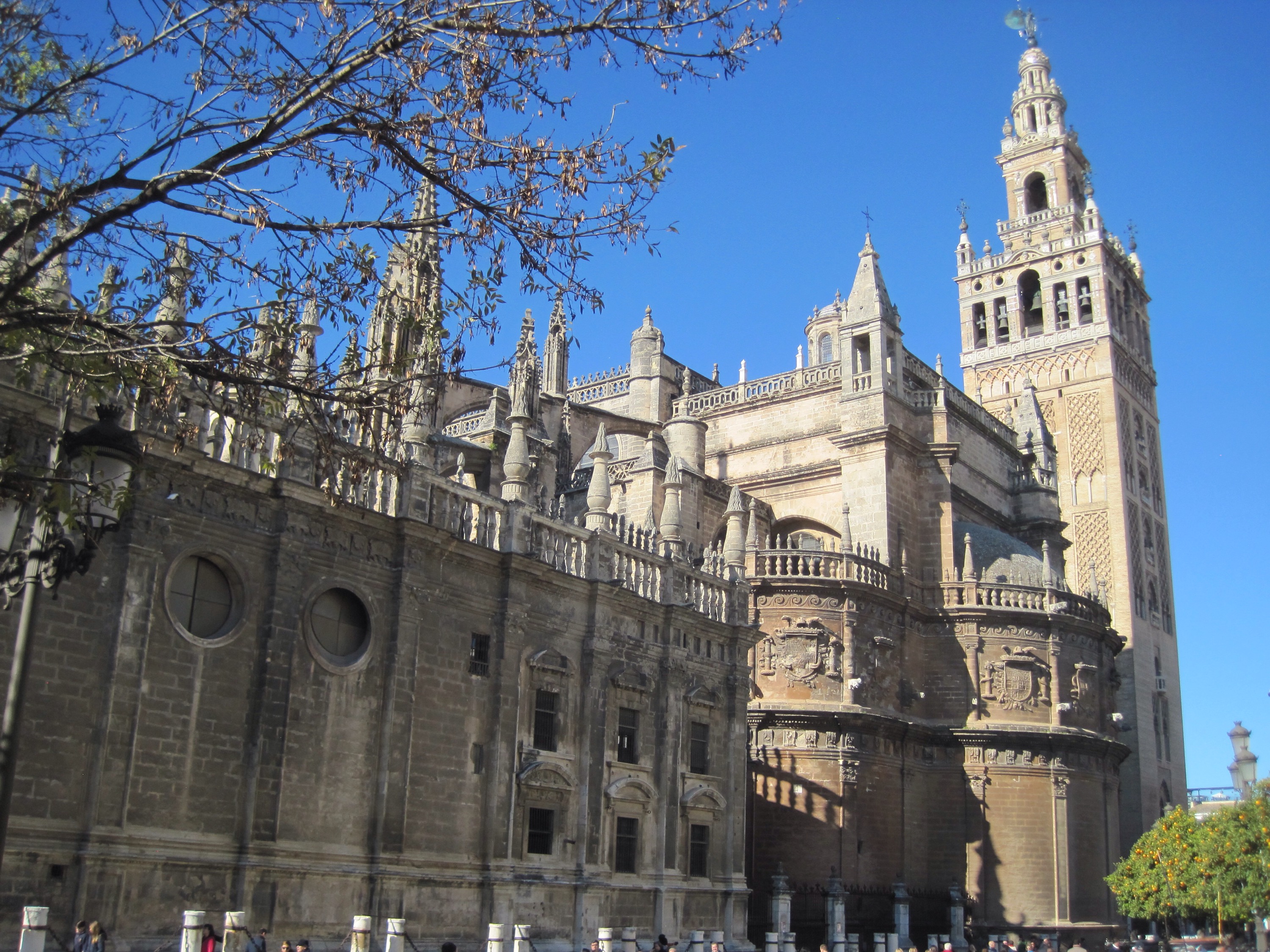
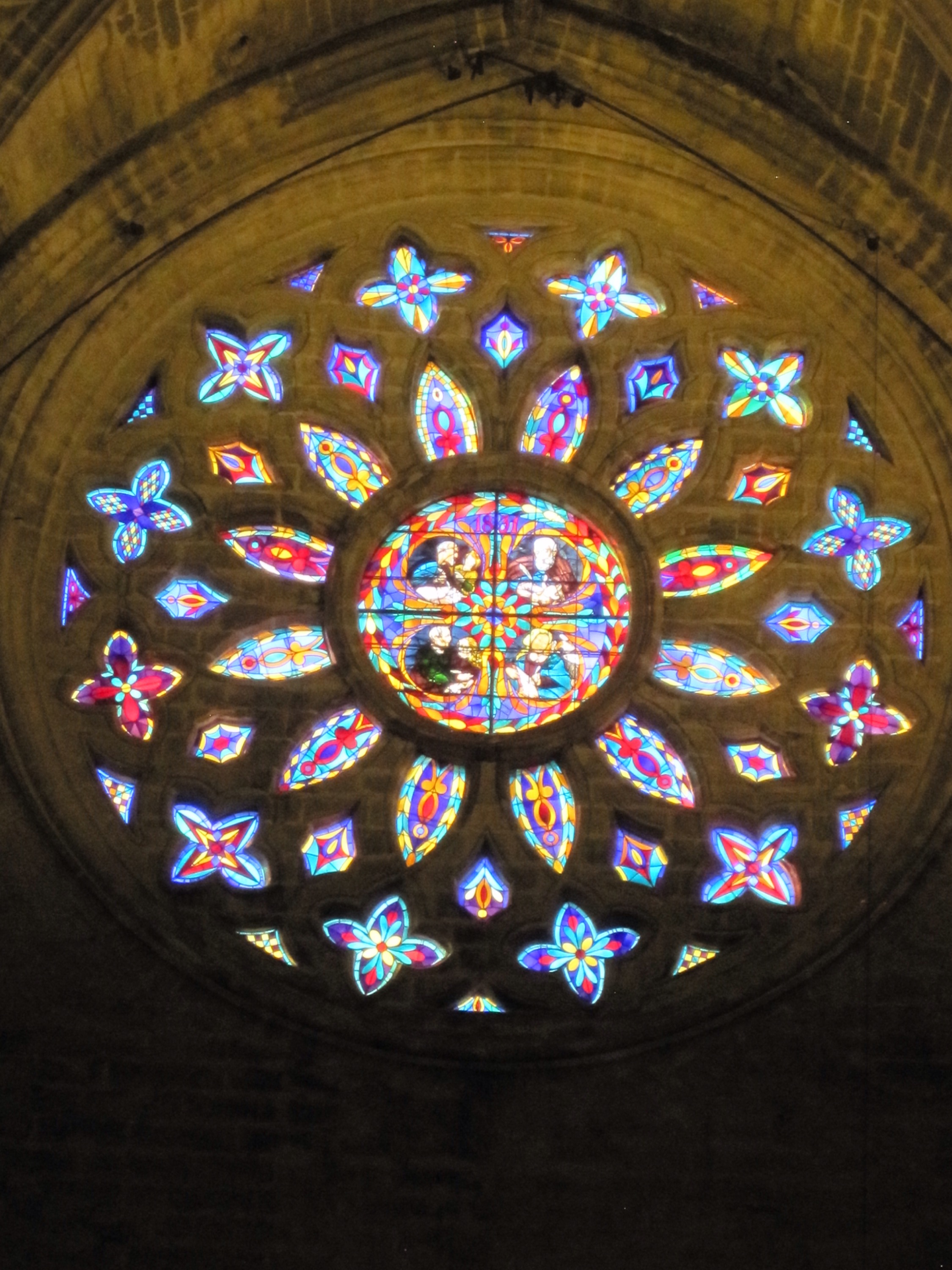
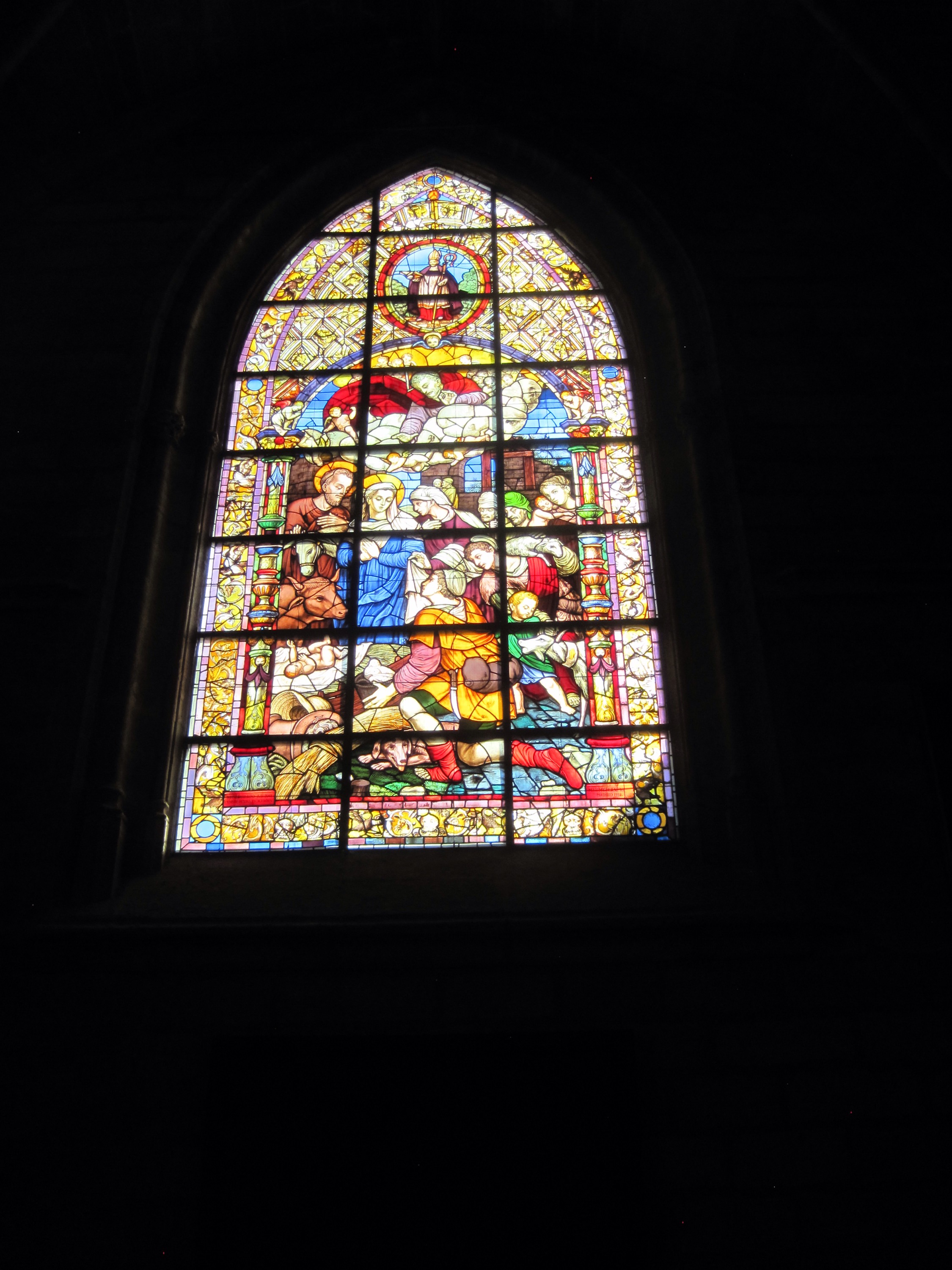
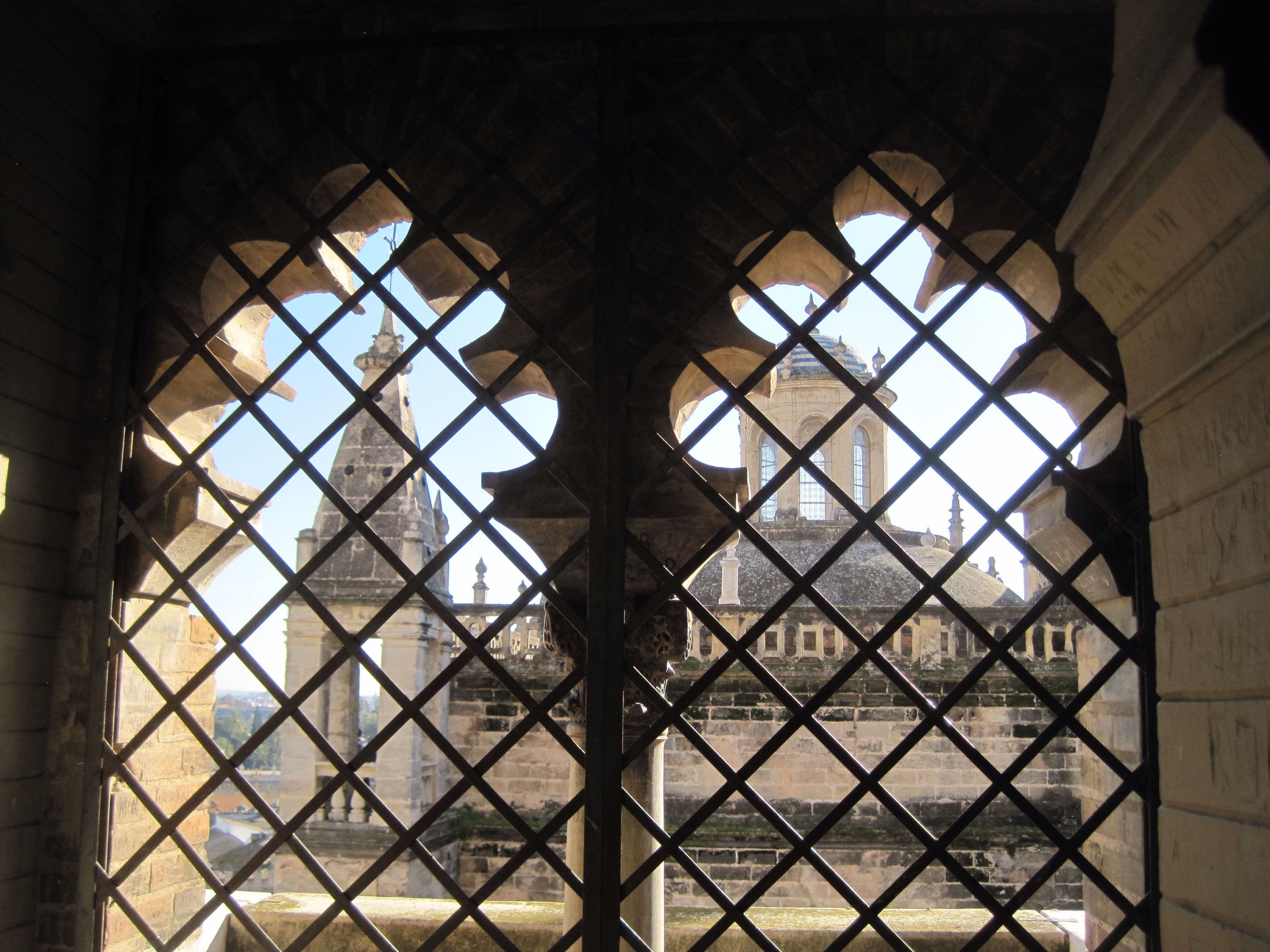
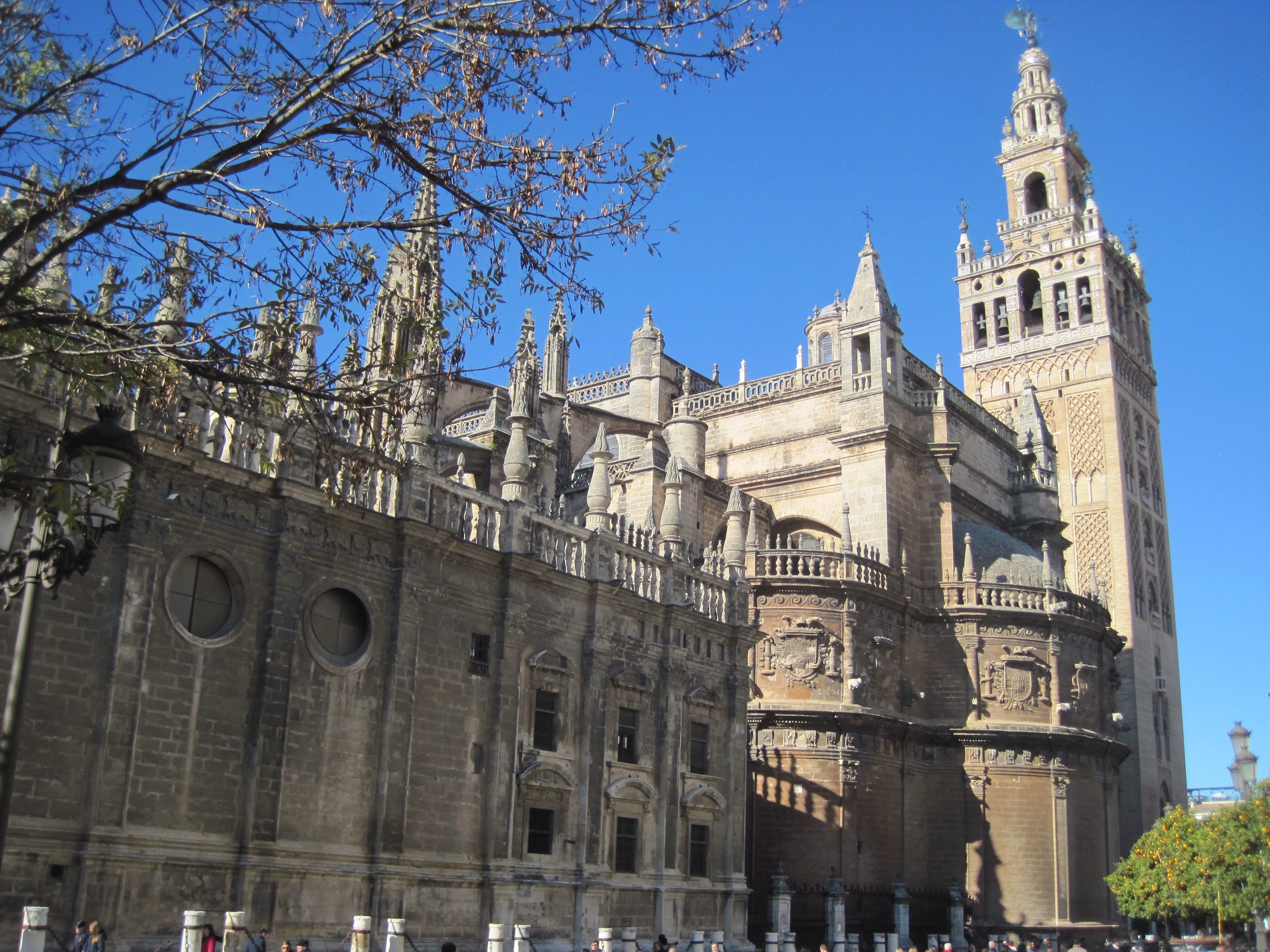
Final major stop, the Sevilla Cathedral, is right across the street from the palace. This cathedral took our breath away. Originally it was built as a mosque though most of that was torn down by the Christians who desired to build an even more impressive place I worship. The only remaining part from the mosque is 2/3-3/4 of the bell tower, or the Giraldais, it was originally built as a minaret during the Moorish period, with a Renaissance style top added by Spaniards. It too became a World Heritage Site with UNESCO in 1987.

We enjoyed the climb to the top, 34 flights but no steps. It was purposely built without steps so historically during the Morrish period horses could take people to the top to call for prayer!

There’s a lot to see and do in Sevilla, we tried to hit the highlights in our short time there, getting a good sense of the city. Out big take away, they smoke a lot of cigarettes and there are 1000’s of babies/children in strollers everywhere.

/home/wpcom/public_html/wp-content/blogs.dir/99b/31551210/files/2015/01/img_3939.jpg

/home/wpcom/public_html/wp-content/blogs.dir/99b/31551210/files/2015/01/img_3982.jpg

/home/wpcom/public_html/wp-content/blogs.dir/99b/31551210/files/2015/01/img_4010.jpg

/home/wpcom/public_html/wp-content/blogs.dir/99b/31551210/files/2015/01/img_4029.jpg

/home/wpcom/public_html/wp-content/blogs.dir/99b/31551210/files/2015/01/img_4052.jpg

/home/wpcom/public_html/wp-content/blogs.dir/99b/31551210/files/2015/01/img_4063.jpg

/home/wpcom/public_html/wp-content/blogs.dir/99b/31551210/files/2015/01/img_3957.jpg

/home/wpcom/public_html/wp-content/blogs.dir/99b/31551210/files/2015/01/img_4041.jpg

/home/wpcom/public_html/wp-content/blogs.dir/99b/31551210/files/2015/01/img_3942.jpg

/home/wpcom/public_html/wp-content/blogs.dir/99b/31551210/files/2015/01/img_3915.jpg

/home/wpcom/public_html/wp-content/blogs.dir/99b/31551210/files/2015/01/img_4116.jpg

/home/wpcom/public_html/wp-content/blogs.dir/99b/31551210/files/2015/01/img_4029-0.jpg

Leave a comment »

Two days= 2 rural Monasteries! Guadalupe and San Francisco Palma Del Rio

Jan. 1-2, 2015

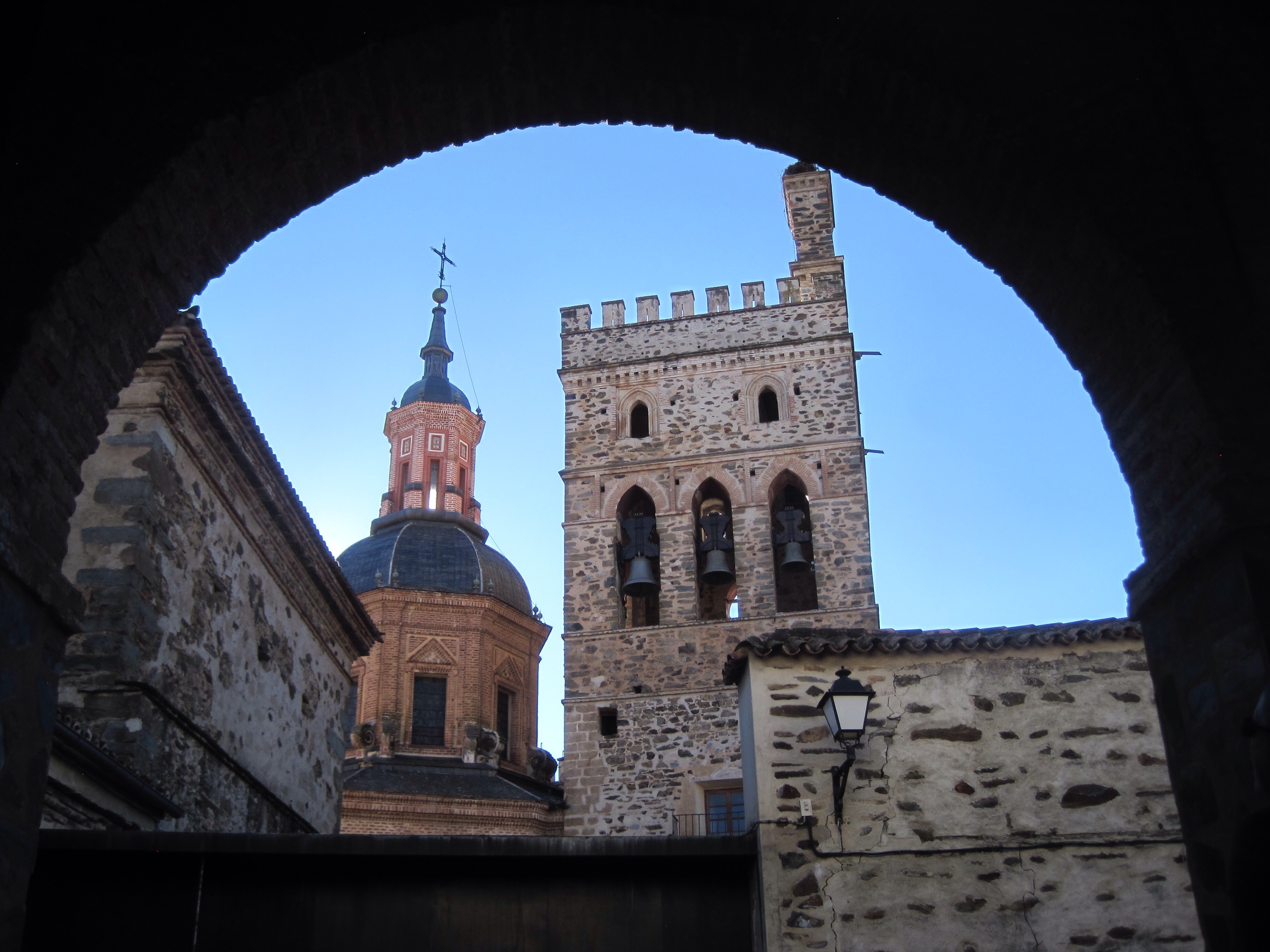
After ringing in the new year with friend in Madrid we took off for our southern route visits. First stop, Guadalupe Sanctuary and Monastery. The drive from Madrid was beautiful and quickly we found ourselves in farm land, fruit, chestnuts and olive trees! We had booked a room in the monastery and signs were trying to direct us there, however they sadly were not helpful. We parked in a community lot and went on foot to find it, finally getting to our room!

We toured the Monastery (5 euro pp) and enjoyed all we saw, but understood very little of what the tour guide said as it was all in Spanish! A fellow tourist helped us a few times translating a few thoughts to us. They explained that they have made a conscious effort to NOT offer tours in other languages because they don’t want it to become a huge “tourist destination” rather a place people want to come because they feel a connection to the place.

The sanctuary was built sometime near the end of the 1200’s. But in 1330 Alfonso XI, King of Castille and Leon thought it was too small and ordered another be built which occurred from 1336-38. The monks of Jeronimo used this location for the next 4 centuries. It became a National monument in 1879 and in 1907 Our Lady Of Guadalupe became its patron saint.

Beautiful small town with a charming central plaza. We had a delightful dinner of regional food: beans with chorizo, garlic soup, goat stew and fish with spinach sauce! Though Guadalupe is “off the beaten path” some pass on visiting here. We sure are glad we didn’t miss it.

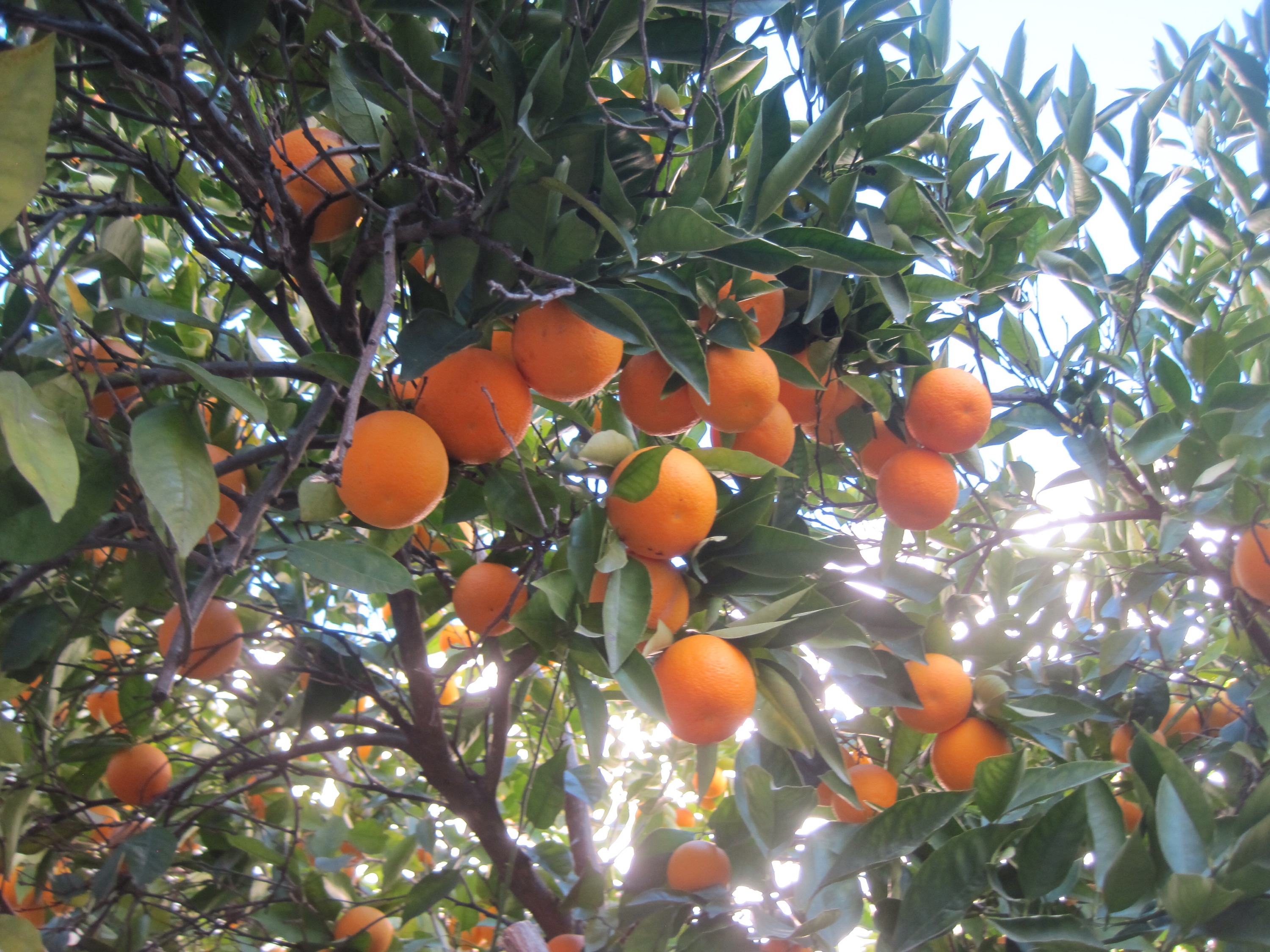
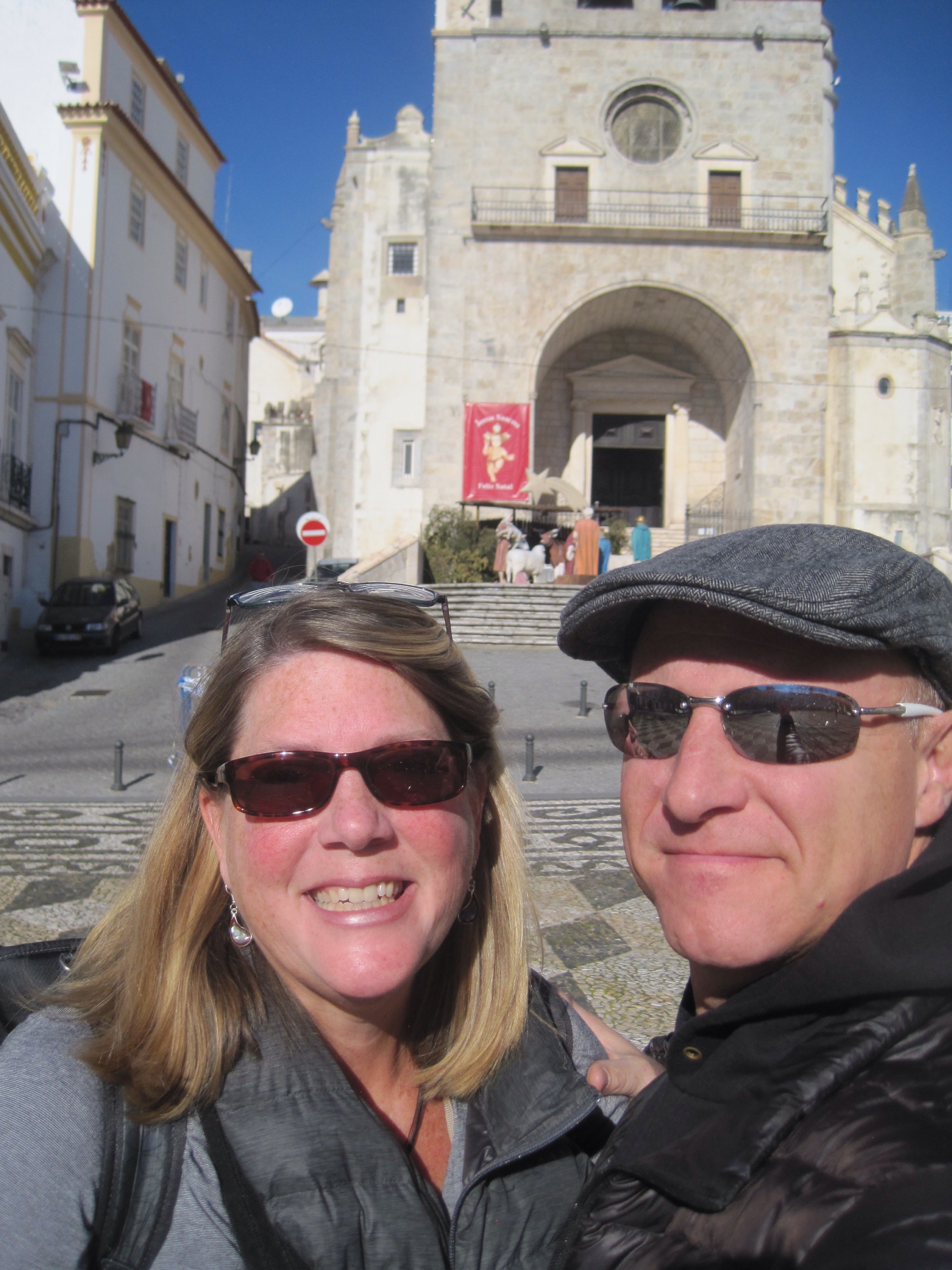
The next day we awoke and headed to our second monastery, San Francisco Palma Del Rio. However we decided to stop in Portugal before heading there. We had lunch in Elvas, Portugal the took back roads to Palma Del Rio. Enjoyed the country side we saw along the way including cattle, sheep, pigs, etc. as well as storks, hawks, and blue herons. But most of all we saw orange trees, this is the area they obviously come from.

Arrived to our room easily tough had some issues with booking. Finally figured it out but must thank Anna at the front desk for all her hard work. I’d say we could have skipped Palma Del Rio as there is nothing exceptionally interesting here but the drive through farmlands were nice.

/home/wpcom/public_html/wp-content/blogs.dir/99b/31551210/files/2015/01/img_3660.jpg

/home/wpcom/public_html/wp-content/blogs.dir/99b/31551210/files/2015/01/img_3675.jpg

/home/wpcom/public_html/wp-content/blogs.dir/99b/31551210/files/2015/01/img_3685.jpg

/home/wpcom/public_html/wp-content/blogs.dir/99b/31551210/files/2015/01/img_3669.jpg

/home/wpcom/public_html/wp-content/blogs.dir/99b/31551210/files/2015/01/img_3739.jpg

/home/wpcom/public_html/wp-content/blogs.dir/99b/31551210/files/2015/01/img_3759.jpg

/home/wpcom/public_html/wp-content/blogs.dir/99b/31551210/files/2015/01/img_3731.jpg

1 Comment »

Flamenco dancers; Casa Patas, Madrid

Dec. 21, 2014

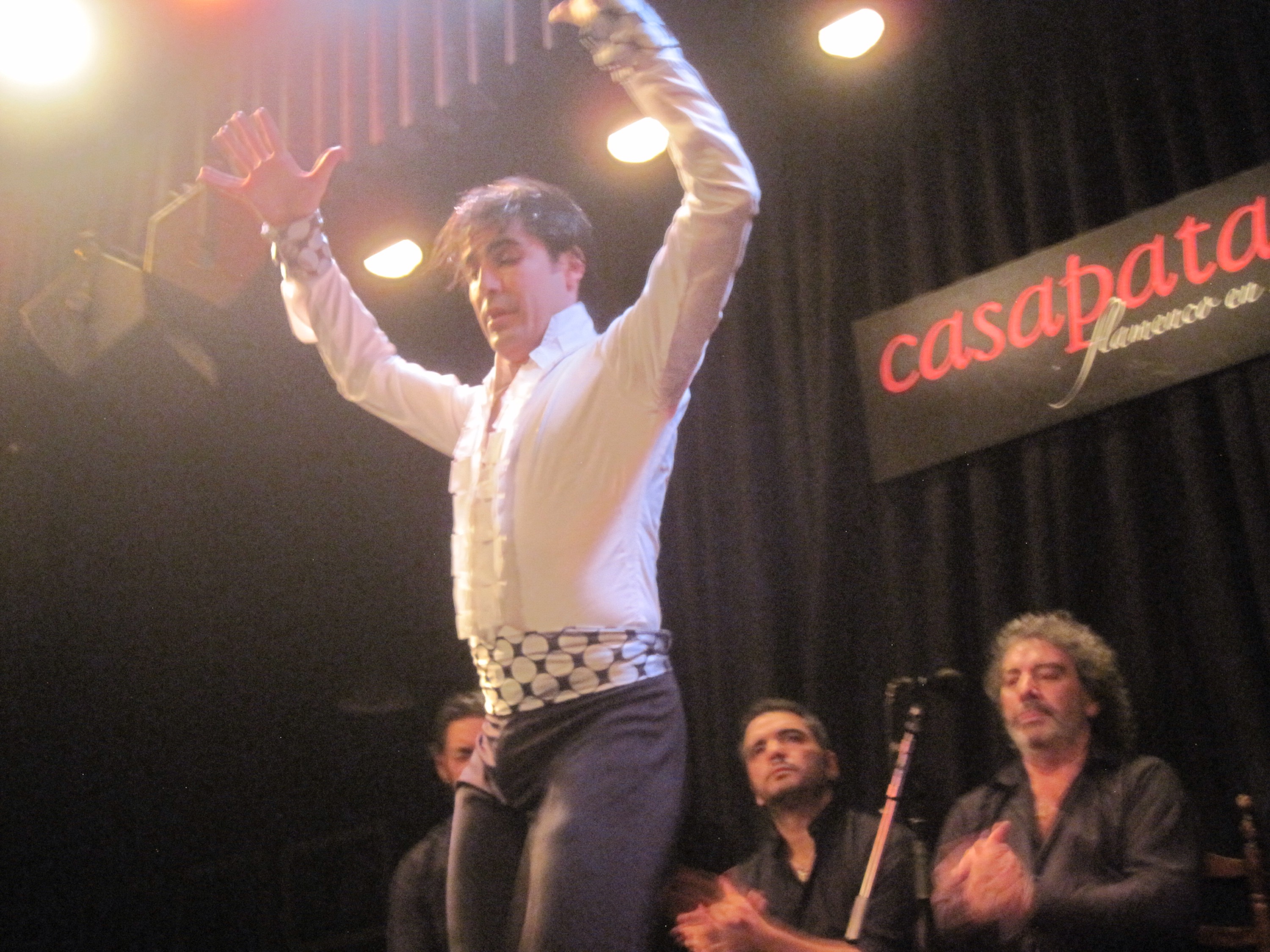
Thanks to our sweet hostess Blanca we had front row seat tickets to see the Flamenco dancers. Flamenco is a traditional folk dance in Spain. It originated in the southern region of Spain, in Andalusia.

The show we attended contained all the traditional components, “cante” (singing), toque (guitar playing), baile (dance) and palmas (handclaps). It was very strong and powerful. Reminded us of the strength of Alaska Native traditional dance. This form of dance is related to the Romani people of Spain and dates back to the late 1700’s.

Our tickets were for the Casa Patas show. They were all the traditional guitar player, violin player, percussion player, and 2 main vocals, as well as three main dancers. We left there feeling as if we’ve had a very powerful cultural experience. My only disappointment was that the vision I’d had in my of head of many women in beautiful dresses was not in this show. Only one female dancer with no flowery flowing dress.

However the two male dancers were powerful and we enjoyed it very much.

If you want to go get tickets in advance and reserve a front row seat, the dancers are in your lap and you even get some sweat tossed on you 😕http://www.flamencotickets.com/casa-patas-madrid

/home/wpcom/public_html/wp-content/blogs.dir/99b/31551210/files/2014/12/img_2091.jpgnot

/home/wpcom/public_html/wp-content/blogs.dir/99b/31551210/files/2014/12/img_2124.jpg

2 Comments »

A full day exploring Barcelona!

Dec. 24, 2014

We stayed on the outskirts of town but 2 blocks from the metro, so first stop tickets for metro! Bought a 10 pack for about 10 euro and headed into the center of town. First stop, the Cathedral of the Holy Cross and Saint Eulalia. We are always in awe of the churches in Europe, so detailed and beautiful. We were able to go inside, and take photos while in there.

Work began on this cathedral in 1298 and did not finish until late in the 19th century, though most of the work was done in the 14th century. Surrounding the building are many gargoyles both real and mythical animals fare represented. The inside had a stunning dome and countless stain glass windows. The organ was not in the traditional location rather along the wall on the right side.

We continued towards the water front and opted for a boat ride on a “golondrinas” which we hopped on right near the Columbus statue. The ride was about 45 minutes but gave a great view of the city.

We continued on foot to Las Rambras street probably the most famous street in Barcelona. We ate lunch here, drank sangria, walked through the market and soaked in some culture. We even saw a guy with an Alaskan Brewery shirt on! (Figured he was most likely a cruise ship employee).

Next came Gaudi’s apartment that had been designed for a wealthy couple at the turn of the century. Though interesting, NOT interesting enough to spend 20 euro/pp to go inside!

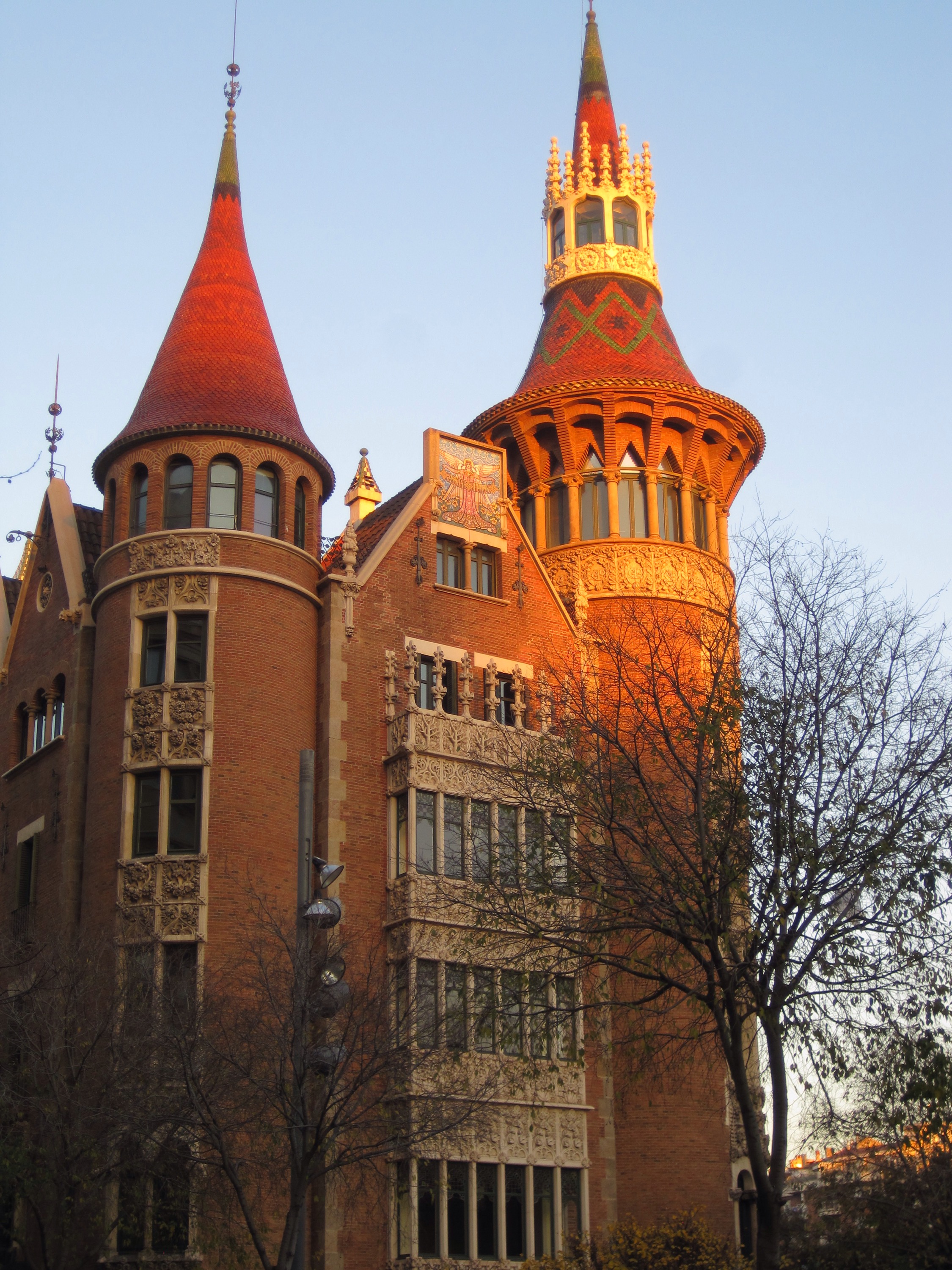
A few blocks away we spotted the Casa Terrades, Another castle in the Gothic style. The spires of this castle can been seen from many blocks away and they made us want to venture out and see it.

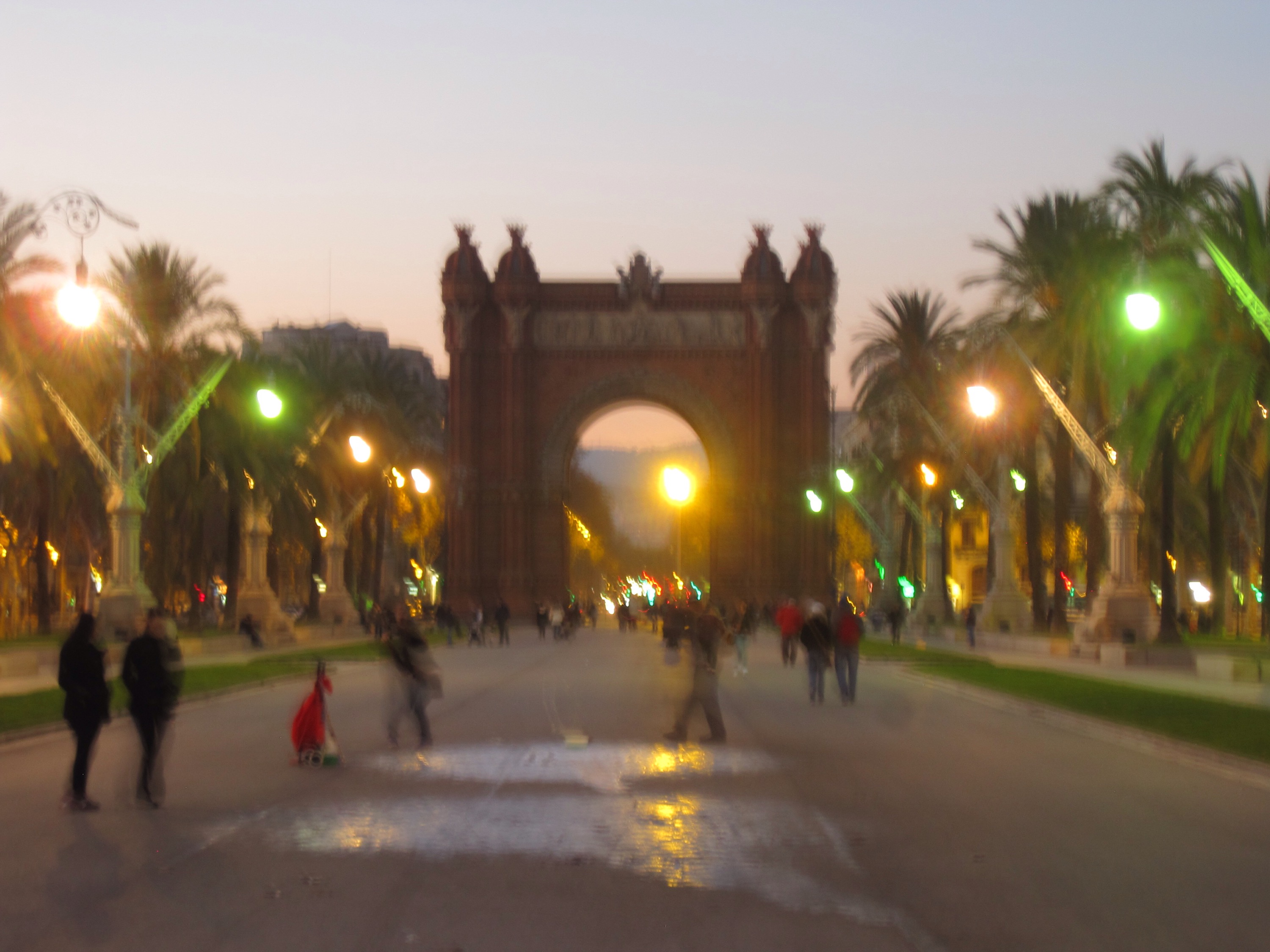
Last stop of the day was The Arc de Triomf. It was built as the main access gate for the 1888 Barcelona World Fair, and is a gathering place for many locals and tourist, a place to enjoy an evening walk, sit and people watch or be entertained by street vendors.

/home/wpcom/public_html/wp-content/blogs.dir/99b/31551210/files/2014/12/img_2482-1.jpg

/home/wpcom/public_html/wp-content/blogs.dir/99b/31551210/files/2014/12/img_2484-1.jpg

/home/wpcom/public_html/wp-content/blogs.dir/99b/31551210/files/2014/12/img_2477-4.jpg

/home/wpcom/public_html/wp-content/blogs.dir/99b/31551210/files/2014/12/img_2688.jpg

/home/wpcom/public_html/wp-content/blogs.dir/99b/31551210/files/2014/12/img_2652.jpg

/home/wpcom/public_html/wp-content/blogs.dir/99b/31551210/files/2014/12/img_2666.jpg

/home/wpcom/public_html/wp-content/blogs.dir/99b/31551210/files/2014/12/img_2572.jpg

2 Comments »